
Why Do My Armpits Hurt After Shaving? Causes by Timing, for Men
Why do my armpits hurt after shaving? Match the pain to when it started, from razor burn within minutes to regrowth prickle, then calm it and spot red flags.
Written by Aman Singh
Last updated on November 3, 2026
When you buy through links on our site, we may earn a commission at no extra cost to you. It never changes which tools we recommend. Learn more.
Summarize with AI
Armpits that hurt after shaving usually sting from razor burn within minutes, burn when deodorant meets broken skin, or prickle days later as hair regrows.
Razor burn is a common skin irritation after shaving. Cleveland Clinic's razor burn guide says it usually shows up a few minutes after shaving and lasts from a few hours to a few days.
If you're asking yourself why do my armpits hurt after shaving, start with when the pain began, because each timing has its own fix.
With a blade, a dry shave or a dull blade can set it off. You need no special kit or skill to calm it, and most cases clear up on their own.
A lump, pus, a fever or pain lasting past a few days is not ordinary razor burn. The last section lists the signs that need a doctor.
Razor burn, nicks, deodorant or regrowth: match the pain to when it started
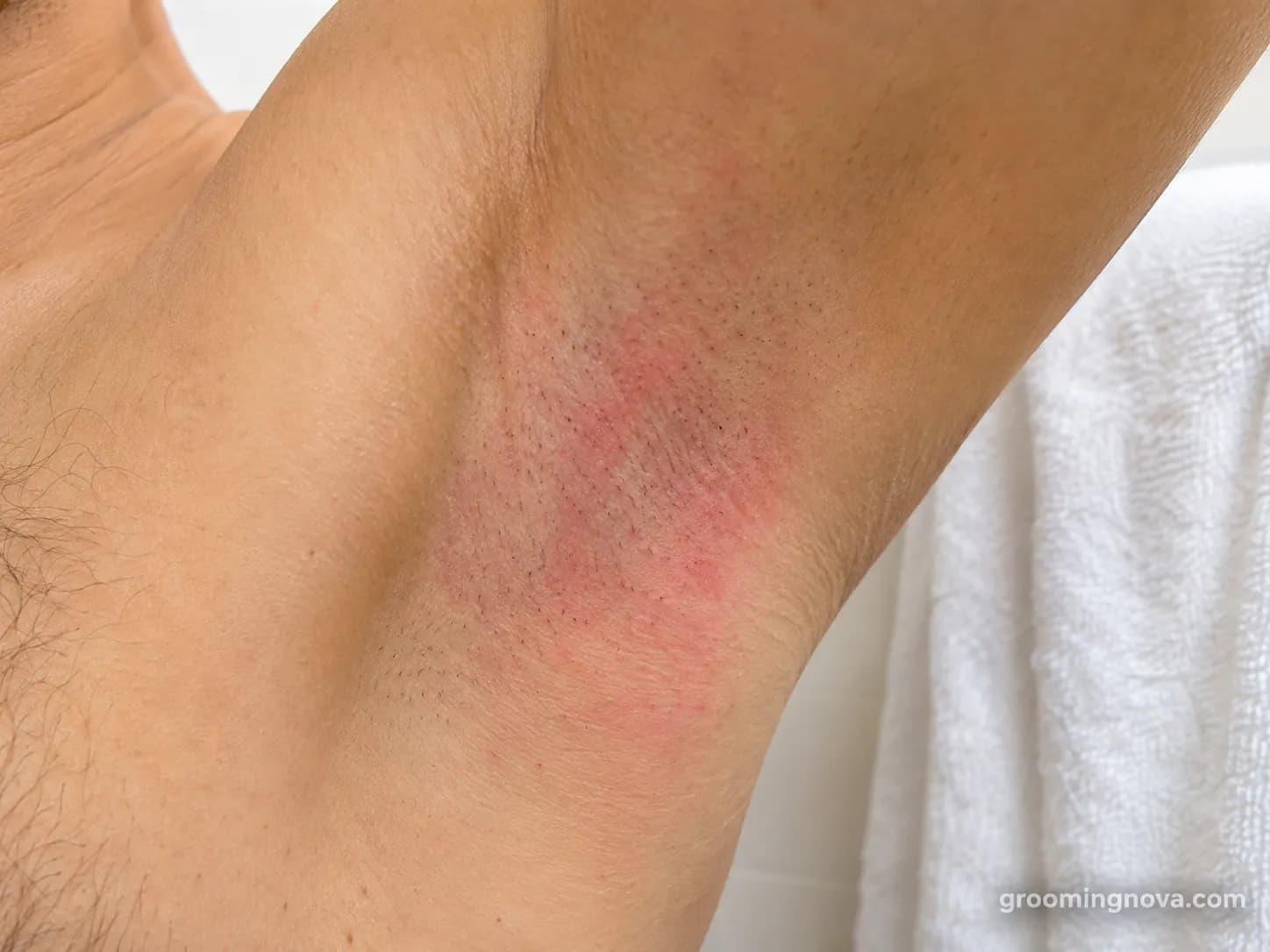
Pain that starts within minutes of the shave is razor burn or a nick. A burn when deodorant goes on is the product on irritated skin; prickle or soreness as the hair returns is regrowth.
A careful shave shouldn't hurt much, and razor burn is the usual reason it does. It appears on shaved areas such as the armpits soon after you shave, according to WebMD's razor burn remedies page.
Underarm skin is sensitive, and the fold of the armpit makes it easy to rush a stroke or press too hard.
Match your pain to its likely cause with this table, starting from when it began.
When it started | What it feels like | Likely cause | Where to go next |
|---|---|---|---|
Within minutes of the shave | Burning or stinging, a blotchy red patch | Razor burn | The calming steps below |
Right away, at one spot | A sharp sting, maybe a bead of blood | A nick | Step 4 of the calming steps |
When deodorant goes on | A sudden burn on skin that felt fine | Deodorant on irritated skin | The deodorant section |
A day or more later | Prickly, scratchy stubble that rubs | Blunt regrowth | The regrowth section |
A day or more later | Tender red spots or bumps | Ingrown hairs or inflamed follicles | The regrowth section |
Any time, lasting days or weeks | A lump, pus, fever or infected-looking redness | Not ordinary razor burn | The warning signs at the end |
The causes in the table come from Cleveland Clinic, WebMD, Mayo Clinic and the American Academy of Dermatology, each linked where its cause is explained.
Shaving too quickly is a blade trigger too, on top of a dry shave and a dull blade.
Going against the grain makes it worse, so the routine for next time starts by checking which way the hair lies in each patch.
How long it lasts helps tell whether you have razor burn, which runs from a few hours to a few days.
A sting that outlasts that, or tender spots that appear a day or more after the shave, points to another row of the table.
How to calm burning armpits after a shave
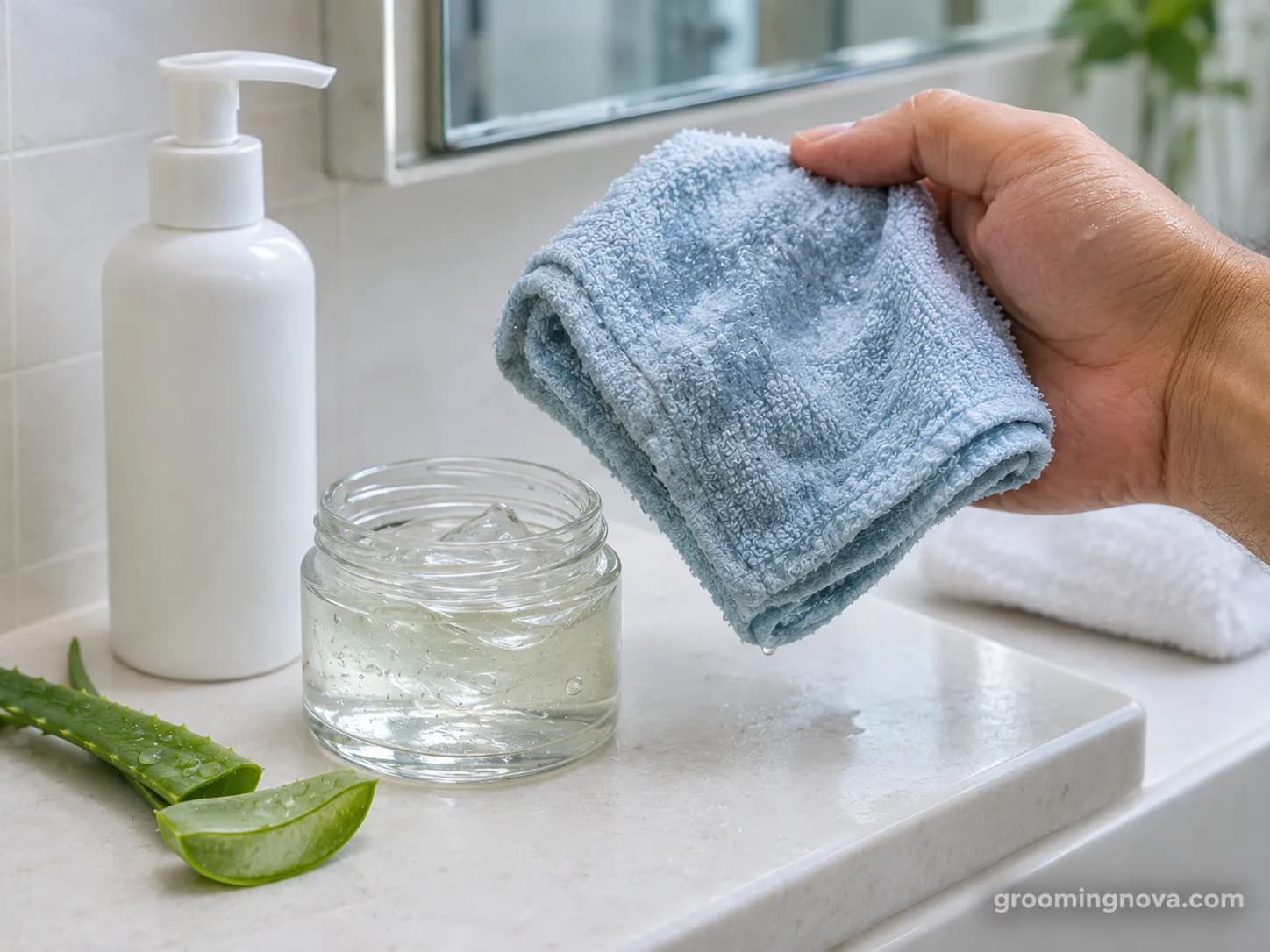
Cool the skin, leave it alone and moisturize it with something plain. You need cool water, a clean towel, two clean washcloths and plain aloe vera gel or a fragrance-free moisturizer.
The steps take a few minutes and use what's already in most bathrooms, so there's nothing to buy.
Warning:
Skip witch hazel and apple cider vinegar on freshly shaved, stinging skin.
Cleveland Clinic's razor burn page lists them as home remedies. But in Cleveland Clinic's guide to healing razor burn, adolescent medicine specialist Ellen Rome, MD, warns they may sting.
If you see a lump, pus, a fever or redness that looks infected, skip the steps and go to the warning signs at the end.
Work through these in order, one at a time.
Rinse the armpit with cool water.
Pat it dry with a clean towel, without rubbing.
Hold a cool, damp washcloth against it.
Press a clean washcloth or gauze on any bleeding nick for 1 to 2 minutes, or until it stops. That's the American Academy of Dermatology's cut advice, and the bleeding should have stopped before you go on.
Smooth on a thin layer of plain aloe vera gel or a moisturizer free of fragrance and alcohol. Witch hazel stays in the cabinet.
Leave deodorant off for now; the next section covers when it can go back on.
Put on a loose cotton shirt so nothing tight rubs the armpit.
Leave that armpit unshaved until it heals. The sting and redness should clear within the few hours to few days razor burn lasts.
If the sting hasn't eased by then, check the red flags in the last section.
If a nick won't stop bleeding, get medical attention right away, as the American Academy of Dermatology advises for any cut that won't stop bleeding.
Deodorant on freshly shaved armpits: why it stings and when to put it on
Deodorant stings after a shave because it lands on skin the blade has just irritated.
In Cleveland Clinic's deodorant guide, dermatology nurse practitioner Lauren Zamborsky explains that products on irritated skin can cause a rash or irritant contact dermatitis.
That's a skin reaction to something that touched it, and antiperspirant can cause it as well as deodorant.
Products with perfumes or dyes are more likely to irritate, as are the fragrance and alcohol the calming steps avoid. A fragrance-free deodorant is the gentler choice for shaved armpits.
Put it on clean, dry skin, and only once the sting has stopped: the cue is the skin, not the clock.
Shaving at night leaves hours for the skin to settle before the morning's deodorant. If it already stings, wash it off with cool water and go back to the calming steps above.
I tested the timing on myself with a fragrance-free stick deodorant. In two split-side sessions, I shaved both armpits with the foil head of my Philips Norelco Bodygroom Series 7000 (BG7040/42).
Deodorant went on one side straight away and on the other about 12 hours later.
With the sides swapped for the second session, the results matched; sting is rated 0 (none) to 5 (burning).
When deodorant went on | Sting at 10 minutes (0 to 5) | Sting next morning (0 to 5) |
|---|---|---|
Straight after the shave | 3 | 0 |
About 12 hours later, on clean, dry skin | 0 | 0 |
The 12 hours was only the gap in my test, not a rule to follow. Skin that is clean, dry and no longer stinging is the signal.
Why armpits hurt as the hair grows back
Soreness or prickle that starts a day or more after the shave comes from the hair growing back.
In Mayo Clinic's answer on hair removal, shaving leaves each hair with a blunt tip that can feel coarse or stubbly as it grows out. In the armpit that stubble meets skin-to-skin rubbing that irritates armpits every time you move your arm.
Leave sore regrowth alone rather than shaving over it; a trim keeps the hair short without taking a blade to irritated skin.
Tender spots that come up as the hair returns can be ingrown hairs. Cleveland Clinic ties them to shaving: they form when a hair curls back into the skin as it grows back.
Some turn into tender bumps under the arms, which have their own causes and timeline.
Spots that look like a sudden acne breakout may be folliculitis, an infection of the hair follicles that shaving can cause.
In the American Academy of Dermatology's folliculitis guide, each spot may have a red ring around it, a sign of the infection.
Its dermatologists advise a warm compress at least 3 to 4 times a day, for 15 to 20 minutes each time. When shaving caused it, stop shaving the area for 30 days.
If the soreness fades and the armpit starts to itch instead, that's the itch that sets in during regrowth, a separate problem.
Foil shaver vs blade on the same day: an armpit sting log
In my two split-side sessions, the armpit shaved with the Bodygroom's foil head stung less and settled sooner than the blade-shaved one.
One side was shaved dry with the foil head, on washed skin left to dry for 15 minutes.
The other got a Gillette SkinGuard Sensitive with a new cartridge and fragrance-free shave gel, the same morning.
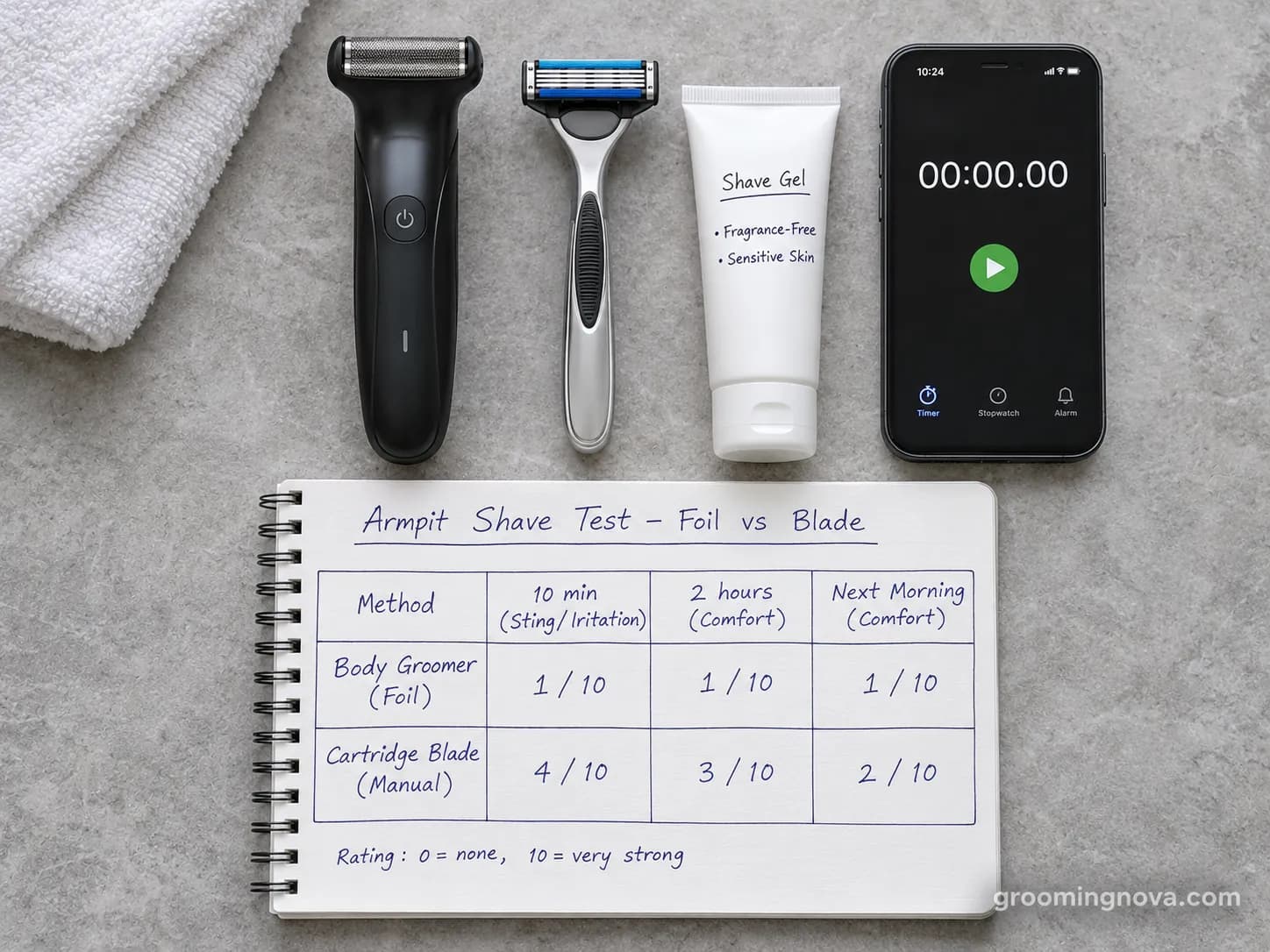
The second session, with sides swapped, gave the same sting ratings.
Armpit and tool | At 10 minutes (0 to 5) | At 2 hours (0 to 5) | Next morning (0 to 5) | Nicks |
|---|---|---|---|---|
Foil head, shaved dry | 1 | 0 | 0 | 0 |
SkinGuard blade, with gel | 3 | 1 | 0 | 0 |
The blade side stung more for the first couple of hours. Both sides were back to 0 by the next morning, and neither had a nick.
That fits Cleveland Clinic's ingrown hair advice to use an electric shaver, held just above the skin, when ingrown hairs are a problem.
For a man who shaves his armpits for the gym or sport, the foil head was the gentler tool on my skin, not a cure.
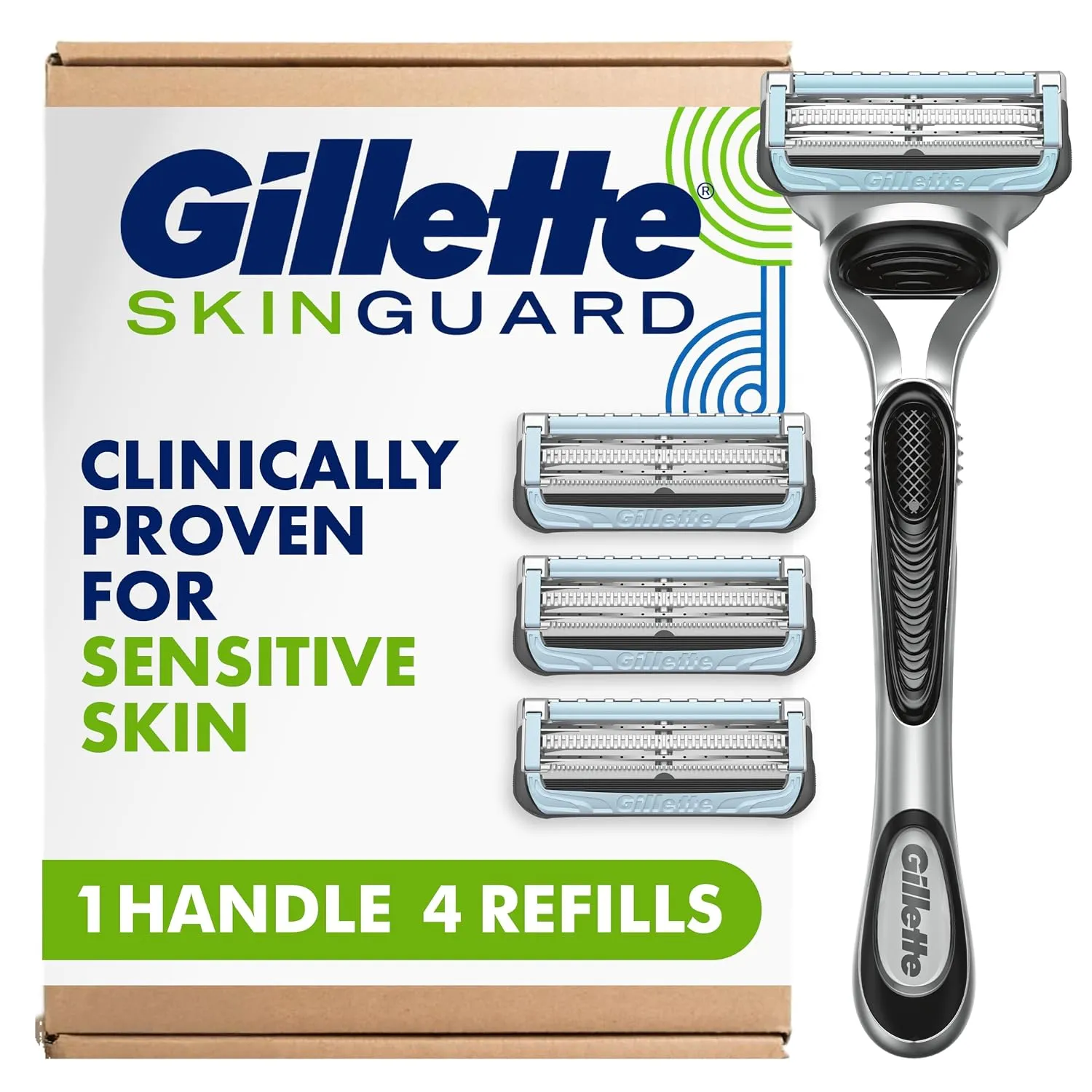
by Gillette
Check Price (opens in a new tab)In Stock · Amazon
Pros
- No nicks on either armpit in my split-side sessions
- Sting gone by the next morning
Cons
- Stung more than the foil head for the first couple of hours
- Needs shave gel: never shave dry with a blade
As an Amazon Associate, Grooming Nova earns from qualifying purchases.
These logs are one man's two armpits over two split-side sessions per test. Sting is rated by feel from 0 to 5, where 5 is burning that disrupts movement or sleep.
Skin, hair and products differ, so they show what changed for me, not how often it happens to others.
The medical points on this page come from Cleveland Clinic, Mayo Clinic and the American Academy of Dermatology, not from my tests.
Shave your armpits with less pain next time
Trim long underarm hair first, then shave lightly with short strokes the way each patch grows, or switch to an electric foil shaver.
You need a fresh blade with shave gel or a foil shaver, and a trimmer or body groomer when the hair is long. Wait until the skin from the last shave has healed, and skip another day if it's still tender.
Shave right after a warm shower, while the skin is moist and soft.
Cleveland Clinic warns that shaving against the direction of growth can lead to inflammation, so work through the shave in this order.
Trim long hair short first, the advice Gillette's manscaping guide gives before shaving the groin.
With a blade, spread shave gel over the armpit, because dry blade shaving can cause razor burn (a dry foil shaver needs none).
Check which way the hair lies in each patch; that direction answers whether to shave up or down.
Shave each patch in its direction with short, light strokes (with a blade, one pass per patch).
Rinse with cool water.
Pat the armpit dry.
Finish with the same plain moisturizer from the calming steps.
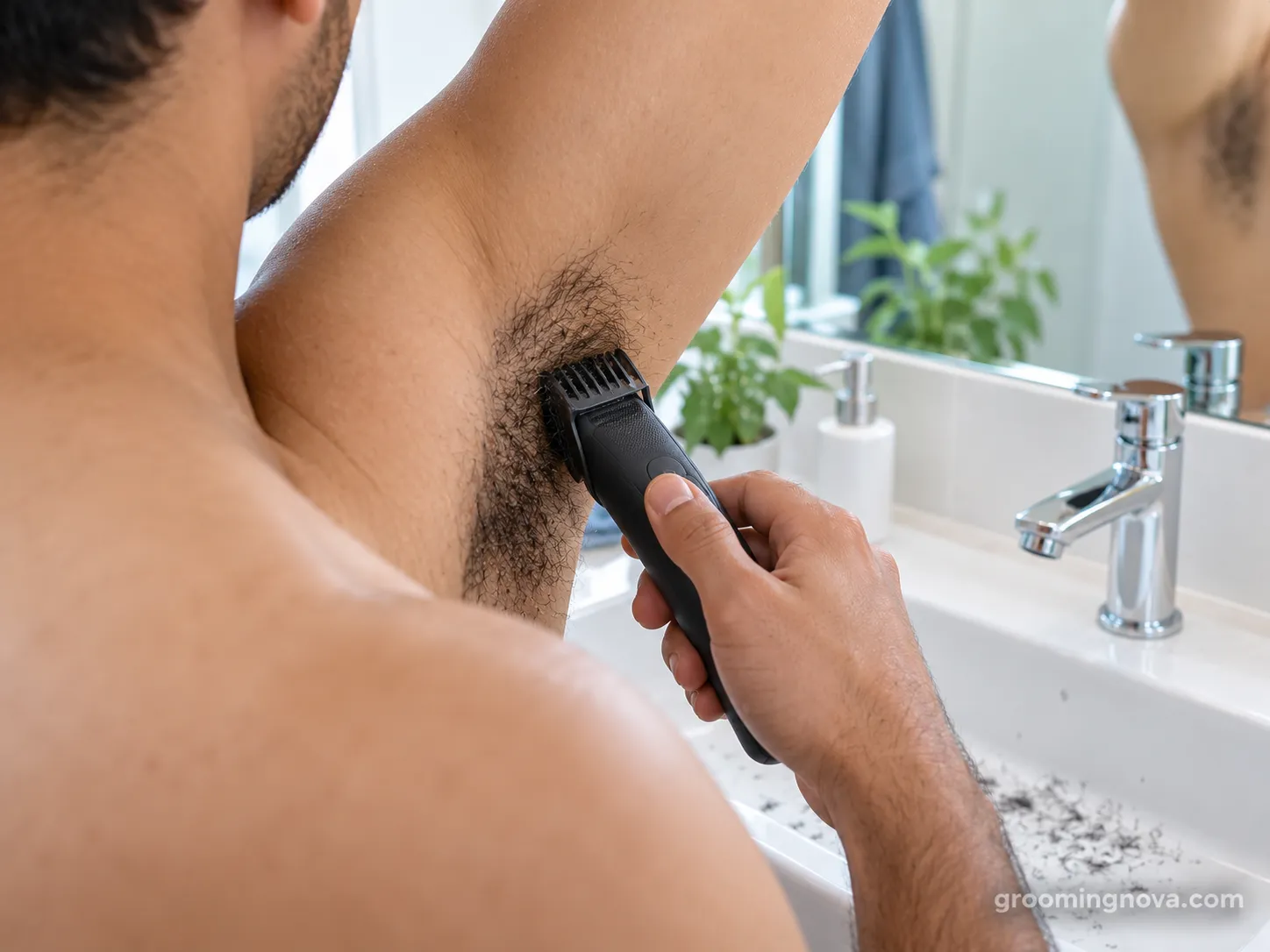
An electric foil shaver or body groomer works dry with no cream, which a blade never should.
It's also the tool suggested for skin prone to ingrown hairs, and it stung less in my log above.
The American Academy of Dermatology's shaving tips call for a new blade, or a new disposable razor, after 5 to 7 shaves to minimize irritation.
A body groomer or foil shaver is optional: the routine works with a fresh blade, and short hair needs no trim first.
If you get razor burn whatever you do, Cleveland Clinic's razor burn page points to waxing instead. Keeping the hair trimmed and skipping the shave works too.
For a step-by-step men's version, with growth directions mapped and tips to avoid darkening, follow the full trim-first armpit routine.
Signs your underarm pain is not just the shave
Razor burn should clear within a few days, so longer pain, pus, a fever or a swollen lymph node points to more than the shave.
Call a healthcare provider if you notice any of these signs, drawn from Cleveland Clinic and Mayo Clinic's swollen lymph node guide:
Razor burn that hasn't gone on its own within a few days, or that looks infected
Large, painful spots that may hold a pocket of pus
A swollen lymph node in your armpit, one of Mayo Clinic's reasons to get checked
A node that keeps growing or has been swollen for 2 to 4 weeks
A node that feels hard or rubbery, or doesn't move when you push on it
Swollen nodes that come with fever, night sweats or weight loss
An ache with no rash, especially after lifting or a hard workout, may be a strained muscle rather than the shave.
WebMD's armpit pain guide links strained muscles there to heavy lifting and repeated movements.
There's a separate guide on how long underarm soreness should last and on pain that has nothing to do with the shave.
A new lump under your arm has its own guide too, covering which lumps shaving can cause and when to get one checked.
Armpit pain after a shave is easier to fix once you know which kind it is.
Cool razor burn and leave it alone, wait out the sting before deodorant, and let regrowth settle without a blade.
Next time, trim first and shave lightly with the grain, or switch to a foil shaver.
Summarize with AI
Keep reading
Related articles
 Technique & How-To
How to shave pubic hair with clippers for men: which guard to start on, where the guard stays on, the steps in order and how to clean the clipper after.
 Technique & How-To
How to use coconut oil to shave pubic hair as a man: melt a thin layer on wet skin, shave with the grain, keep the trimmer dry and wash the oil off.
 Technique & How-To
Sensitive skin after shaving is most likely razor burn. Tell it from bumps and hives, calm it in 24 hours, and see if dry or wet electric shaving suits you.
 Styles, Shapes & Length Guides
Trim your beard dry so it dries even; wet hair stretches then shrinks. Go wet only for a razor lineup in the shower, plus wash and comb order.
Comments
Moderated for quality. Share a correction, ask a follow-up, or tell us what worked for you - every comment is reviewed before it goes live.