
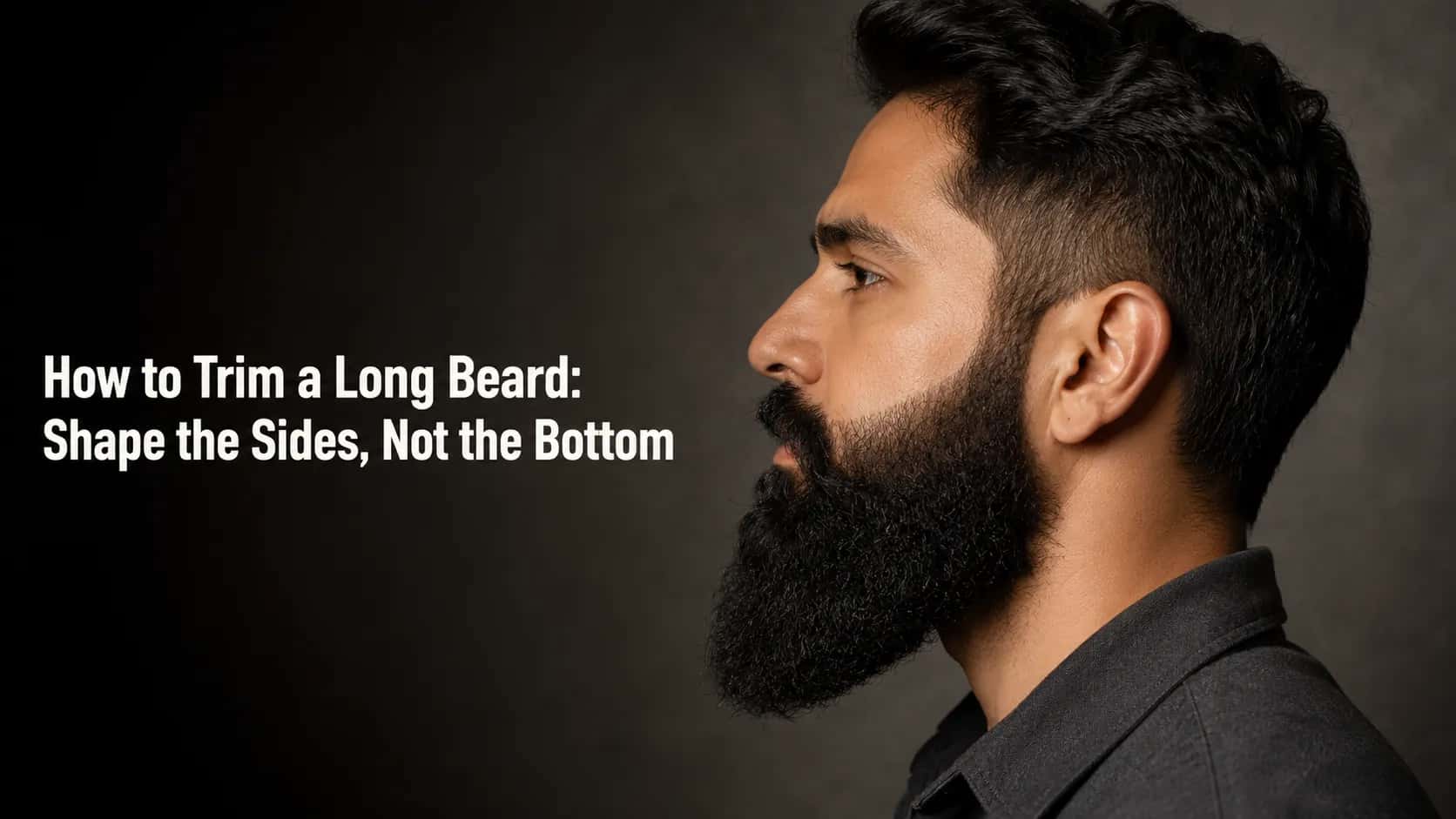
How to Trim a Long Beard: Shape the Sides, Not the Bottom
Trim a long beard like a barber: taper the sides a guard shorter than the chin, scissors-over-comb the bottom, and keep every inch of length you grew.
Written by Andre ColemanReviewed by Russell Hartley
Last updated on July 14, 2026
When you buy through links on our site, we may earn an affiliate commission (at no extra charge), which we use to fund new product tests. Learn more.
Summarize with AI
Most men trim a long beard like it is a big short beard, and that is exactly why it ends up looking bushy or boxy. The fix is counterintuitive: you shape a long beard on the sides, not the bottom.
Take the cheeks a single guard shorter than the chin and the length you spent months growing suddenly reads as intentional. I learned this trimming my own five-inch beard, and it is the one move that separates a barber-finished long beard from a wild one. This guide is the freehand method a barber uses, written for a finished long or full beard, not a grow-out and not a reduction to short.
The 5-Step Long-Beard Method (Start Here)
To trim a long beard, work in five ordered steps: wash and blow-dry it straight, taper the sides a guard shorter than the chin, scissors-over-comb the bottom, even out any lopsided side, then clean the neck and cheek lines and finish the mustache. The rule that governs all five is simple and definitive: shape the sides, not the bottom. Cutting the bottom only makes the beard shorter, while tapering the sides is what makes it look groomed at the same length. This is the route long-beard owners want from the master beard-trimming guide.
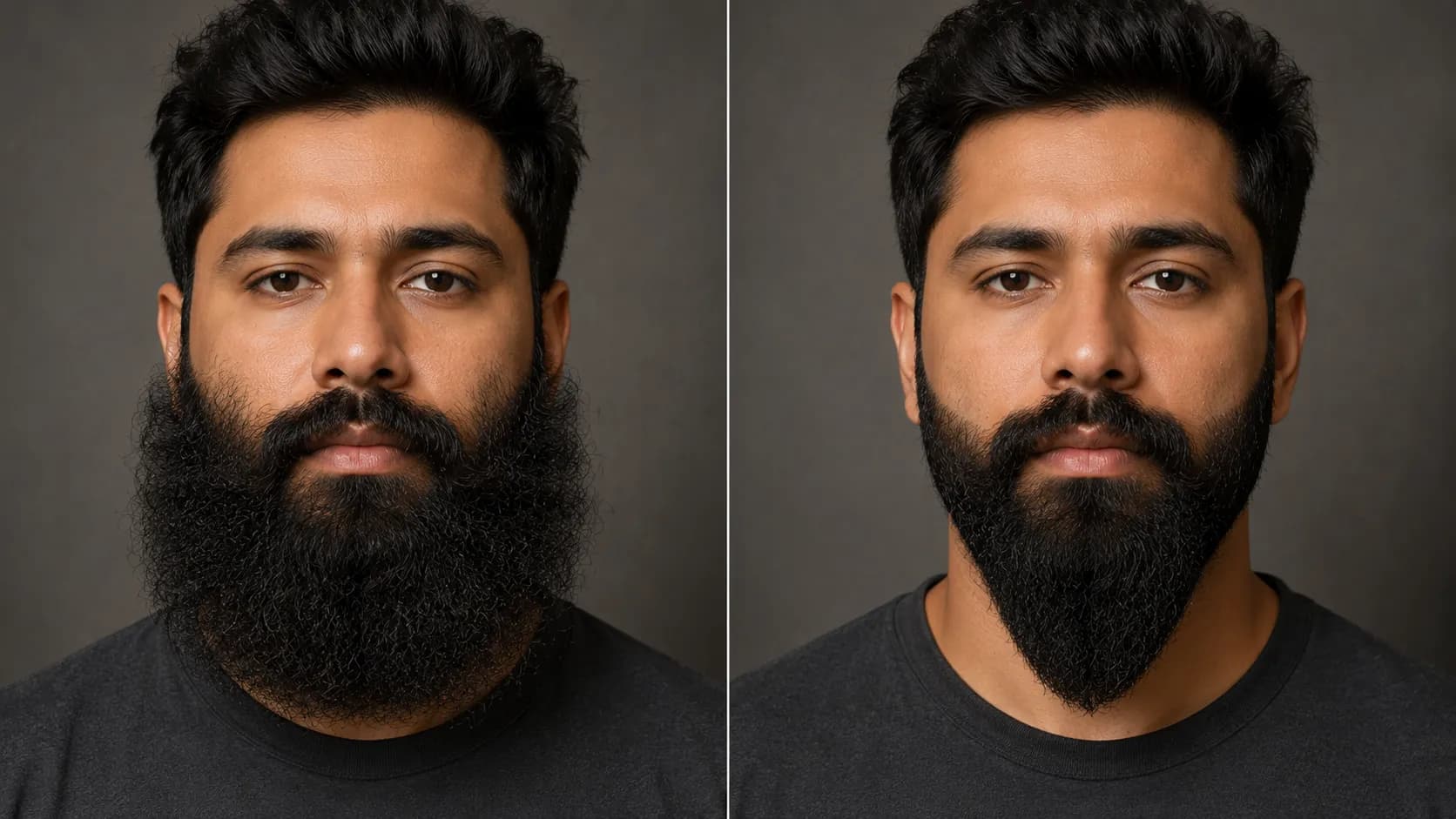
When I ran this method on my own beard, the round look was gone after the first taper pass, before I had touched the bottom at all. Below, each step is broken out with what you should see as you go.
What You'll Need to Trim a Long Beard
Trimming a long beard well needs five tools, not one: a long-beard trimmer with a dial or guards reaching roughly 20 mm, a pair of barber shears, a wide-tooth comb, a blow-dryer, and a hand mirror for the back line. The split between tools matters. Clippers handle bulk and the taper, while scissors take length off without thinning density, which is why beardsmen growing length lean on shears. According to Beard Gains, scissors let you remove length while keeping thickness, the opposite of what a guard does.
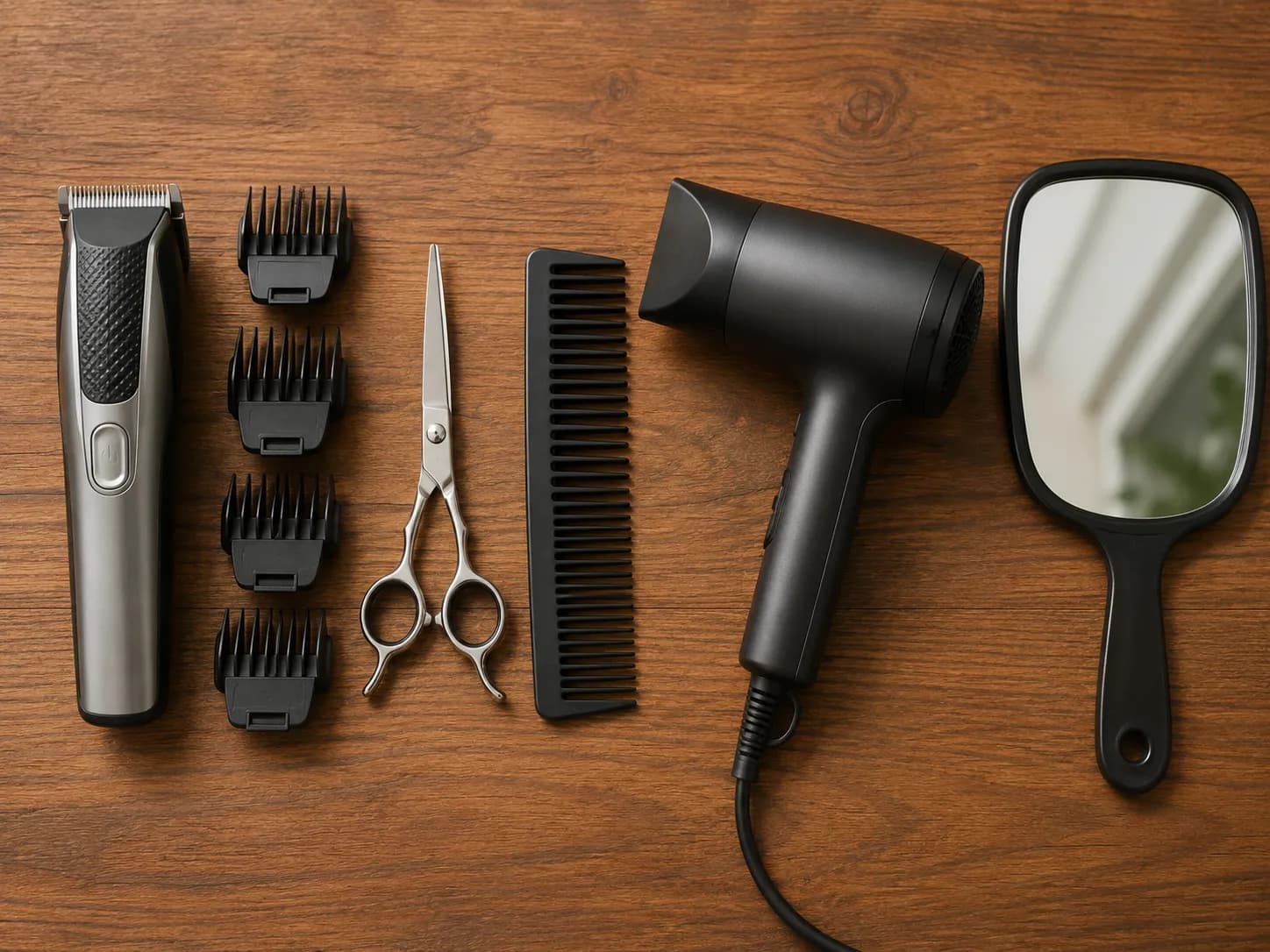
My wide-tooth comb caught tangles a fine comb skated straight over, and that is what let the trimmer ride flat instead of snagging. The hand mirror is not optional on a long beard either, because you cannot judge the back line by feel.
The one-line tool verdict: clippers taper the sides, scissors shorten the bottom and dust the ends, the comb and blow-dryer set the beard up so both cut accurately.
Wash, Blow-Dry Straight and Comb It Out
Before any cut, wash the beard, blow-dry it straight on low heat, and comb it out in the direction of growth so every hair sits where it grows. Trim a long beard dry, not wet. Wet hair stretches and sits longer than it really is, so cutting wet means cutting more than you meant to. Live Bearded makes the same point about trimming dry to see true length. Braun argues instead for washing and drying first, because hair lying in its growth direction makes uneven areas easier to spot. Blow-drying straight, then trimming dry, gets you both at once.
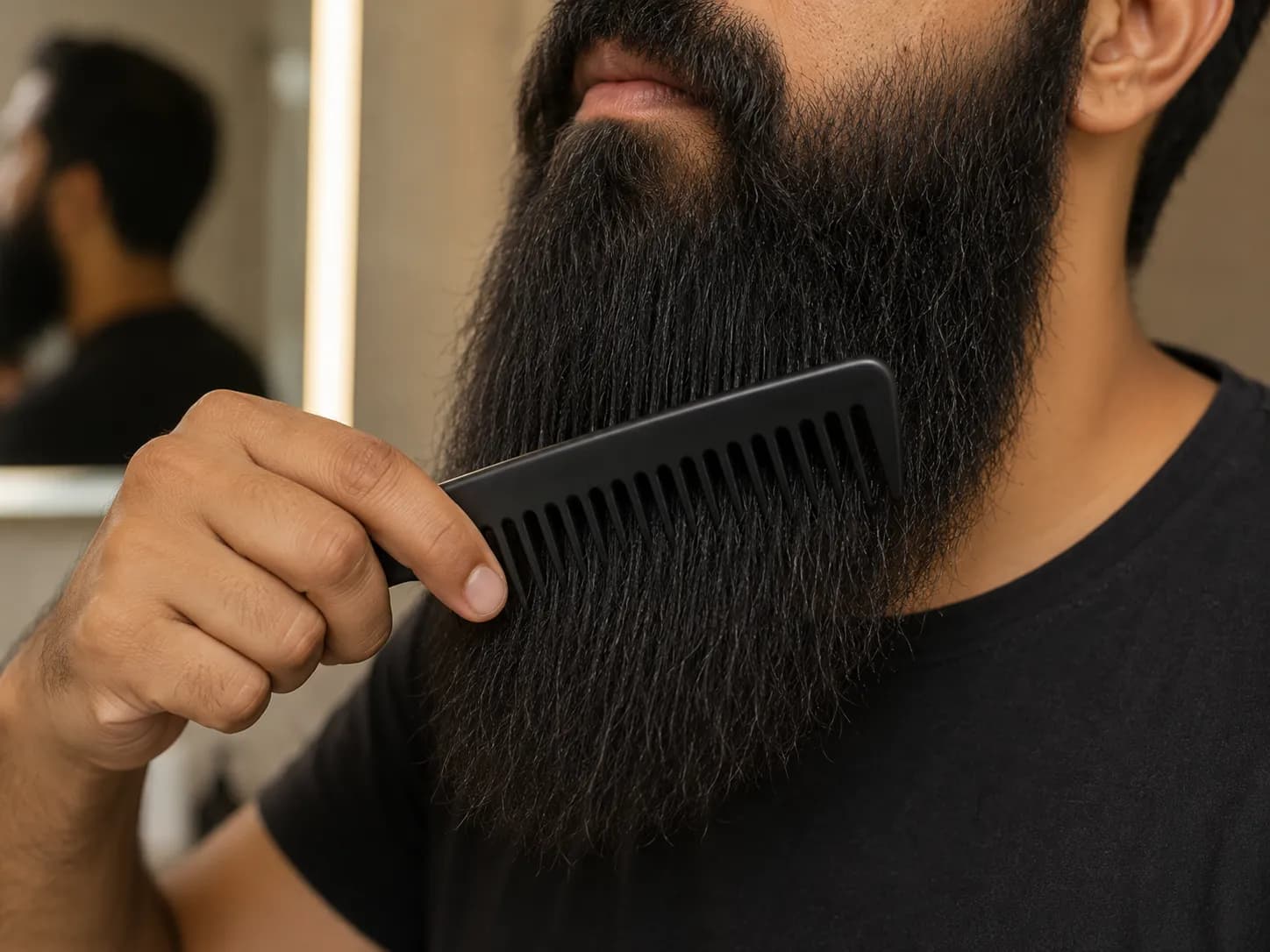
Blow-drying straight on low for about ninety seconds showed me three stray hairs the wet beard had hidden completely. Comb downward first, then against the grain once to find knots, then downward again to settle it.
Wet or dry? The honest trade-off. A wet beard sits longer than a dry one, so cut it wet and you will take off more than you planned. Blow-drying it straight and dry is the compromise that gives you a straightened beard and its true length in one move.
Taper the Sides (Shape the Sides, Not the Bottom)
The taper is the load-bearing step: take the sides of a long beard one guard shorter than the chin, float the clipper freehand with the grain, and the beard reads as a shaped triangle instead of a bush. On my beard the chin stayed freehand-long while the sides came down to a number four, roughly 13 mm, and that single contrast did more than any amount of bottom-trimming could. According to Church Barber, floating the clipper freehand with the grain produces a more graduated taper than locking it to one fixed setting. Wahl adds that you should debulk the interior before you touch the edges.
Boxy or rounded? Shape the sides, not the bottom.
A long beard goes wrong in one of two ways: left fully square it looks boxy, left fully round it looks like a bush. Both happen because the sides are as long as the chin. Tapering the sides shorter is what gives the beard a deliberate shape, whichever finish you want.
Work the taper in order:
Debulk the sidewalls with the grain at one guard shorter than your chin length. You should see the sides sit visibly tighter against the face while the chin stays full.
Float the clipper freehand to feather the taper so there is no hard shelf where the short sides meet the longer chin. The line between them should look like a gradient, not a step.
Brace your trimmer hand against your jaw so the clipper cannot dip into the beard. Supporting my hand this way stopped the dip that took a chunk out of my side the last time I rushed it.
Comb the side out and re-check before a second pass. Take less than you think, because a second pass is free and an over-cut side is not.
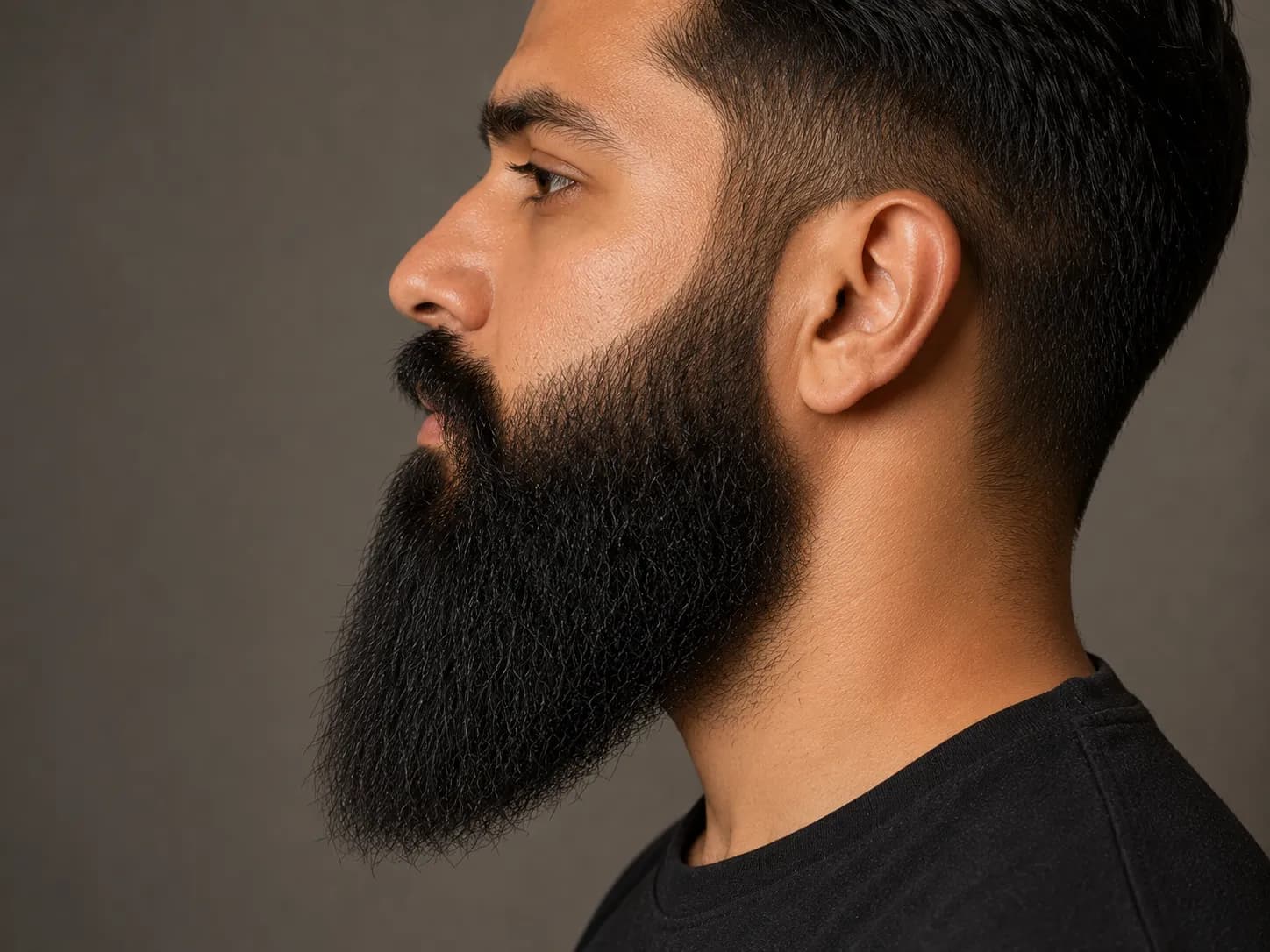
Use one guard shorter than the chin as your starting pairing, then adjust to taste.
If your chin sits at | Take the sides to | Approximate side length |
|---|---|---|
Freehand long (over 20 mm) | Number six | 19 mm |
Number six (19 mm) | Number four | 13 mm |
Number four (13 mm) | Number three | 10 mm |
If you would rather the sides fade into the cheek instead of stepping down, that is the taper-and-fade method in its own right.
Freehand is fast but unforgiving. Floating the clipper with no guard lets you shape a long beard the way a barber does, but it removes hair quickly and cannot be undone. Go slow, support your hand, and never freehand a beard you cannot afford to lose for the first time on a rushed morning.
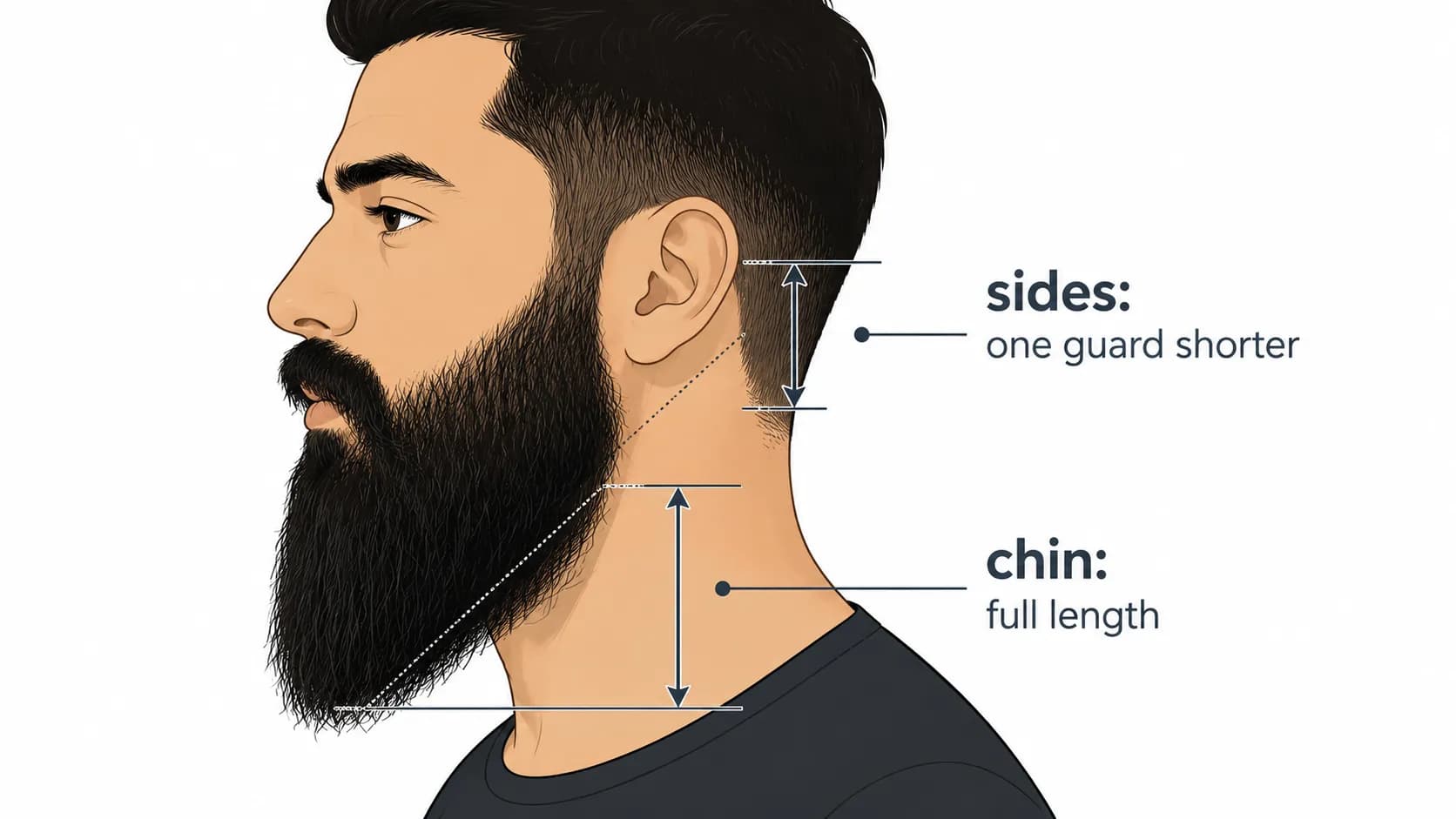
Scissors-Over-Comb the Bottom
To shorten the bottom of a long beard without losing density, use scissors over a comb rather than clippers: comb a section out and away, then snip only the hairs that pass the comb's teeth. This is the hedge model, where you keep the bulk and take off the strays. Clippers would carve a flat shelf across the beard floor, but Beard Gains notes that scissors take length while preserving thickness, which is exactly what a long beard needs. It is also how you go shorter while staying long, reducing bulk without becoming a short beard.
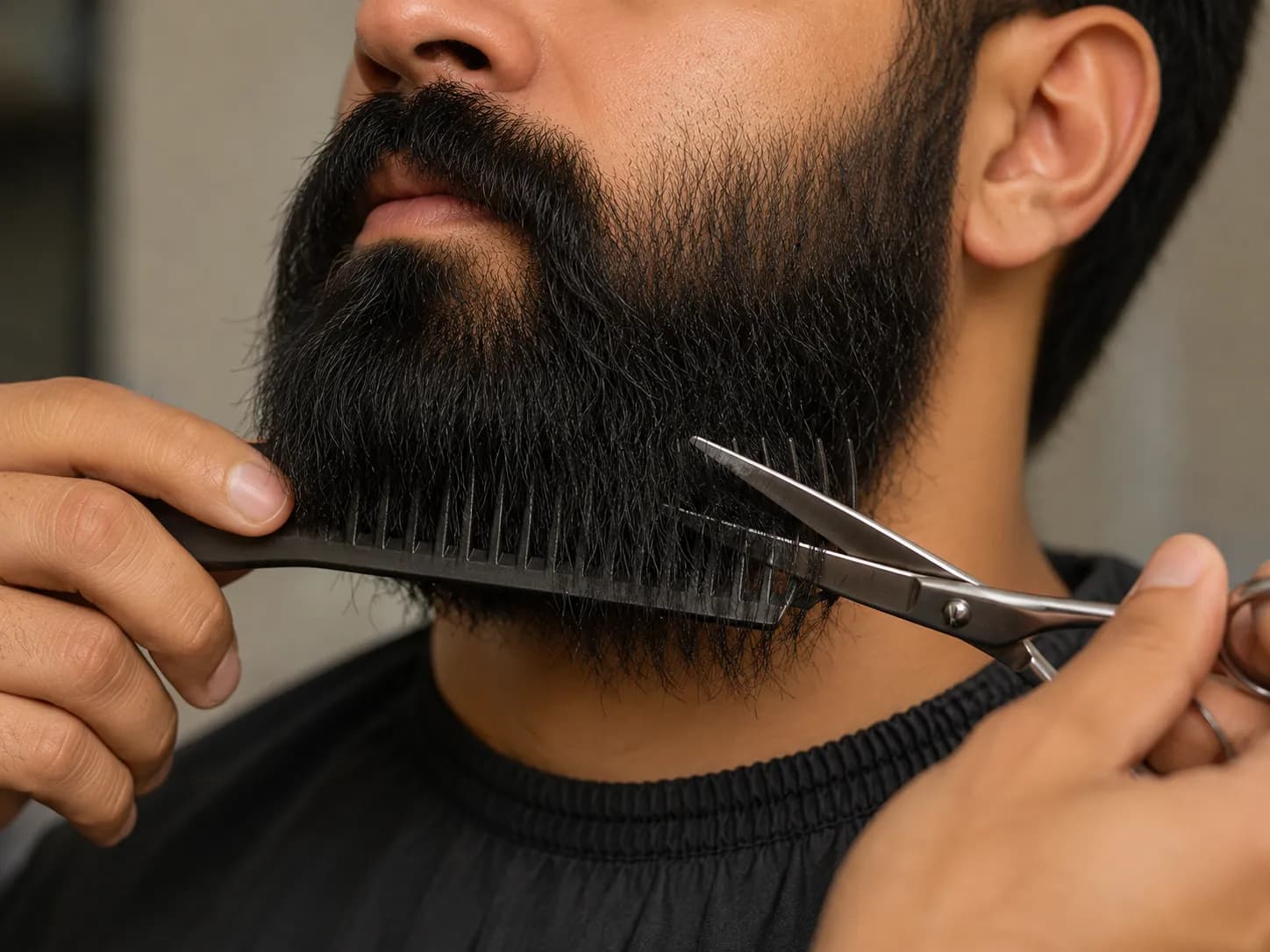
Scissors-over-comb took roughly half an inch off my beard floor without thinning it, where a clipper pass would have left a blunt line. Keep the shear tips pointing into the beard, not flat across it, and re-comb between every pass. For the full no-clippers approach, here is how to finish a long beard with scissors start to end.
Scissors are slower, and that is the point. Comb-and-snip takes more passes than a clipper guard, but it is far harder to ruin a beard with it. Rushing the floor is the one way to leave it jagged, so work in small sections.
Even Out the Sides and Fix a Lopsided Beard
To even out a long beard, comb both sides straight down, compare them in a mirror at eye level, and trim only the longer side. The discipline that saves the beard is resisting the urge to even things up by cutting the shorter side too, because that just shortens the whole beard chasing a symmetry you will never quite catch. Use a hand mirror to check the back line and the sideburn connection while you are at it. If unsure which guard matches your chin length when you correct a side, here is the guard-size reference.
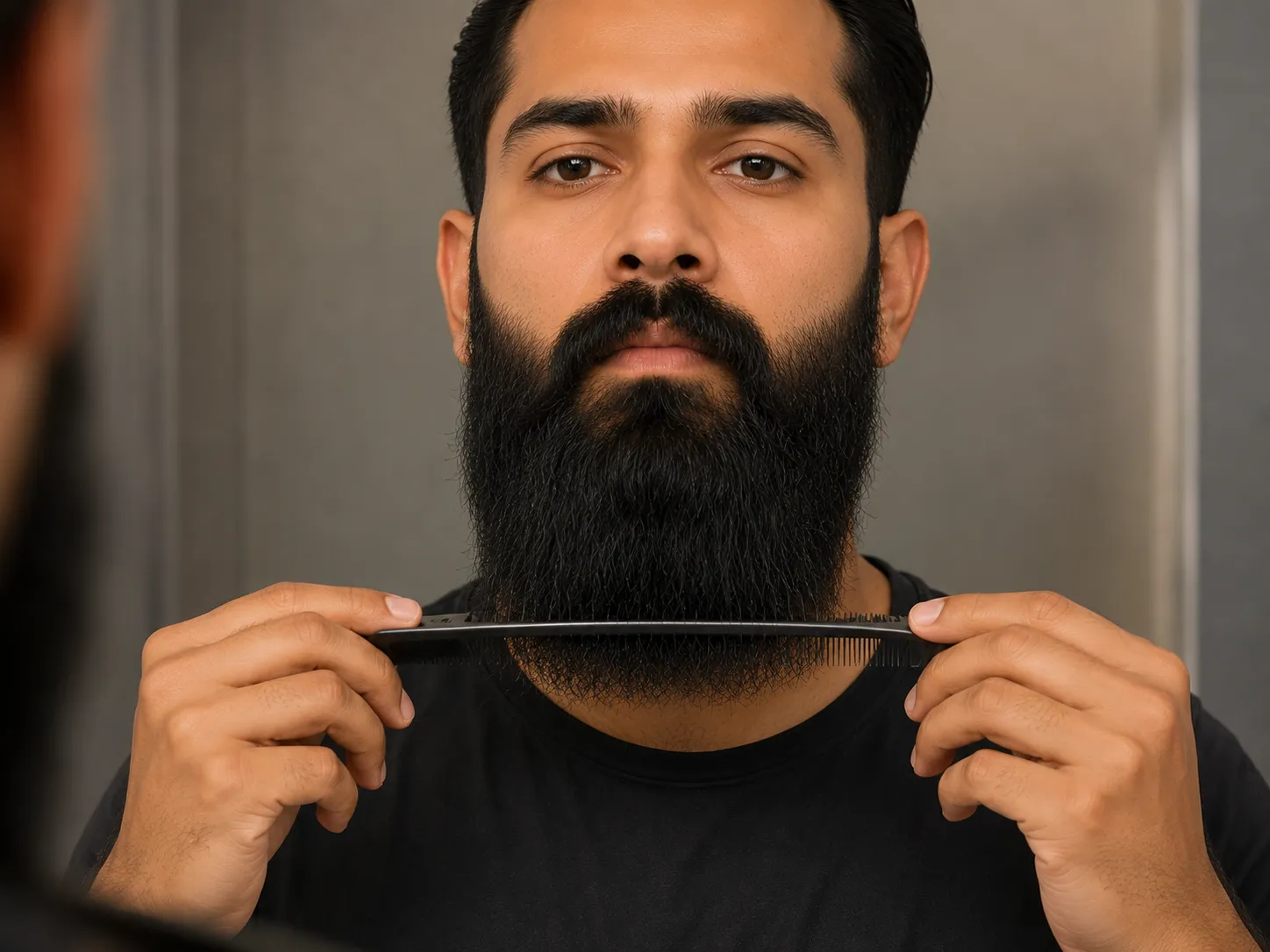
Combing both sides down at eye level, my right side sat a comb-width longer than the left, so I fixed only that side and stopped. The stop-rule matters more than the cut.
When both sides are within a comb's width, you are done. Symmetry on a beard is judged by eye at conversational distance, not under a ruler. Chasing perfect evenness is how men accidentally trim a long beard down to a medium one.
Trim Split Ends and Flyaways (Dusting)
To clear the frizz that makes a long beard look unkempt, dust it: comb the beard out and snip only the frizzed, split tips that splay past the line, taking off fractions of a millimetre. Split ends are not bad luck on a long beard, they are physics. Once a beard reaches length, Beard Gains explains that the sebaceous glands cannot oil the full shaft, so the tips dry out, turn brittle and split. Dull blades make it worse, because stubble + 'stache points out that a dull edge crushes the hair shaft instead of slicing it cleanly.
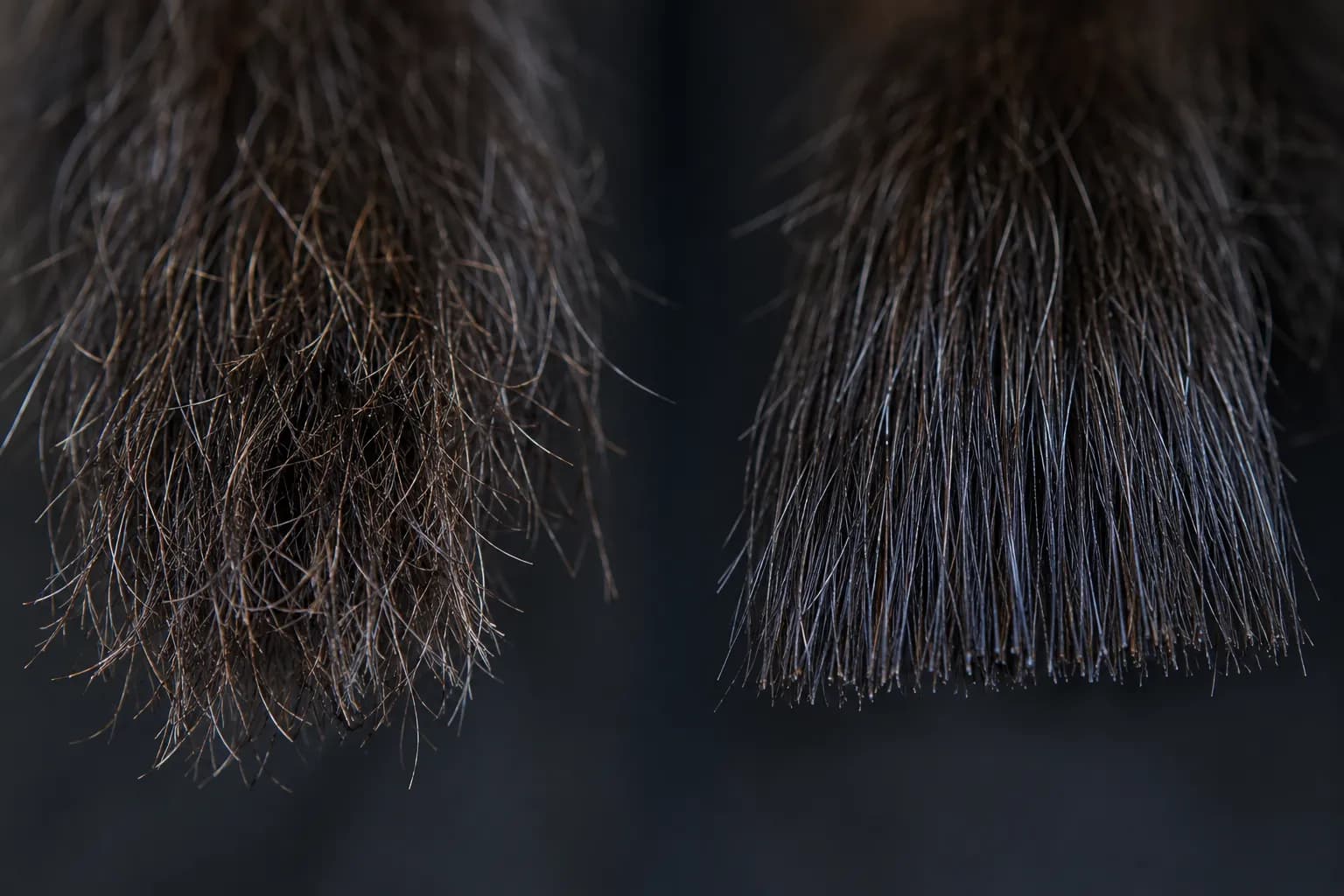
Dusting the split tips with the points of the shears removed the frizz halo without costing me any real length. Two habits keep splits from coming back: oil the mid-lengths and ends, and replace blades once they start crushing rather than cutting. If your blades are dull enough to chew the hair, it is time for a sharper trimmer.
Dusting reduces frizz, it does not cure splits. Snipping the visible damage cleans up the look, but the cause is dryness, so oil and sharp blades are what actually keep a long beard from re-splitting between trims.
Clean Up the Neck and Cheek Lines
A long beard still needs two boundary lines: a neckline set two fingers above the Adam's apple and a light cheek-line tidy. For the neckline, Braun puts the lowest point about two fingers above the Adam's apple, curving up toward the ears in a gentle U. On a long beard the neckline should follow the bottom of the beard rather than sit on the jaw. Keep the cheek line natural, tidying only the strays above the line, because a hard carved cheek edge can look severe under this much length.
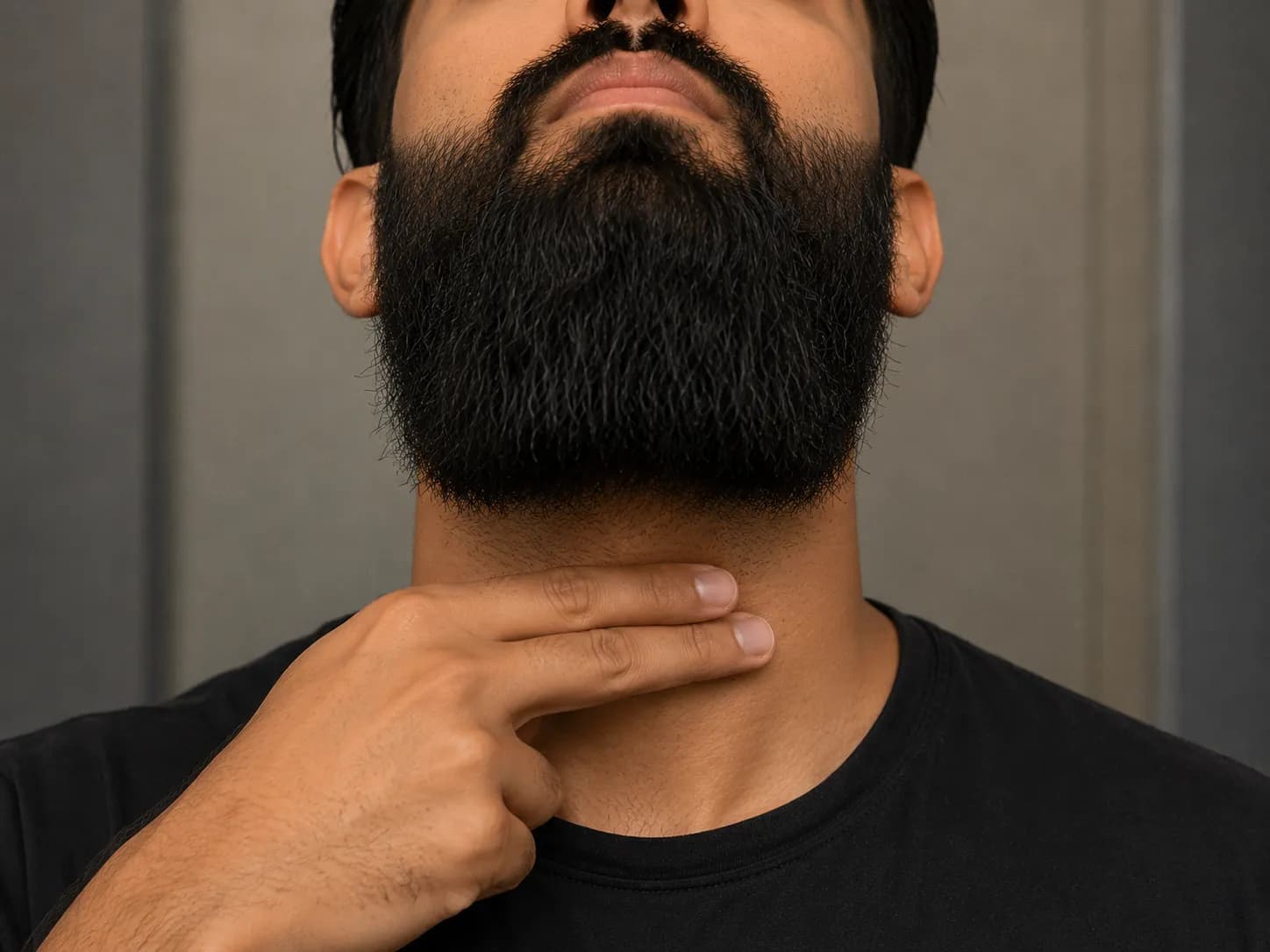
The two-finger neckline plus a light cheek tidy took me about four minutes and squared the whole shape that the taper had set up. If you are not at full length yet and are still growing it out, keep shaping the lines as it grows rather than waiting.
Full Beard vs Long Beard (Plus the Mustache)
A full beard and a long beard are not different jobs: a full beard means complete coverage and density, a long beard means length, and the same taper-the-sides method shapes both. Live Bearded frames the mustache as a piece that should complement the beard, not compete with it, which is the right way to finish either one. Trim the mustache to just clear the upper lip with scissors or a precision trimmer, keeping it equal to or slightly shorter than the surrounding beard.
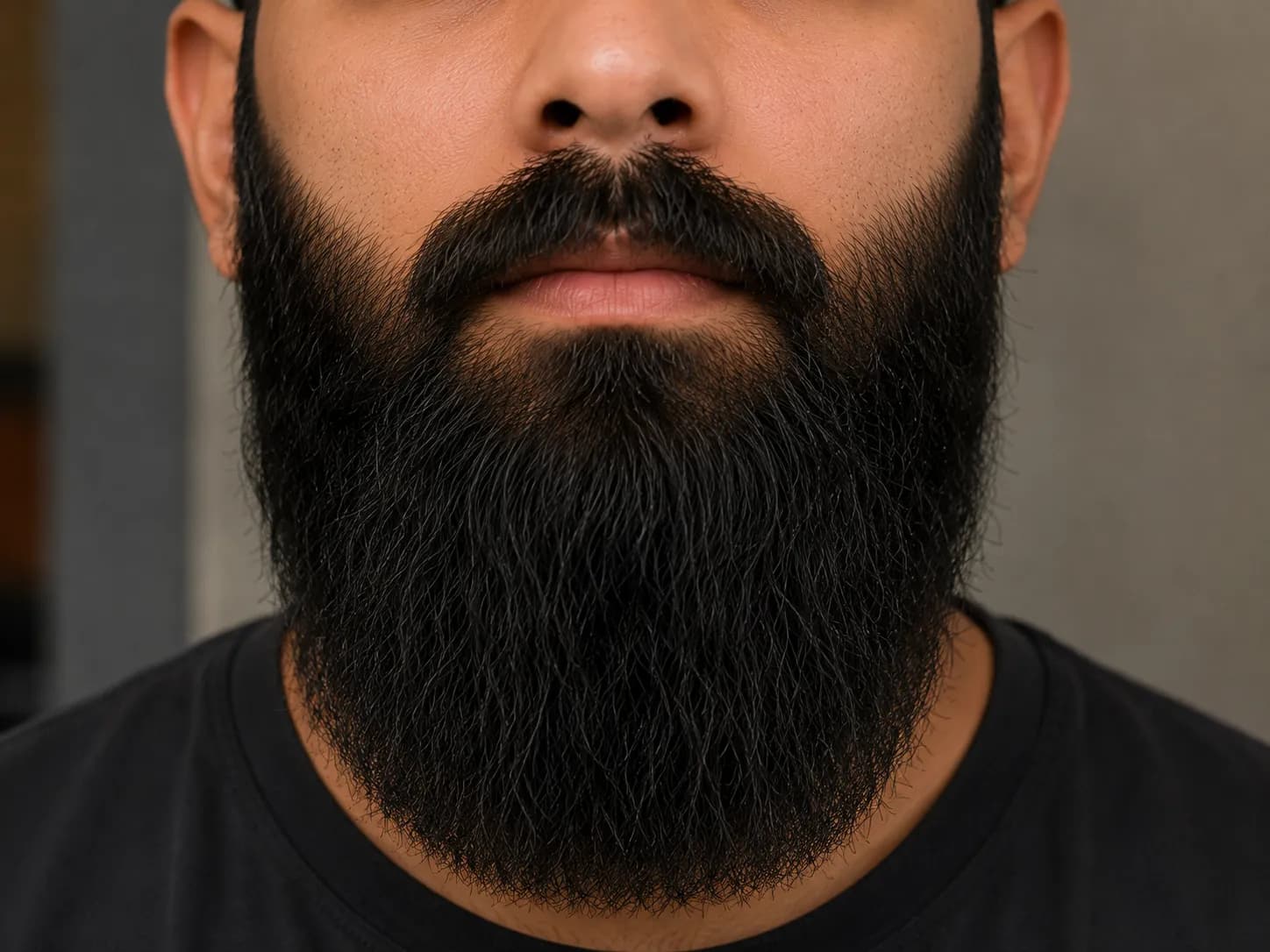
Leaving my mustache a hair shorter than the chin kept it from swallowing my upper lip on a full beard.
Dimension | Full beard | Long beard |
|---|---|---|
Defined by | Full coverage and density, no gaps | Length, roughly one inch and beyond |
Main task | Even the surface, define the lines | Tame the bulk, taper the sides, dust the ends |
Same method here? | Yes | Yes |
The two labels are a spectrum, not a hard category, and most long beards are also full beards.
Long-Beard Trimming FAQs
How often should you trim a long beard?
Trim a long beard for shape every seven to ten days, and dust split ends as you spot them. On a seven-day cadence my beard only needed dusting and a side touch-up rather than a full re-trim. Cadence varies with growth rate, so treat seven to ten days as a starting point, not a rule.
Should you trim a long beard wet or dry?
Trim a long beard dry, after blow-drying it straight. Wet hair sits longer than it really is, so cutting wet removes more than you intend. Blow-drying straight first gives you the straightened beard and its true length together.
Should you use scissors or clippers on a long beard?
Use both, for different jobs. Clippers taper the sides and debulk, while scissors shorten the bottom and dust split ends without thinning density. That division is the whole method in one line.
How do you stop a long beard looking bushy or round?
Taper the sides a guard shorter than the chin. The bushy and round looks both come from leaving the sides as long as the chin, so shaping the sides shorter is the single fix.
How do you fix split ends without losing length?
Dust them: snip only the frizzed tips, taking off fractions of a millimetre with sharp shears. Then oil the ends and keep your blades sharp so the splits do not return.
How do you trim a long beard without ruining it?
Work in small passes, comb between every pass, and never freehand blind on a rushed morning your first time. Take less than you think, because you cannot un-cut a beard you grew for months.
Week | What the beard needed |
|---|---|
Week 1 (full trim) | Wash, taper the sides, scissors-over-comb the bottom, set the lines |
Week 2 | Dust split ends, light side touch-up |
Week 3 | Comb-check only, no cut |
Week 4 | Dust ends, tidy the neckline |
A long beard is the rare grooming project where doing less, more carefully, beats doing more. Shape the sides a guard shorter than the chin, let scissors handle the bottom, and the length you worked months to grow finally looks like you meant it. Keep to a light seven-to-ten-day rhythm and the same beard that once looked wild stays barber-sharp with only a few minutes of upkeep.
Summarize with AI
Keep reading
Related articles
 Styles, Shapes & Length Guides
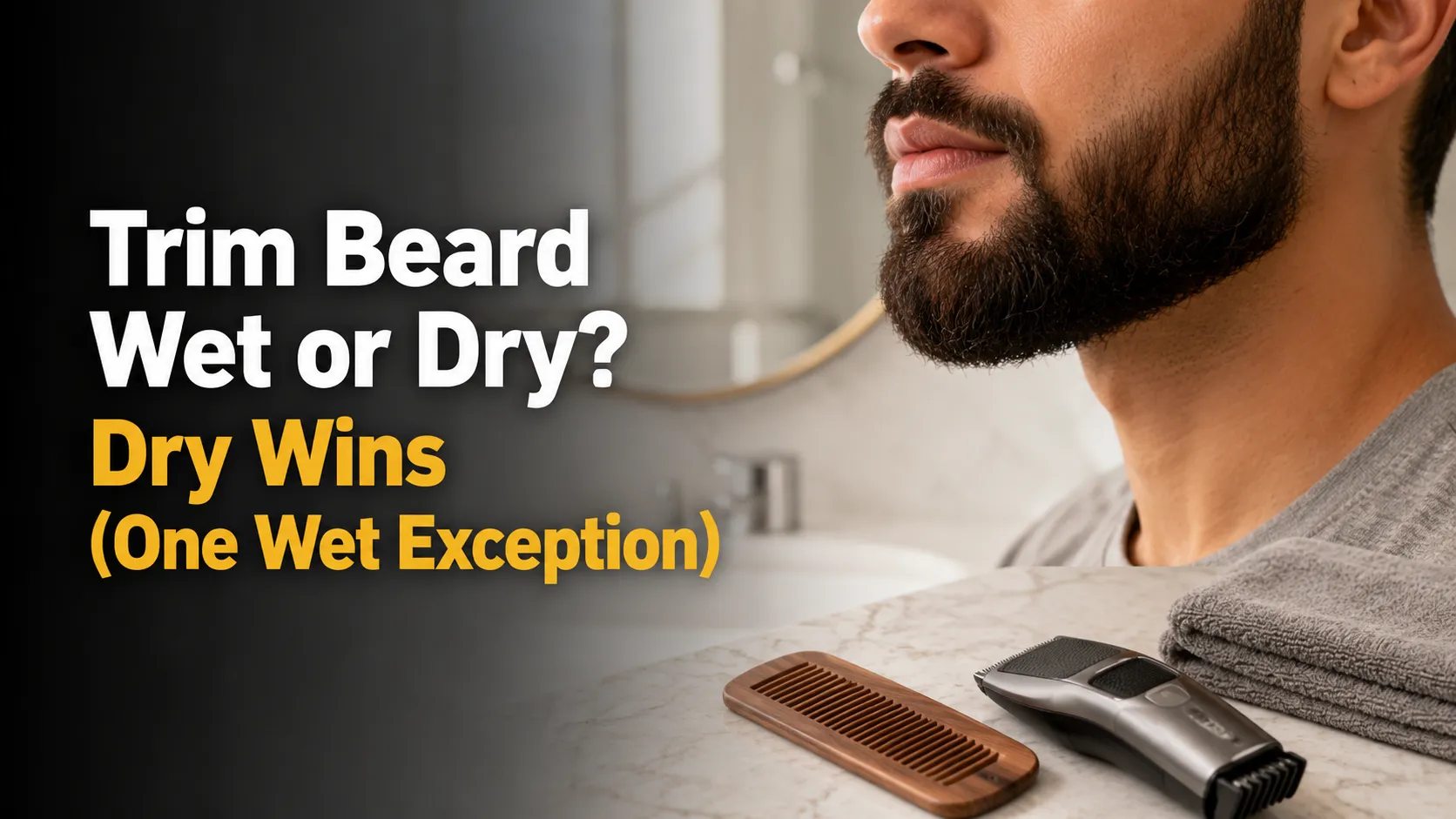
Trim your beard dry so it dries even; wet hair stretches then shrinks. Go wet only for a razor lineup in the shower, plus wash and comb order.
 Styles, Shapes & Length Guides
Taper your beard at home with the 4-guard step-down method - drop one guard at a time for a clean low, mid, or high gradient without bowl-beard lines.
 Styles, Shapes & Length Guides
Set your stubble to one even length across three tiers (light, medium, heavy mm), fix the patchy jawline, and learn how often to re-cut for a clean 3-day look.
 Styles, Shapes & Length Guides
Keep the sides short and the chin long — the opposite of a haircut — to slim a round face. A barber-reviewed shaping guide by face shape, with before/after.
Comments
Moderated for quality. Share a correction, ask a follow-up, or tell us what worked for you - every comment is reviewed before it goes live.