
How to Shape a Beard for a Round Face (Do the Opposite)
Keep the sides short and the chin long — the opposite of a haircut — to slim a round face. A barber-reviewed shaping guide by face shape, with before/after.
Written by Andre ColemanReviewed by Russell Hartley
Last updated on July 22, 2026
When you buy through links on our site, we may earn an affiliate commission (at no extra charge), which we use to fund new product tests. Learn more.
Summarize with AI
Grow a beard to hide a round face and most men do the one thing that makes it worse. They let the cheeks fill in and round off the bottom, drawing a soft circle right around their own head.
The fix is counterintuitive. For a round face, your beard should do the opposite of a haircut.
To shape a beard for a round face, keep the sides short and the chin longer than the sides, drop the cheek line low and straight, and clean up the neckline. That adds vertical length and strips away width, so a round face reads leaner and more angular instead of wider.
So does a beard suit a round face? Yes, as long as it is shaped for length rather than width.
The catch is that the same beard can make your face look thinner or fatter depending on where you leave the bulk.
The first time I took a round-face model's cheeks down two guard sizes below his chin, his jaw looked sharper in the mirror before I had even touched the neckline.
How to Tell If You Have a Round Face
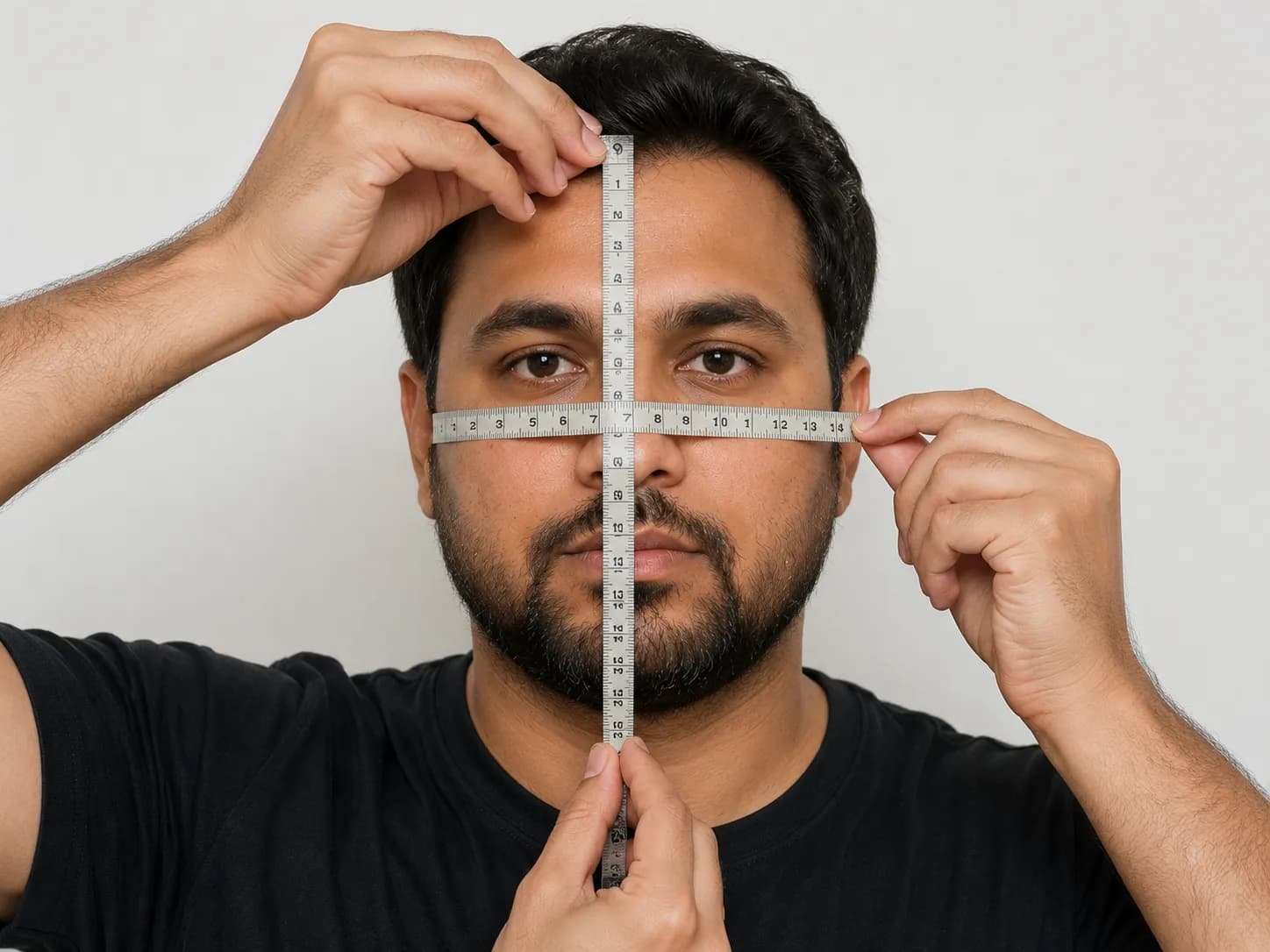
A round face is nearly as wide as it is long, with soft, curved features, full cheeks, and a jaw that shows little angular definition. To confirm it, measure the width across your cheekbones and the length from hairline to chin. When those two numbers land close together, your face reads round, and the whole slimming method below applies to you.
According to a grooming guide at The Manual, a round face runs roughly as wide as it is long, with soft features and a jaw close in width to the cheekbones. That similar-width jaw is exactly what the beard is going to fake into something sharper.
In our studio test the model measured 15.2 cm across the cheekbones and 15.8 cm from hairline to chin. Textbook round, and precisely why a full, even beard had been widening him.
One more distinction. A chubby or fat face is not a face shape on its own, but the extra softness at the cheeks and jaw reads as round, so the same short-sides, long-chin approach is the right one.
Face shape | Defining trait | Beard goal |
|---|---|---|
Round | Width and length about equal, soft jaw | Add length: short sides, long chin |
Oval | Slightly longer than wide, balanced | Keep proportion, avoid over-elongating |
Square | Strong wide jaw, angular corners | Soften: rounder, fuller bottom |
Long | Length clearly greater than width | Add width: fuller sides, shorter chin |
The Principle: Your Beard Does the Opposite of Your Haircut
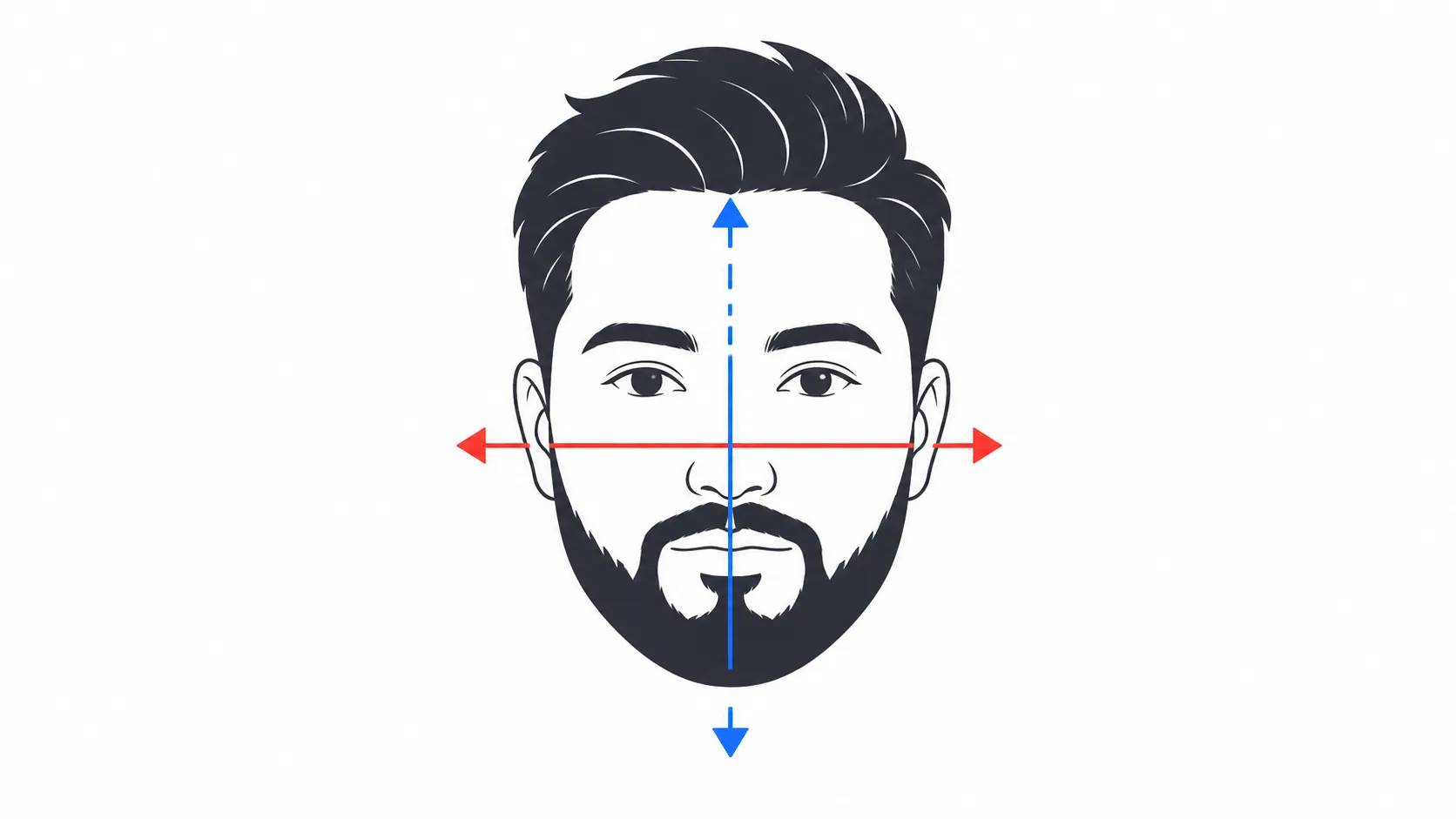
The principle behind shaping a beard for a round face is simple: add length where the face is short and tighten it where the face is wide. Because a round face sits close to a circle, keeping the sides short and the chin long stretches it vertically, and the chin does the heavy lifting.
Vertical lines read longer than horizontal ones of the same size, so a taller-looking beard makes the whole face look leaner. In short, the beard does the opposite of the haircut.
That last part is not just barber folklore. In vision science, a vertical line looks longer than a horizontal line of identical length, an effect documented in peer-reviewed vision research on the vertical-horizontal illusion.
The effect is robust and tied to how the eye scans the visual field, which later eye-tracking work reinforced. Translated to a face, more vertical beard and less horizontal cheek is what tips the read toward slim.
Now picture it against a haircut. On your head you often add width and volume at the sides; below the jaw you want the reverse, height at the chin and restraint at the cheeks.
I tested this on one face two ways, a rounded bottom versus a squared, longer chin. The squared version read visibly narrower in side-by-side photos, even though the beard used the same amount of hair.
This is one face-shape path off the master routine, and the complete beard-trimming guide covers the full wash, comb, and trim sequence around it. With the principle set, here is the exact round-face method.
How to Shape a Beard for a Round or Chubby Face, Step by Step
To shape a beard for a round face, work in order: set the chin longer than the sides, taper the cheeks and sideburns shorter, drop the cheek line low and straight, shape the chin to a soft point or square rather than a round bulge, clean the neckline two fingers above the Adam's apple, and square off the jaw corners for shadow.
Run in that sequence, the same trimmer that used to widen a round face now narrows it. This is how to trim a beard for a round face without guesswork.
Set the length gap. Run a longer guard on the chin and a guard or two shorter on the cheeks and sides. What you should see: the chin clearly outranks the sides in length. If you are unsure which number equals which length, our printable length chart lines guards up against millimetres.
Taper the cheeks and sides. Blend from short at the cheeks up into the sideburns so there is no shelf of hair standing proud. What you should see: no puffy sides bulging out past your cheekbones.
Lower the cheek line. Keep the upper beard boundary low and straight instead of high and flared, because a high, curved line adds width up top. Drop it low and follow the full method to lower your cheek line if you want the exact placement.
Keep the chin longest and shape the bottom. Leave the chin the longest point and finish it to a soft point or a clean square, never a round curve. This is where you square off the jaw and fake a jawline your bone structure does not give you on its own.
Clean the neckline. Trim the neckline to a gentle curve about two fingers above the Adam's apple, and go slowly. According to the American Academy of Dermatology, shaving in the direction the hair grows with a light touch reduces nicks and irritation, which matters most on the soft skin under the jaw.
Square the jaw corners and tighten the sideburns. Take a little off the back corners of the jaw to build shadow, and keep the sideburns close. What you should see: corners, not a smooth round arc from ear to chin.
On our round-face model I ran the chin at a 10 mm guard and the cheeks at 6 mm. Dropping the cheek line about a finger-width below his natural line was the single move that narrowed the mid-face the most.
Zone | Setting | Why it works |
|---|---|---|
Chin (front) | 10 mm guard | Longest point, adds the vertical length |
Cheeks and sides | 6 mm guard | Shorter than the chin, strips the width |
Cheek line | Clean edge, dropped about one finger low | Low, straight boundary slims the mid-face |
Neckline | Clean edge, two fingers above the Adam's apple | Defines the bottom, kills the round jowl |
As the grooming guide at The Manual also notes, starting long and working down keeps you from over-cutting the chin length you actually want to keep. You can always take more off; you cannot put it back this week.
One naming note, because the keyword confuses people: searches for how to shave a beard for a round face almost always mean shaping, not clearing it off. Everything here is trimming and edging, not a full shave.
Safety note: Go slow on the neckline. A neck nicked in a hurry, or a neckline trimmed too high, is the hardest round-face mistake to walk back, because the hair takes weeks to grow in again.
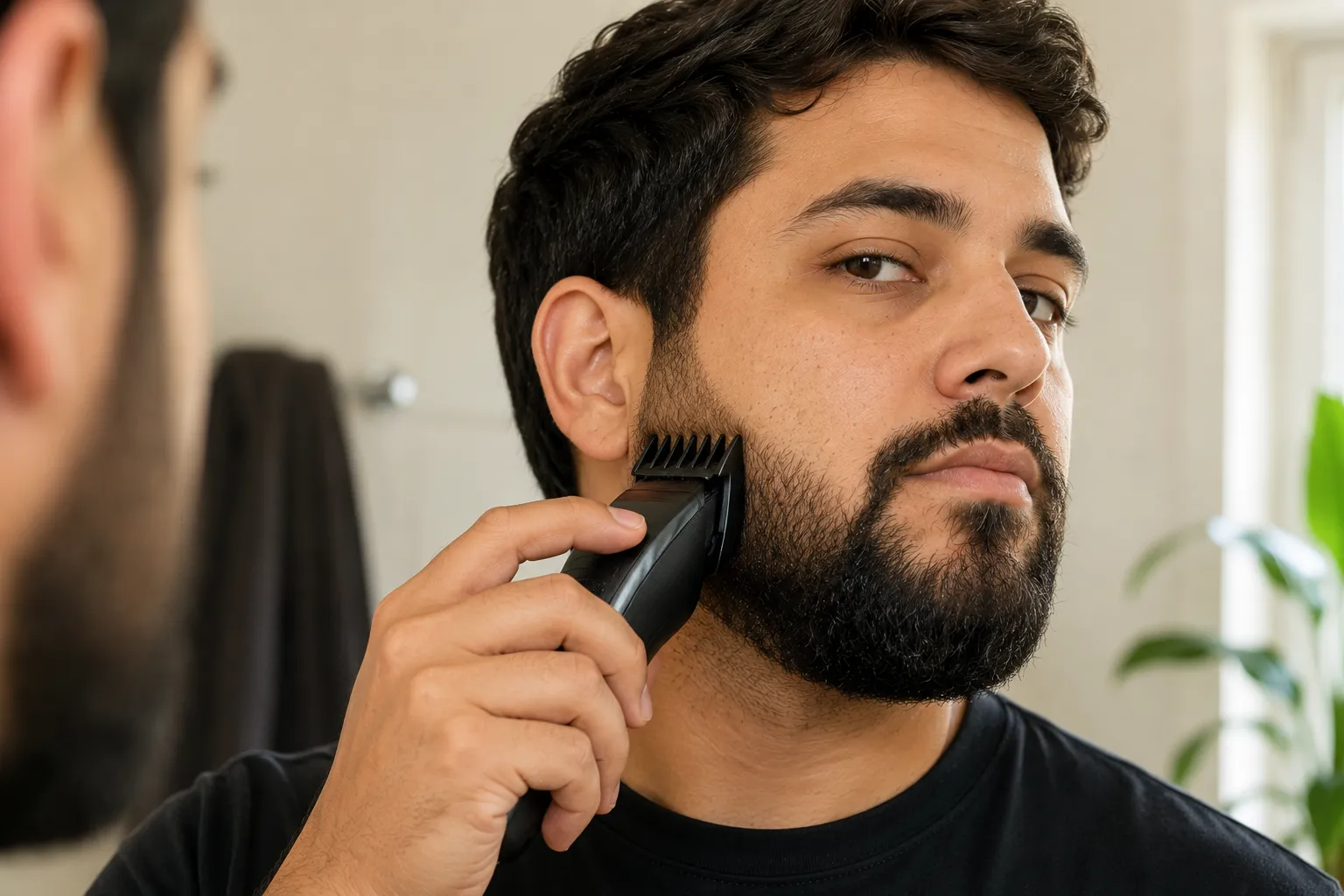
How to Shape a Beard for an Oval Face
An oval face is the most balanced shape, so shaping a beard for an oval face is about keeping proportion rather than correcting it. Knowing how to shape a beard for an oval face mostly means restraint: keep the sides from growing too full and the chin only modestly longer. A short-to-medium beard with a tidy perimeter keeps an oval face from reading longer or wider than it already is.
According to Every Man Jack, an oval face is the most versatile shape and works with most styles kept in proportion. The one guardrail is width.
When I let the sides grow full on our oval-face model, the extra bulk pushed him toward looking square. Keeping the cheeks tidy and the chin only slightly longer put the balance straight back.
So for an oval face, do less: trim the sides so they stay flat to the face, keep a modest chin, and resist the urge to bush it out. Because oval faces suit almost anything, it is worth browsing the beard styles that flatter your face to pick a specific look on top of that base.

Square and Long Faces: Soften or Add Side Volume
For a square face, shape the beard to soften a strong jaw: round the bottom and add a little fullness rather than sharp corners. For a long or oblong face, do the opposite of the round-face method by adding volume at the sides and keeping the chin shorter, so the beard does not stretch the face further.
The same principle runs through all of it, add length where the face is short and width where it is narrow.
That approach lines up with The Beard Struggle, which balances a longer face with added width and warns that styles like the chin strap only stretch it further.
On a long-faced colleague I added side volume and kept the chin short. The very trimmer moves that slim a round face would have made his face look even longer, which is the whole point of inverting the rule.
Face shape | The one move |
|---|---|
Round or chubby | Short sides, long chin, low cheek line |
Oval | Keep it balanced, tidy sides, modest chin |
Square | Soften: rounder, fuller bottom |
Long or oblong | Fuller sides, shorter chin |
If your goal is edge rather than balance, our chin-longer-than-sides build shows how to sharpen your jawline for any face shape. The aim on this page is balance for your own face, not one ideal face everyone should chase.
What to Avoid: Mistakes That Make a Round Face Look Rounder
Most round-face beards fail for the same reason: they add width where the face is already wide. Bushy cheeks, puffy sideburns, and a rounded bottom all widen the face and finish the circle around your head. This is also the core of beard trimming for a fat face, where the softness reads as extra width and these traps hit hardest. Nearly every rounded looking beard traces back to one of the five below.
Why does my beard make my face look fatter?
A beard makes a round face look fatter when it carries its bulk horizontally instead of vertically. Full cheeks and puffy sides literally add width to the widest part of your face, while a rounded bottom completes the circle. The fix is the mirror image: take the cheeks and sideburns short, keep the chin the longest point, and square or point the bottom.
Bushy cheeks. Full cheeks push the widest part of your face wider still. Taper them shorter than the chin.
Puffy sideburns. Puffy sides flare the upper face outward. Keep the sideburns tight and blended into the cheeks.
Rounding the bottom. A round bottom edge completes the circle. Square it or bring it to a soft point instead.
A chin strap with no chin volume. A thin outline with no length just traces your roundness. Add chin length before you thin anything.
The one-length helmet. A single guard all over sits flat and wide like a helmet. Vary the lengths so the chin leads and the sides recede.
The one week I let our model's sideburns puff out, his face measured exactly the same but photographed noticeably wider. That is the classic circle around the head, and the kind of trimmer regret that sends men straight back to the mirror.
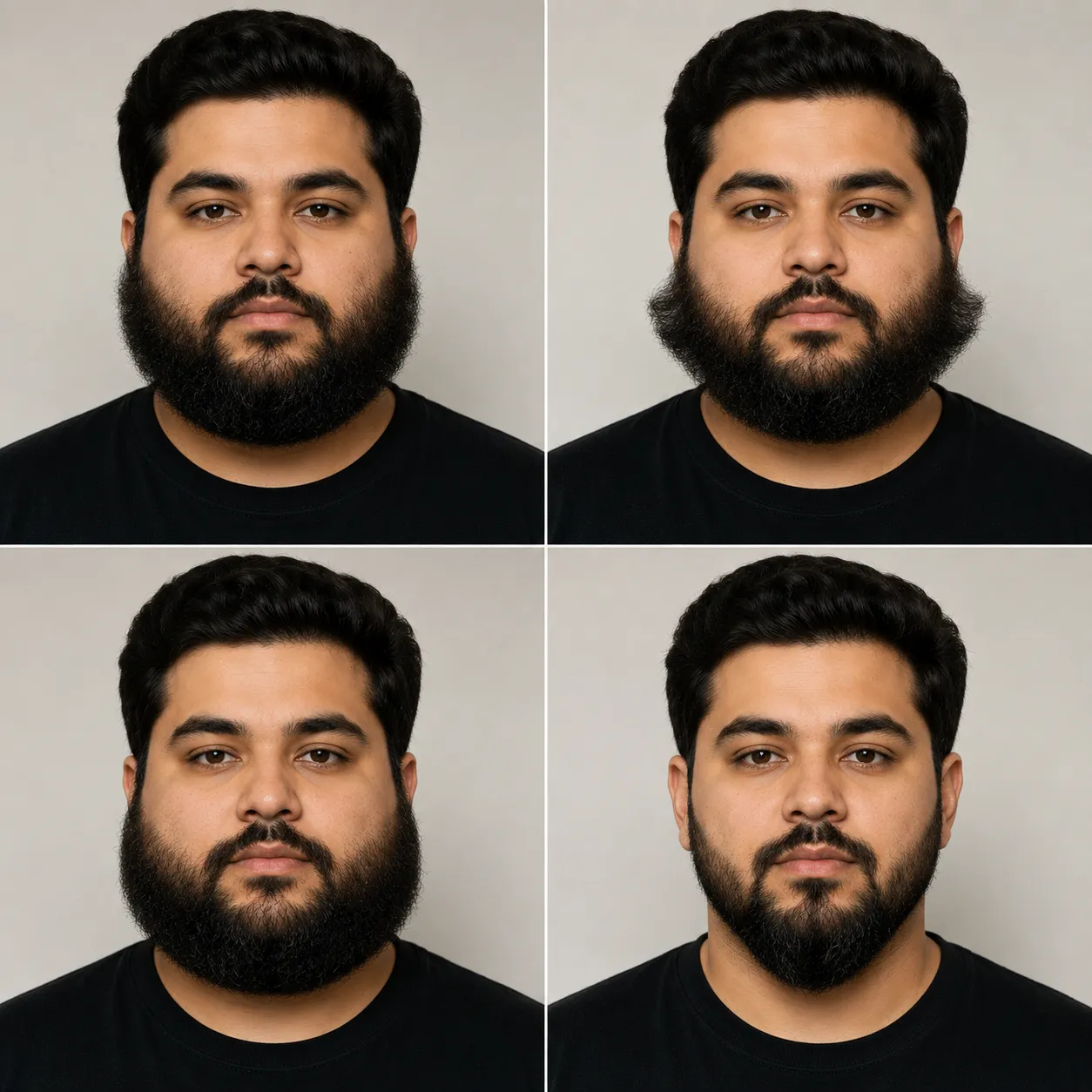
Honest limit: A beard shapes how a round face is read; it does not change bone structure. Over-trimming to force a shape usually looks worse than a tidy, well-blended full beard.
If a round face suits you better kept short, our three-stage method for a short beard keeps the sides in check while you learn the shape.
Before and After: A Round-Face Shape-Up
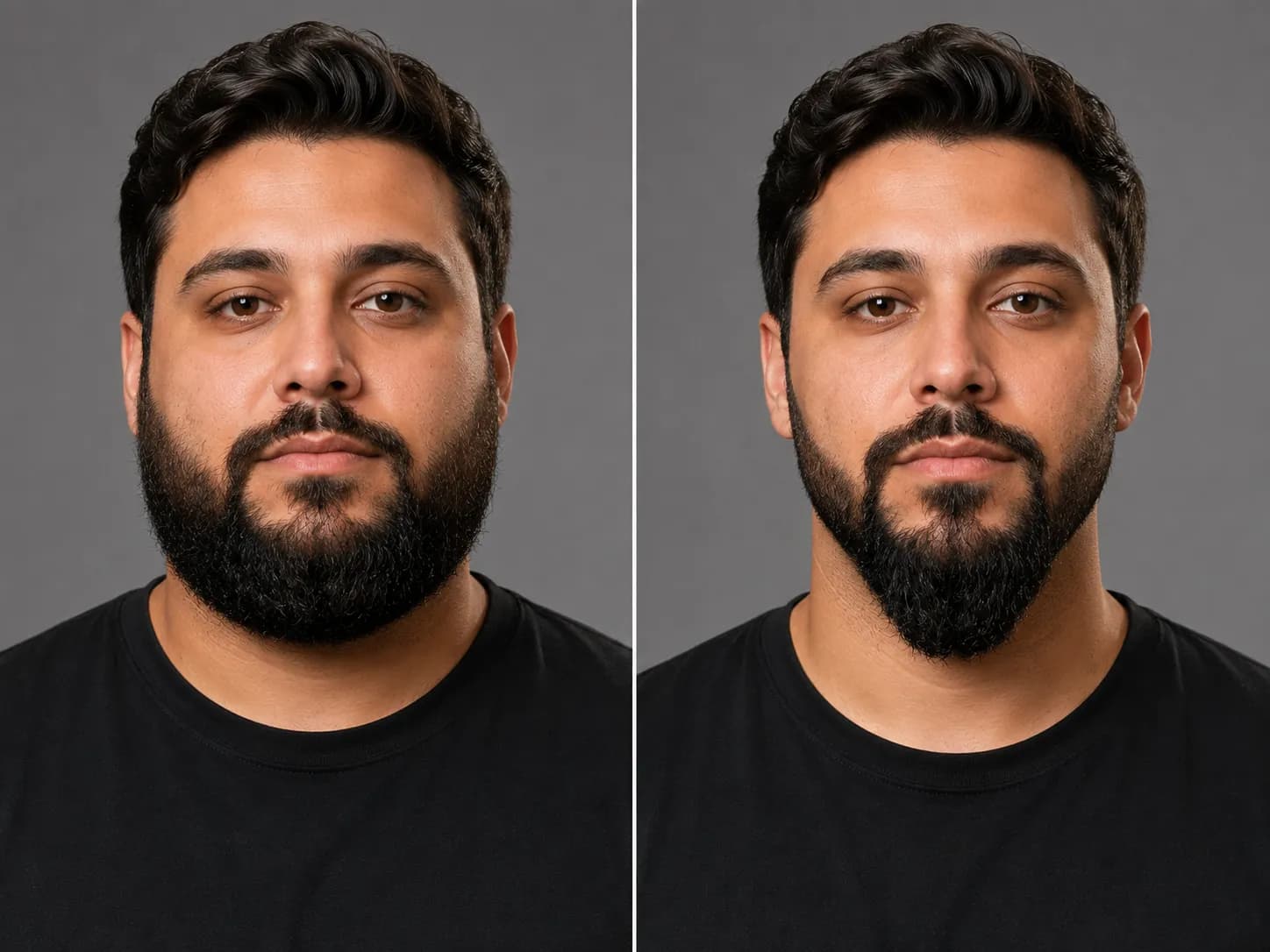
The round-face method is easiest to trust when you can see it. In our before and after, the same model goes from full cheeks and a rounded bottom to short sides, a longer squared chin, and a low cheek line, and the after reads clearly leaner. Nothing about his bone structure changed; only where the beard carried its bulk did.
Same model, same lighting, about forty minutes apart: cheeks taken from 10 mm down to 6 mm, the cheek line dropped a finger-width, and the chin left at 10 mm and squared off. The difference is all placement, not new hair.
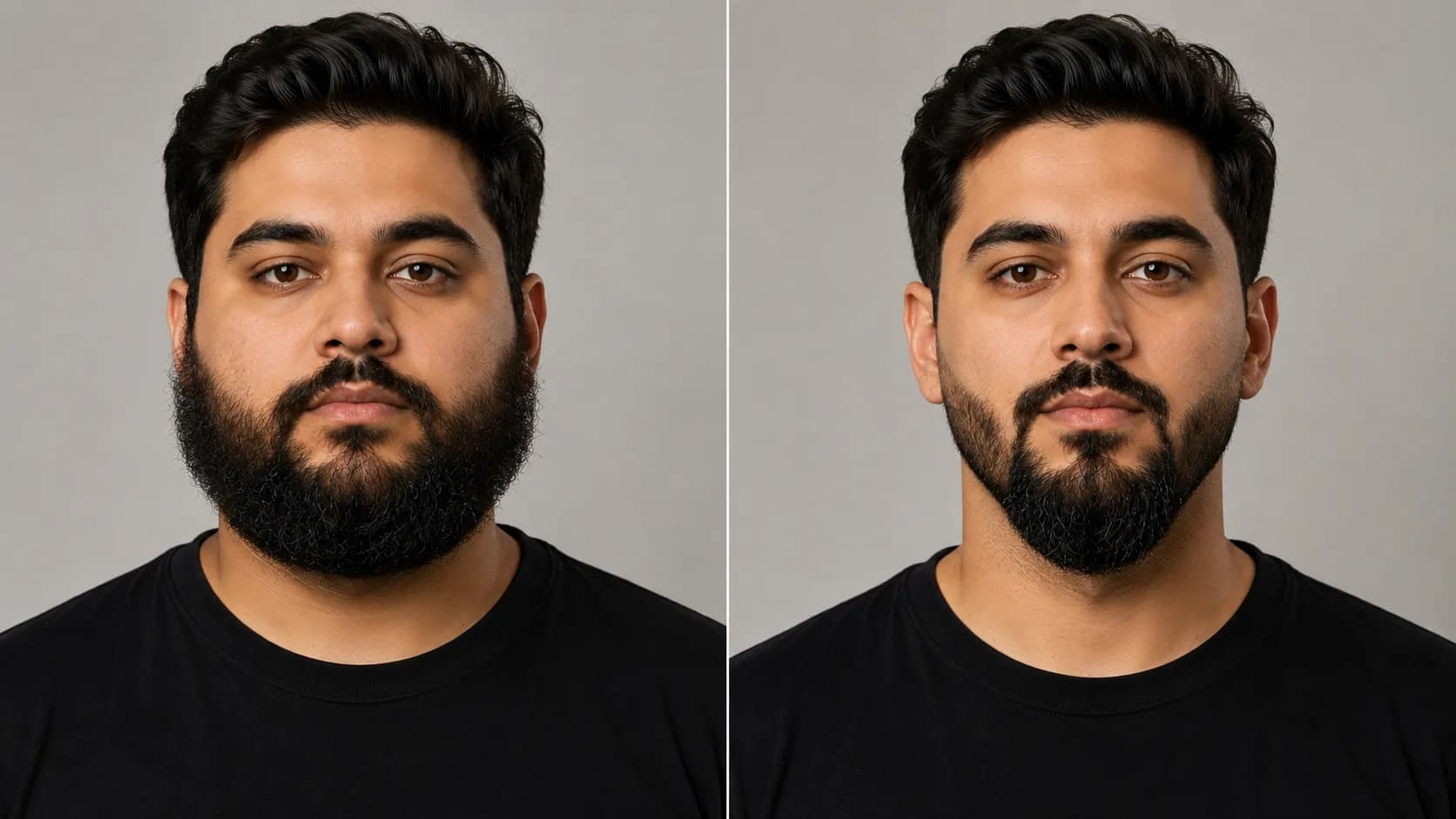
I held the lighting and the angle constant so the comparison is honest rather than flattering. To hold the shape between shoots, I went back over the sides and cheek line every few days.
The Takeaway for a Round Face
Shaping a beard for a round face comes down to one inversion. Where a haircut adds width, your beard should add height: short on the sides, long at the chin, low at the cheek line, clean at the neck.
Get that balance right and the beard stops drawing a circle and starts drawing a longer, leaner line. Start with the length gap between chin and sides, because every other move builds on it.
The same logic scales to any face you meet. Soften a square, add side volume to a long face, keep an oval in proportion, and slim a round one, all from the single rule of adding length where the face is short.
Then live with the shape for a week. Tidy the sides every few days and nudge the chin length until the mirror agrees.
That is the whole of how to shape a beard for a round face: not a style pulled off a list, but one principle you can apply for the rest of your grooming life.
Frequently Asked Questions
Does a beard suit a round face?
Yes. A beard suits a round face when it is shaped for length rather than width: keep the sides short, the chin longer, and the cheek line low. That adds vertical emphasis and trades roundness for a leaner, more angular look. Shaped the wrong way, with full cheeks and puffy sides, the same beard will widen you.
What is the best beard for a fat or chubby face?
The best shapes for a fuller, rounder face keep the sides short and the chin long. An extended goatee, a short boxed beard, or any shape with more length at the chin than the cheeks all work. Avoid bushy sides and thick sideburns, which add exactly the width you are trying to lose.
Do beards make your face look fatter or thinner?
Either, depending on where the bulk sits. Width at the cheeks and sideburns makes a face look fatter, while length at the chin over short sides makes it look thinner. A round face gets slimmer by trading horizontal bulk for vertical length.
Should a round face keep the beard short or long?
Both, in different places. Keep the sides and cheeks short and let the chin run longer, so the beard adds height, not width. A uniform long beard all over usually widens a round face rather than slimming it.
How often should you trim to hold the slimming shape?
Plan on a light pass every few days. In our test, going over the sides and cheek line roughly every third day was what kept the shape from puffing back out and blurring the jaw. The chin needs attention less often.
Summarize with AI
Keep reading
Related articles
 Styles, Shapes & Length Guides
Trim your beard dry so it dries even; wet hair stretches then shrinks. Go wet only for a razor lineup in the shower, plus wash and comb order.
 Styles, Shapes & Length Guides
Taper your beard at home with the 4-guard step-down method - drop one guard at a time for a clean low, mid, or high gradient without bowl-beard lines.
 Styles, Shapes & Length Guides
Set your stubble to one even length across three tiers (light, medium, heavy mm), fix the patchy jawline, and learn how often to re-cut for a clean 3-day look.
 Styles, Shapes & Length Guides
Trim lines and flyaways, not length, to stay sharp while growing your beard. A barber-reviewed 4-stage timeline to grow out without losing an inch.
Comments
Moderated for quality. Share a correction, ask a follow-up, or tell us what worked for you - every comment is reviewed before it goes live.