
Sensitive Skin After Shaving: Calm It and Pick Dry or Wet
Sensitive skin after shaving is most likely razor burn. Tell it from bumps and hives, calm it in 24 hours, and see if dry or wet electric shaving suits you.
Written by Aman Singh
Last updated on November 3, 2026
When you buy through links on our site, we may earn a commission at no extra cost to you. It never changes which tools we recommend. Learn more.
Summarize with AI
Sensitive skin after shaving most likely means razor burn, which clears in a few days: cool it, apply fragrance-free moisturizer, and skip shaving there.
That fits a red, blotchy rash, which Cleveland Clinic says you can usually identify as razor burn on your own.
Pimple-like bumps, raised welts and pus-filled bumps are different reactions, and each needs its own fix.
If you use an electric shaver, the popular rule to never shave dry is really blade advice.
Philips recommends a dry shave for redness with its own shavers, and its other fixes are lighter pressure, fewer passes and heads that aren't damaged.
Match your reaction in the table below first, then calm it with the steps for the first 24 hours.
After that, pick how to shave next: dry electric, wet electric or blade. The final section lists the signs that need a doctor.
Razor burn, razor bumps, hives or folliculitis: match what you see
A blotchy red rash within minutes of shaving is razor burn, while pimple-like bumps that form as the hair grows back are razor bumps.
Raised welts that come and go are hives, and pus-filled bumps around hairs point to folliculitis.
The table puts the five reactions side by side, from Cleveland Clinic, Mayo Clinic and MedlinePlus pages.
Reaction | What it looks like | When it shows | How long it lasts | First move |
|---|---|---|---|---|
Razor burn | A blotchy red rash that stings | Minutes after shaving | A few hours to a few days | Cool cloth, fragrance-free moisturizer, no shaving there |
Razor bumps | Small pimple-like bumps from trapped hairs | As shaved hairs grow back into the skin | Timed in the bump plan linked below | Stop shaving close; follow the bump plan |
Hives | Raised welts that change shape and come and go | Pressure hives: at once where skin was pressed | One welt rarely lasts over 48 hours | Ease the pressure; avoid hot showers |
Product reaction | Red, sore or inflamed skin where a product touched | Allergy: usually 24 to 48 hours after use | Most cases clear in 2 to 3 weeks | Stop the product; switch to fragrance-free |
Folliculitis | Clusters of small bumps around hairs; pus blisters that crust | Once a follicle gets infected, often by bacteria | Mild cases heal in a few days with self-care | Gentle self-care; see a doctor if it spreads |
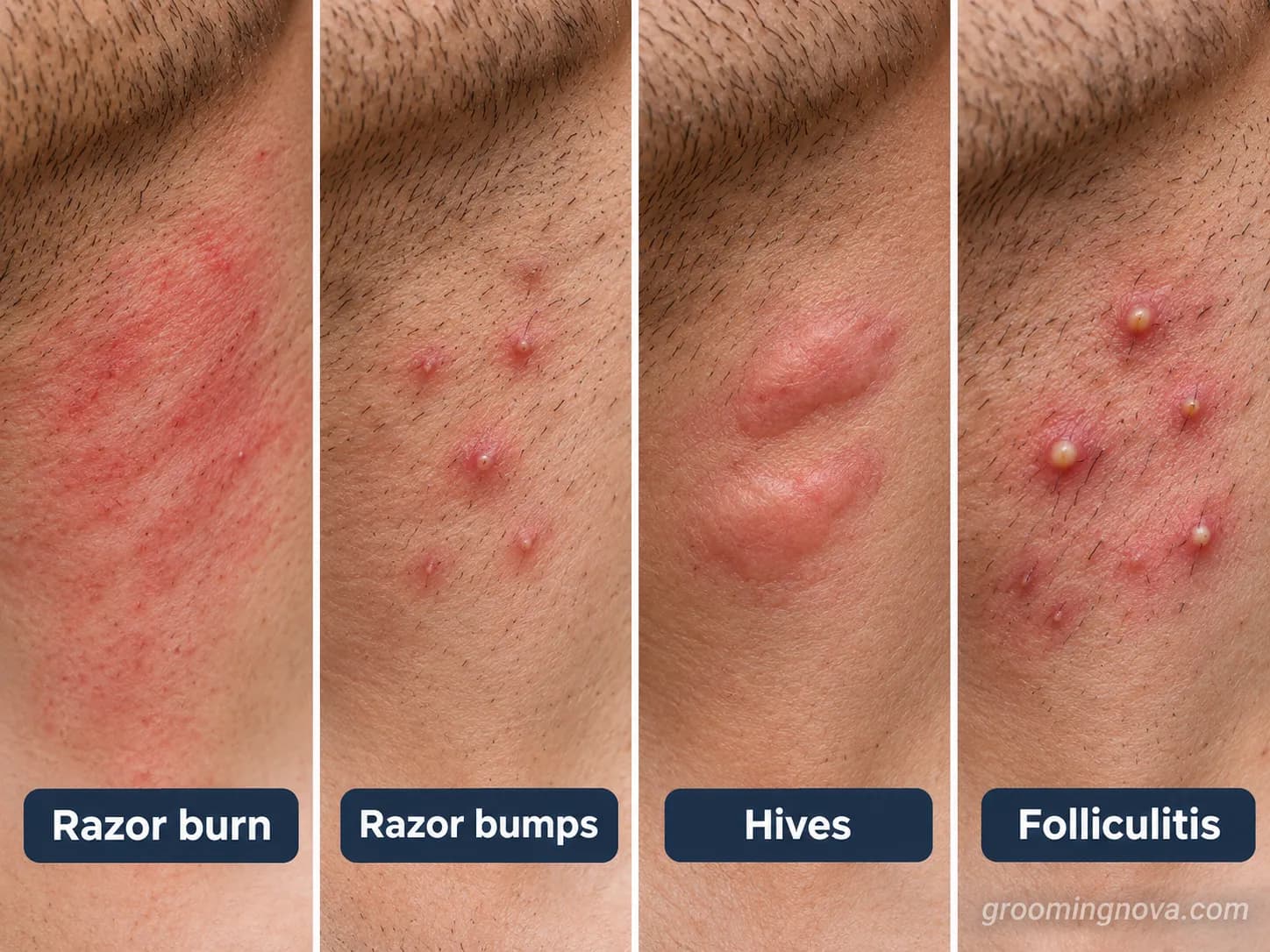
The difference between the first two is the cause. Razor burn is irritation from the razor itself, while razor bumps form when shaved hairs curl back into the skin as they grow.
If yours are trapped hairs, follow a step-by-step plan for clearing razor bumps.
Pressure alone can raise hives. This kind, called dermatographism, rises at once where the skin was pressed or scratched. The press of a shaver head counts too.
A product reaction is the other look-alike. Irritant dermatitis, the most common type, is the skin reacting to friction or an irritating substance, not an allergy.
An allergy to a scented gel or aftershave is the slow one in the table. Think back to any product you started in the last two days.
The same reactions show up on armpits, legs and other shaved areas, but the steps on this page are written for the face and neck.
Razor bumps or folliculitis: how to tell them apart
Razor bumps and folliculitis can look almost the same, and Mayo Clinic separates them by cause. Check these three things to tell them apart:
Cause: razor bumps are hairs trapped under the skin, while folliculitis is an infected hair follicle.
Look: pus-filled blisters that break open and crust over point to folliculitis.
Next move: trapped hairs need the bump plan above, and pus-filled bumps that spread need a doctor (last section).
Calm irritated skin in the first 24 hours
Cooling the skin, moisturizing it without fragrance and leaving it unshaved is the home care Cleveland Clinic gives for razor burn.
You need only a clean washcloth and a fragrance-free moisturizer or plain aloe vera gel, everyday items you may already have. It takes a few minutes, and over-the-counter hydrocortisone cream is optional.
Work through the steps in order, simplest first:
Hold a cool, damp washcloth on the area, or rinse it with cold water.
Smooth on a fragrance-free moisturizer, or plain aloe vera gel, which can calm it fast.
Leave out anything with fragrance or alcohol, aftershave included.
Don't shave that patch again until it has healed.
Optional: Take an oatmeal bath or dab on over-the-counter hydrocortisone cream if it itches.
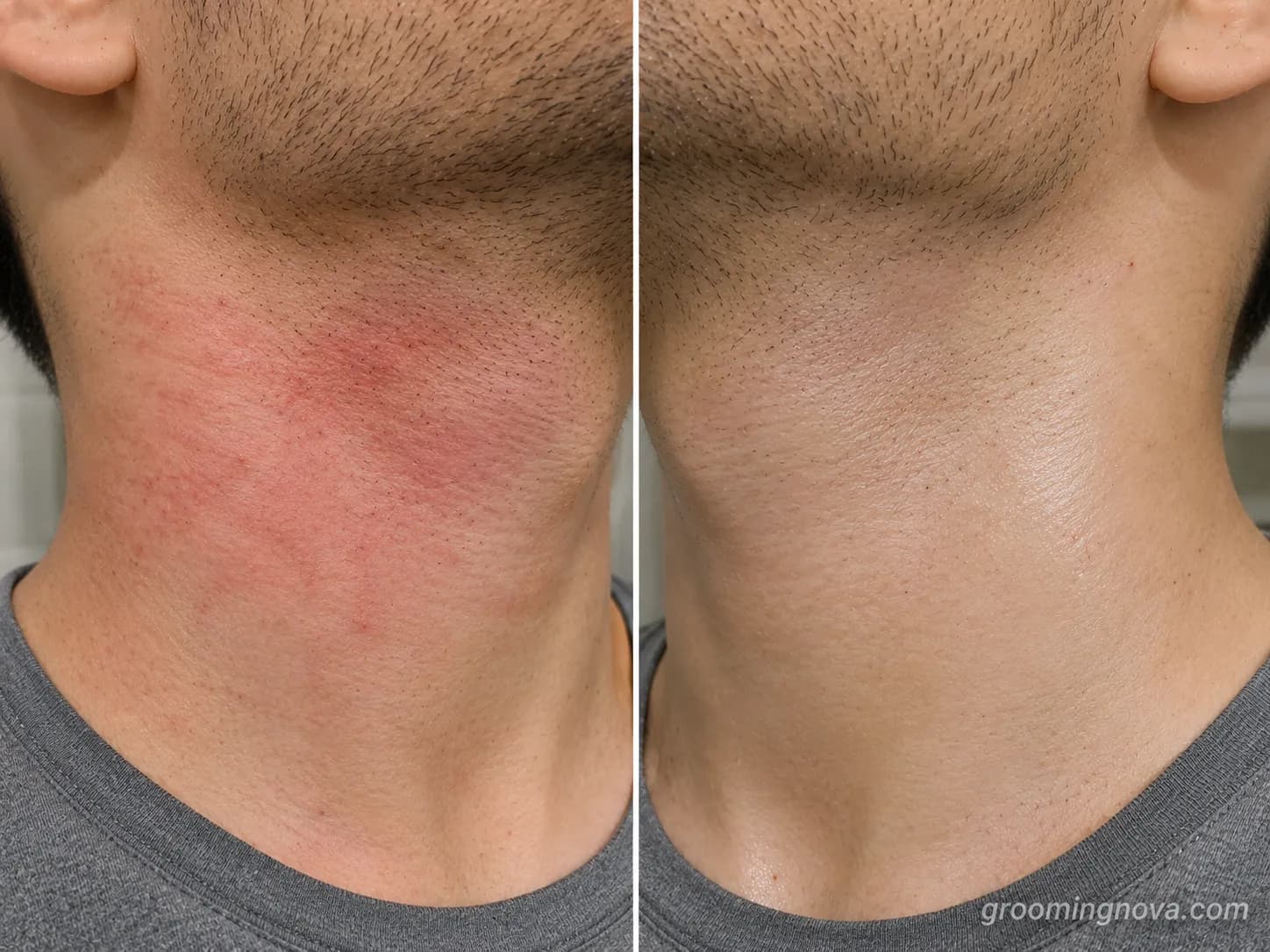
I tested the first two steps on one side of my neck after each blade shave in the comparison further down.
On both blade mornings, the neck side I cooled with a washcloth and fragrance-free moisturizer looked visibly paler 1 hour later than the untreated side.
Hives need two additions to the routine. MedlinePlus says to skip hot baths and showers.
A provider may also suggest an antihistamine such as cetirizine (Zyrtec Allergy), taken as your provider or the package directs.
Razor burn clears on its own within a few days, so the rash should be fading by then. If it isn't, or it looks infected, go to the doctor signs in the last section.
Plain redness with no bumps follows its own clock, so check how long plain redness lasts.
Why skin itches a day after shaving, and what stops it
Itch that starts the day after a shave can point to a product rather than the shave itself. An allergic skin reaction most often appears 24 to 48 hours after contact, MedlinePlus notes.
That makes a gel, aftershave or cologne you used yesterday the first suspect. Hair products, cosmetics and perfumes can set off reactions on the face, head and neck.
Itching is a common symptom of a product reaction, so leave out anything with fragrance or alcohol.
Itch with small pimples around hairs can be folliculitis, whose signs include itchy, burning skin. Itch that comes with razor burn fades with the rash, usually within a few hours to a few days.
For quick relief, reach for one of these:
A cool, damp washcloth on the itchy patch
Over-the-counter hydrocortisone cream
An antihistamine for hives, if a provider suggests one
Why shaving leaves skin sensitive
Shaving makes skin more sensitive because a blade crossing it can leave tiny cracks in the top layer, with lost moisture and inflammation.
Anything that adds friction then makes it worse. An electric shaver adds friction too when it is pressed hard or passed over the same spot again.
Damaged or dull heads cause trouble of their own.
The table sets Cleveland Clinic's blade advice beside Philips instructions for its shavers, with MedlinePlus on products.
Trigger | With a blade | With an electric shaver |
|---|---|---|
No lubrication | Shaving dry can cause razor burn | Dry is a designed mode on wet and dry models; see below |
Dull or worn edge | An old, dull blade can cause razor burn | Replace damaged heads at once; dull blades need new heads |
Pressure | Use light, short strokes | Press gently to cut friction |
Repeat passes | Don't go over one section more than once | Go over each area as few times as possible |
Scented products | Fragrance is a common allergen; skip alcohol on irritated skin | The same risk from scented gels, foams and aftershaves |
A new shaver needs time. Philips says to use a new Philips shaver regularly for at least 21 days so your skin can adapt. The same run-in applies after you fit new shaving heads.
Dry electric, wet electric or blade: which is gentler on sensitive skin
With a blade, never shave dry. With an electric shaver, dry is the mode Philips recommends for redness. If dry still stings after the run-in, try a wet shave with gel on a wet-rated shaver.
The blanket rule against dry shaving comes from blades. Cleveland Clinic lists shaving without water, soap, cream or gel as a cause of razor burn, and its advice is about razor blades.
For skin prone to infected follicles, Mayo Clinic suggests avoiding a too-close shave by using an electric razor or a guarded blade.
Is dry shaving bad for your skin?
With a blade, yes: shaving dry can cause razor burn. Pimple-like bumps that form as the hair grows back are razor bumps, hairs trapped under the skin.
The table at the top of this page tells them apart from folliculitis.
With an electric shaver, dry is a designed mode: Philips wet and dry models shave dry or wet with gel, foam or in the shower.
Either way, skin that's already irritated shouldn't be shaved until it heals. If a dry shave leaves your face burning, here's why a dry shave can burn.
How the three shaves compared over 24 hours
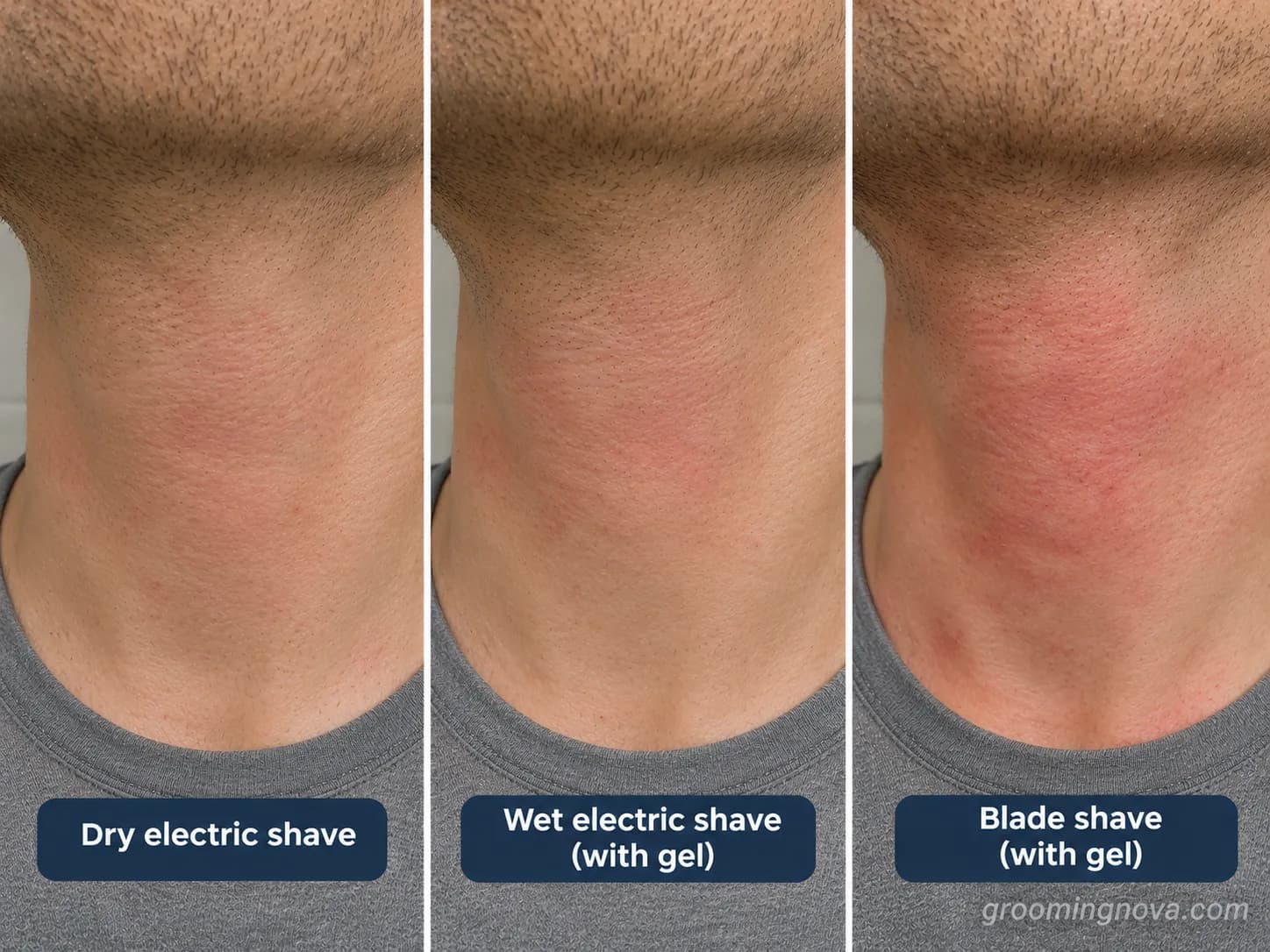
I shaved my cheeks and neck each way on two mornings, and each method gave the same result both times, so each row covers both.
Shave | Redness right after | Redness at 1 hour | Sting at 10 minutes (0 to 5) | Sting at 2 hours (0 to 5) |
|---|---|---|---|---|
Dry electric | Light, on the neck | Faint, on the neck | 1 | 0 |
Wet electric with gel | Light, on the neck | Faint, on the neck | 0 | 0 |
Blade with gel | Red patches on cheeks and neck | Faint, on the neck | 2 | 1 |
By the next morning none of the three left redness or sting, and none left a nick. On blade mornings, the neck readings come from the side I left untreated in the calming test above.
The blade was the only shave that reddened my cheeks, and the wet electric shave was the only one I didn't feel at all.
This is one man's skin, mine, tested with one Philips Norelco 7000 Series face shaver (S7887/82) after its 21-day run-in.
The blade was a Gillette SkinGuard Sensitive razor, with a new cartridge for each test shave.
The six shaves ran on alternate mornings in September 2026, on 2 days' growth, in the order dry, wet, blade, then again.
I judged redness by eye and in photos taken in the same light. I rated sting myself from 0 (none) to 5 (burning that disrupts movement or sleep) and gave no score.
The results show what happened on my skin, not how often it happens to others. Each maker's instructions also cover only its own shavers, so your own skin decides.
The medical facts come from the linked medical pages, and none of it replaces a doctor.
Cleveland Clinic's razor burn page and Mayo Clinic's folliculitis page date from 2022 and are still current on their sites.
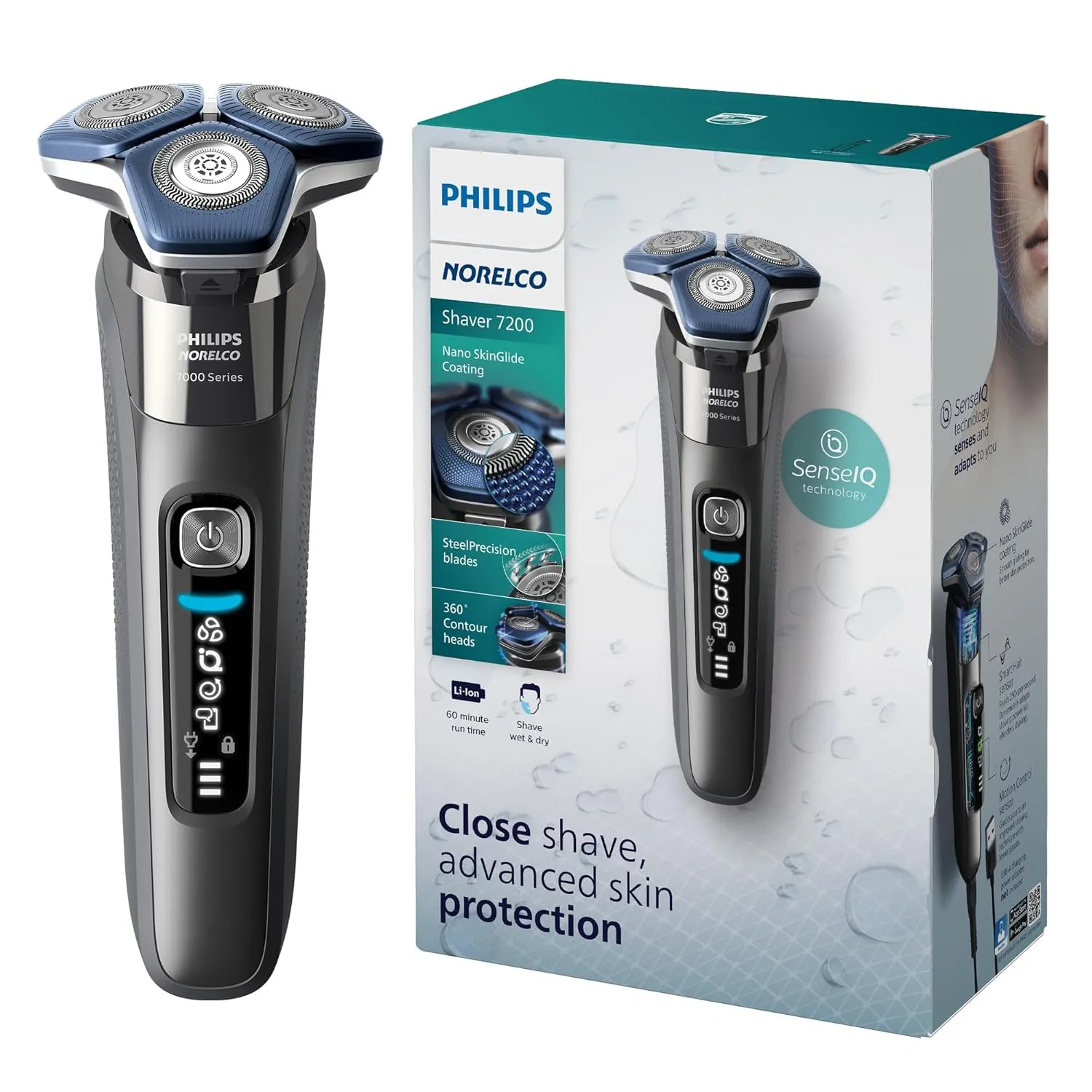
by Philips Norelco
Check Price (opens in a new tab)In Stock · Amazon
Pros
- Dry shaves left only light neck redness, faint at 1 hour and gone by the next morning
- Wet with gel, it was the only shave I didn't feel at all
- Shaves dry or wet with gel or foam
- No nicks on any test shave
Cons
- Needs a 21-day run-in before your skin adapts, and again after new heads
- Dry shaves stung slightly at first, 1 out of 5 at 10 minutes
- Light neck redness right after shaving, dry or wet
As an Amazon Associate, Grooming Nova earns from qualifying purchases.
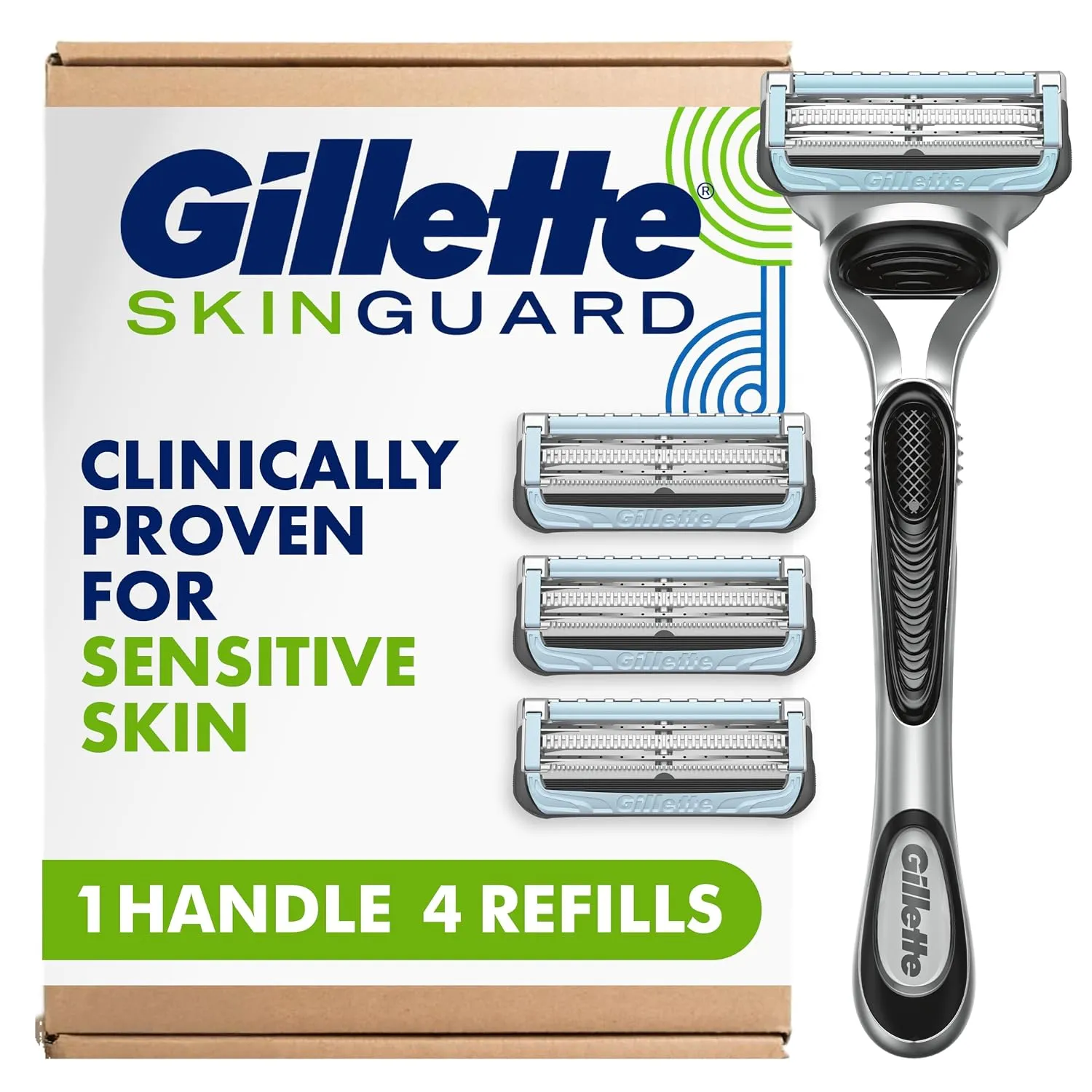
by Gillette
Check Price (opens in a new tab)In Stock · Amazon
Pros
- No nicks on either armpit in my split-side sessions
- Sting gone by the next morning
Cons
- Stung more than the foil head for the first couple of hours
- Needs shave gel: never shave dry with a blade
As an Amazon Associate, Grooming Nova earns from qualifying purchases.
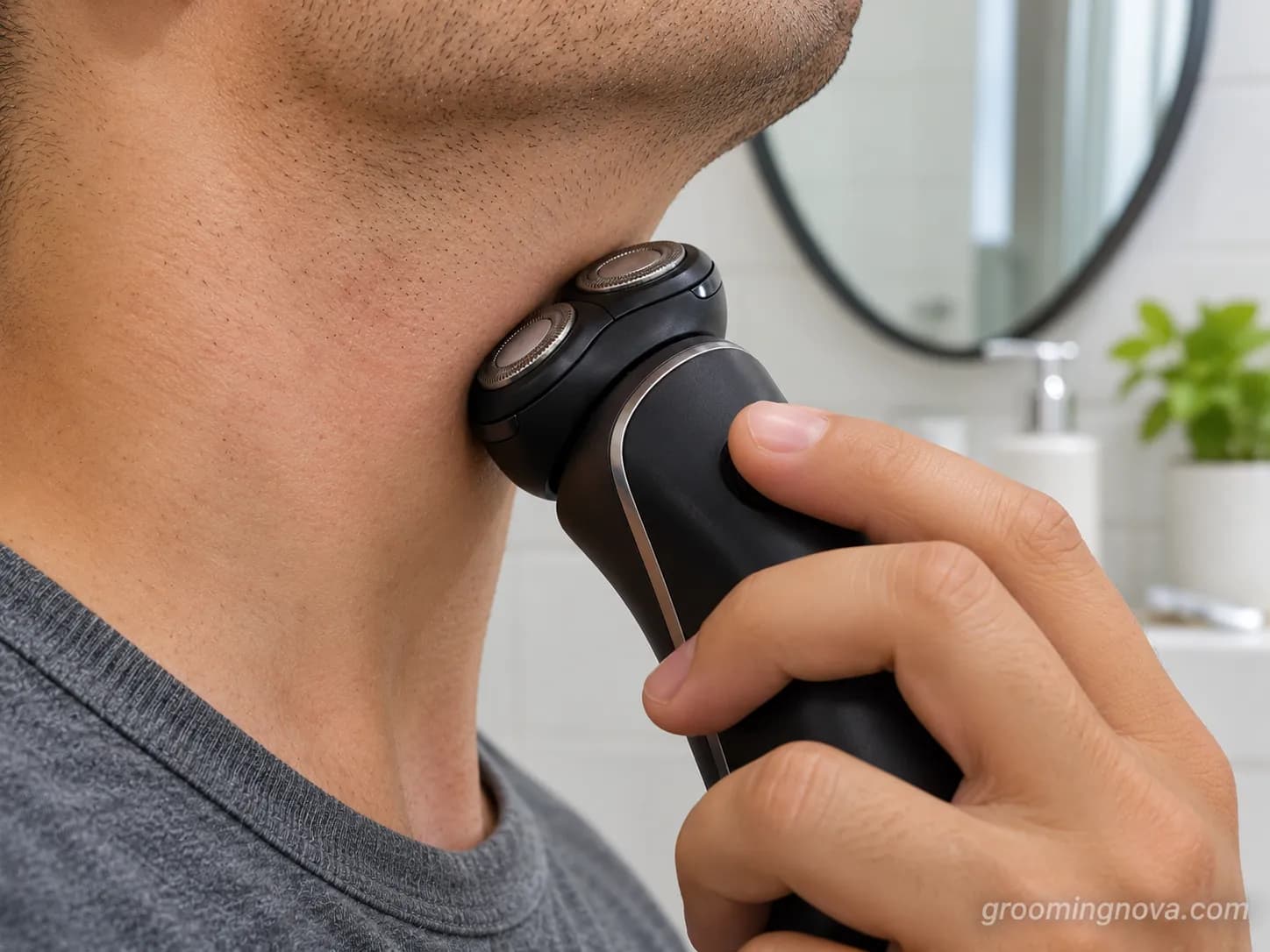
A low-irritation electric shave routine for sensitive skin
A low-irritation routine starts with clean, fully dried skin for a dry shave, or gel on a wet-rated shaver for a wet one.
Either way, press lightly, make as few passes as you can, then rinse cool and moisturize.
Wet shaving: Philips advises checking that your shaver is rated for wet use before you shave with water, gel or foam.
You need your shaver, a fragrance-free moisturizer and a washcloth, plus a beard trimmer if you haven't shaved for 3 days or more.
These steps combine Philips instructions for its shavers with Cleveland Clinic's shaving advice:
For a dry shave, let freshly washed skin dry for at least 15 minutes; for a wet one, spread gel on wet skin.
Pre-trim stubble of 3 days or more with the beard trimmer.
Let the shaver rest on your skin with light pressure instead of pushing it in.
Shave with the grain on sensitive patches, since going against it can inflame the skin.
Move rotary heads in small circles, covering each area as few times as possible.
On your neck, follow the grain as it changes direction; this guide to red bumps along the neck shows how to map it.
Rinse with cold water, or hold a damp washcloth on the skin.
Smooth on a fragrance-free moisturizer.
Avoid shaving right before a hard workout, because sweat can redden freshly shaved skin.
A damaged head can nick the skin, so replace it right away. Replacement intervals differ by maker.
Philips Norelco face shavers get new self-sharpening blades every 24 months, and Braun foil shavers new cutter parts every 18 months. New heads bring back the run-in described above.
On blade days, the American Academy of Dermatology says to swap the blade or disposable razor after 5 to 7 shaves to minimize irritation.
Replacement heads for your model, new blades on blade days and shave gel if you shave wet are the paid items here.
The moisturizer, washcloth and trimmer are things you may already own.
Signs that irritation after shaving needs a doctor
Get emergency help: Call 911 if hives come with shortness of breath, a tight throat, or a swollen tongue or face. Get medical care right away for signs of a spreading infection: a sudden increase in redness or pain, fever, chills or feeling unwell.
Home care comes first, and Cleveland Clinic, Mayo Clinic and MedlinePlus name the points at which irritation needs a doctor or other provider. Book a visit for any of these:
Razor burn that home care hasn't cleared within a few days
Pus-filled bumps that are widespread or haven't gone after a week or two of self-care
Hives that are severe and don't respond to self-care
Bumps that keep coming back after you change how you shave, which the razor bump plan above covers
The order is simple: match the reaction, calm it, change the shave, and get help when one of the signs above appears.
With an electric shaver, that change is lighter pressure, fewer passes and undamaged heads.
Save gel for skin that still stings after a dry shave.
Make your next shave the test: dry skin, a light touch and as few passes as you can manage.
Summarize with AI
Keep reading
Related articles
 Technique & How-To
How to shave pubic hair with clippers for men: which guard to start on, where the guard stays on, the steps in order and how to clean the clipper after.
 Technique & How-To
How to use coconut oil to shave pubic hair as a man: melt a thin layer on wet skin, shave with the grain, keep the trimmer dry and wash the oil off.
 Technique & How-To
Why do my armpits hurt after shaving? Match the pain to when it started, from razor burn within minutes to regrowth prickle, then calm it and spot red flags.
 Styles, Shapes & Length Guides
Trim your beard dry so it dries even; wet hair stretches then shrinks. Go wet only for a razor lineup in the shower, plus wash and comb order.
Comments
Moderated for quality. Share a correction, ask a follow-up, or tell us what worked for you - every comment is reviewed before it goes live.