
Trim Beard Wet or Dry? Dry Wins (One Wet Exception)
Trim your beard dry so it dries even; wet hair stretches then shrinks. Go wet only for a razor lineup in the shower, plus wash and comb order.
Written by Andre ColemanReviewed by Russell Hartley
Last updated on July 22, 2026

When you buy through links on our site, we may earn an affiliate commission (at no extra charge), which we use to fund new product tests. Learn more.
Summarize with AI
Reach for the trimmer straight after a hot shower and the beard feels soft, warm, and easy to cut. That is exactly the trap.
Warm, damp hair hangs long and straight, so you cut confidently. Then it dries, springs back, and leaves you shorter and blotchier than you meant to be.
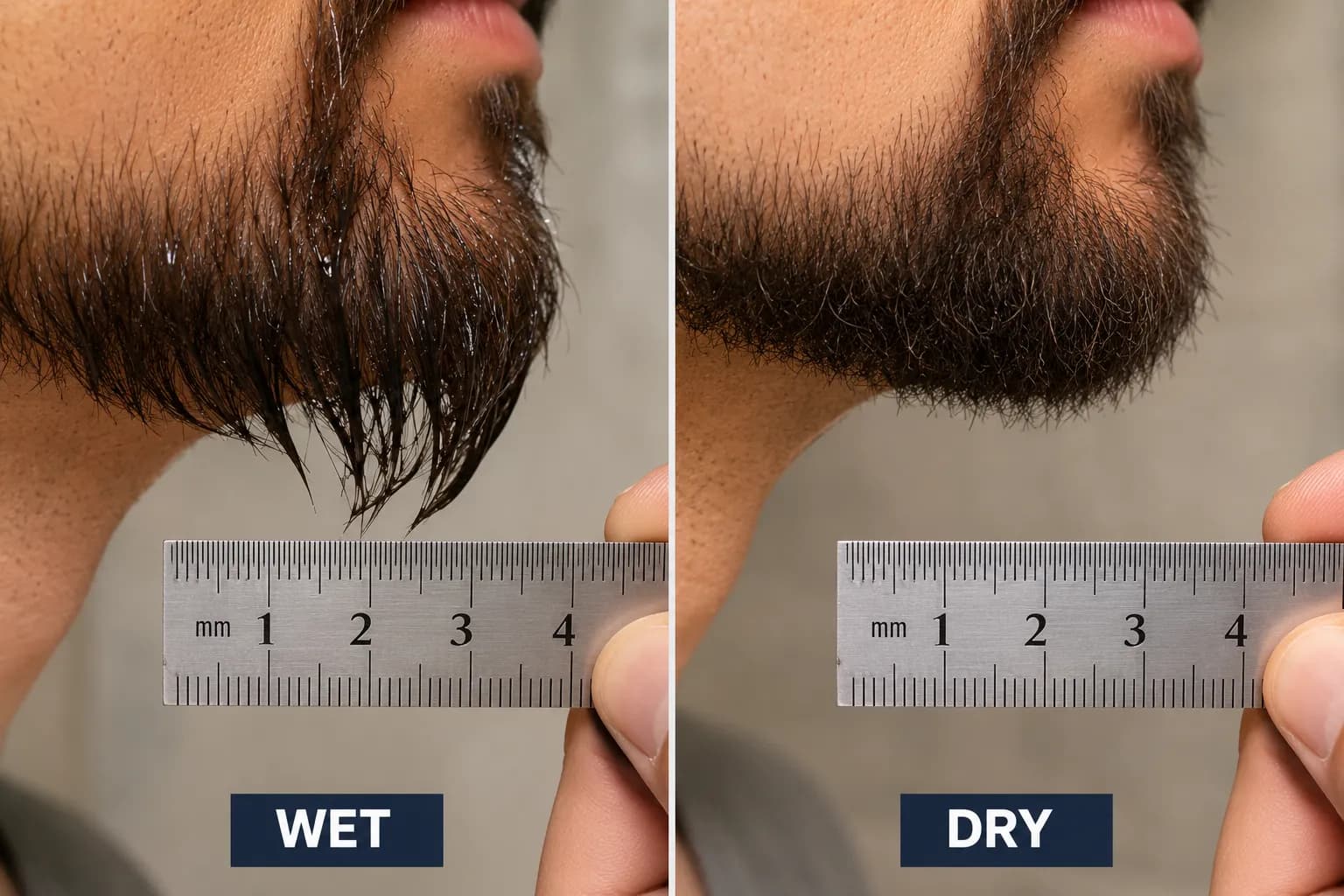
The question of whether to trim your beard wet or dry has one clear answer for length, and one honest exception for lines. I marked five zones on my own roughly one-inch beard, measured each one wet and again bone-dry, and the average difference was large enough to turn a tidy trim into a patchy one.
Here is the rule, the reason, and the full prep order.
The Quick Answer: Trim Beard Wet or Dry?
To trim your beard wet or dry, the answer for length is dry: wet beard hair stretches and reads longer, so cutting it wet leaves you shorter and patchy once it dries and shrinks up. Wash and fully dry the beard, comb it out, then trim, and keep wet work for one job only, a razor lineup in the shower or a full shave where softened skin helps.
The counterintuitive one-liner worth remembering: trim dry, but do your razor lineup wet. Trimmers set length and want dry hair; a razor drawing a line wants soft, wet skin.
Why You Trim a Dry Beard: The Shrink Effect
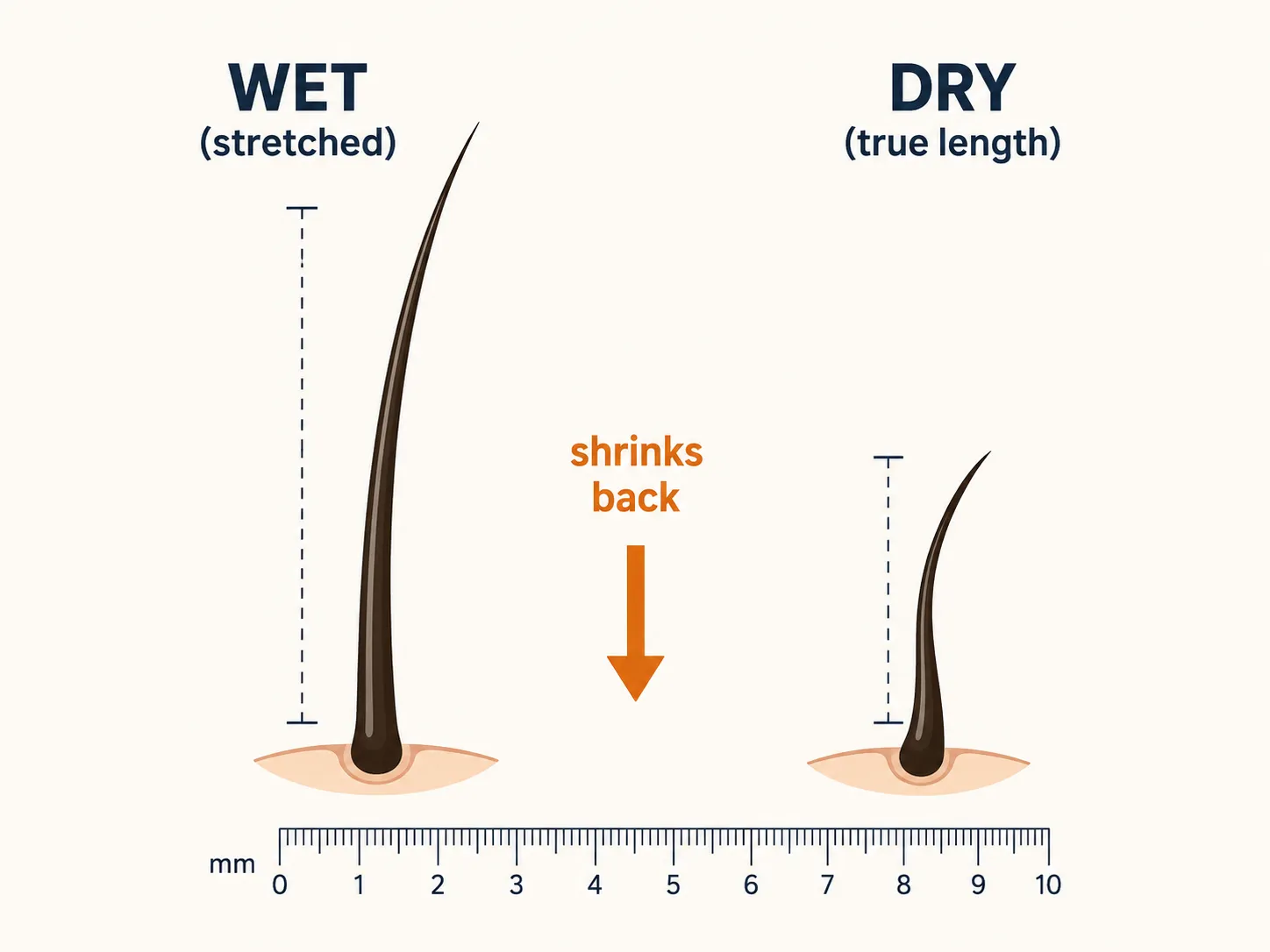
You trim a dry beard because wet hair stretches: water loosens the hydrogen bonds in each strand's keratin cortex, so healthy hair can elongate up to about 30 percent wet versus roughly 20 percent dry.
Cut at that stretched length and the beard springs back shorter and uneven as it dries, which is why drying to 100 percent first is what shows the true length you are actually cutting to.
That stretch is not folklore. A plain-language explainer from Cliphair's hair-elasticity guide puts healthy hair at around 30 percent stretch when wet and about 20 percent when dry, driven by the hydrogen bonds in the cortex.
The strand does not stay long, either. As The Mestiza Muse describes it, wet hair extends and then returns to its original length as it dries, which on a beard means the tidy line you just cut climbs back up your face.
To put real numbers on it, I marked five zones on a roughly one-inch beard and measured each one wet, then again after a full cool-air dry, in a single session with the same ruler.
Beard zone | Length wet | Length dry | Shrink |
|---|---|---|---|
Chin | 32 mm | 26 mm | 19% |
Left jaw | 27 mm | 22 mm | 19% |
Right jaw | 26 mm | 22 mm | 15% |
Cheek | 19 mm | 16 mm | 16% |
Mustache | 21 mm | 18 mm | 14% |
The wet reading ran 3 to 6 mm long across every zone, averaging about 17 percent. Cut to the wet number and you remove that 17 percent twice: once with the trimmer, and again when the beard dries and pulls up.
The "mostly dry" trap: even a damp, almost-dry beard still shrinks. Dry to 100 percent, not to "close enough," or the parts that were wettest will end up shortest.
If your beard is still short and you are wondering whether it is even long enough to shape, that is a different question, and it is worth knowing how long to grow it first before you start measuring shrink.
Your Pre-Trim Checklist: Wash, Dry, Comb, Cut, Oil
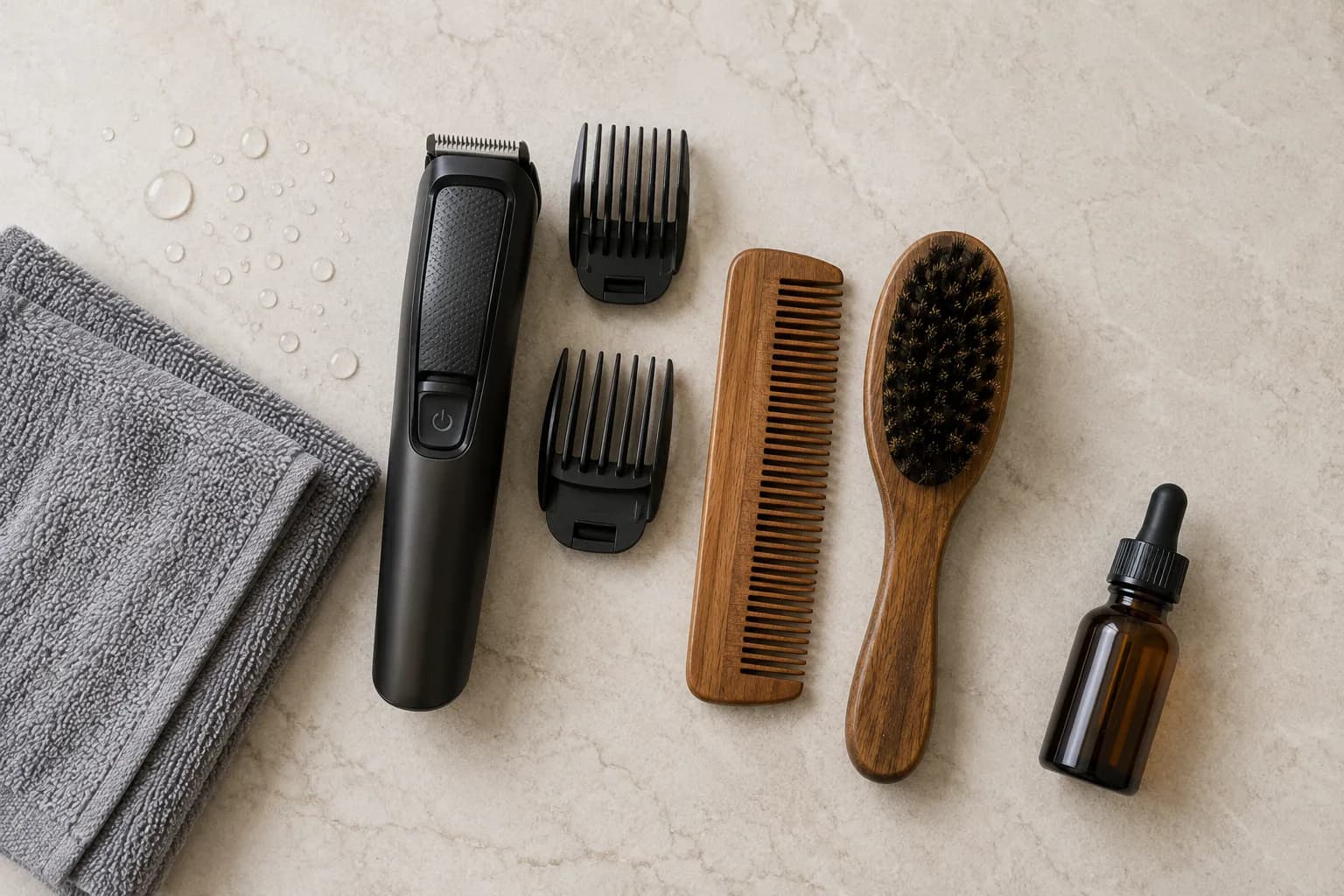
The pre-trim beard checklist runs in five steps: wash the beard, dry it completely on cool air, comb or brush it out, start with the longest guard and take small passes, then apply oil after the cut. Trimming a clean, fully dry, combed beard is what makes the result even, and holding the oil until last means it never weighs the hairs down and hides the length while you work.
Wash. Clean the beard so it lies in its natural shape. Oil and grime clump the hairs and make the beard read patchier than it is.
Dry to 100 percent. Towel first, then a blow dryer on cool air. The barbers at The Forge Barbers recommend a cool-air pass to set the natural shape before you cut, and warn that a tugging, biting sensation means dull blades.
Comb out. Lift the beard to expose flyaways and true length, then settle it into shape.
Start long. Use the highest guard first and take small passes, dropping down only if you need to. You can always remove more, never add it back.
Oil after. Condition once the cut is done, not before, so the oil never distorts the length you are cutting to.
Go slow near the skin, and swap in a fresh blade when the trimmer starts to pull. This page is the prep stage only, so if you want the cut itself, follow the full step-by-step trim after your beard is dry and combed.
Should You Shower Before You Trim?
Shower before you trim your beard, then dry it completely before cutting: a warm shower softens skin and hair and opens the pores, which lowers irritation, but wet hair still stretches. So the order that actually works is shower first, towel and cool-air dry to 100 percent, then trim dry, and the two ideas only sound like a conflict.
They are not in conflict because they act on different things. The shower conditions your skin; the dry-down protects your cutting length.
You get the softening benefit and the accurate length by doing them in sequence, rather than trimming while everything is still wet.
Dermatologists back the softening half of that order. The American Academy of Dermatology advises shaving at the end of or right after a shower, when the heat has softened the hair, and shaving in the direction the hair grows.
The trade-off is timing and mess. Trimming before the shower is tidier, since dry clippings rinse away, while a barber-reviewed rundown from Barber Craft notes that coarse, unruly beards benefit most from post-shower softening.
Fine or straight beards often do fine trimmed dry before the water even runs.
Do not skip the dry-down. A warm, damp beard straight from the shower will still shrink up after you cut it, so a "chin strap" from over-shaping is the usual result of trimming wet.
If you like the after-shower routine and want a tool that survives it, a wet/dry trimmer lets you rinse the head without dulling the blades, though you still dry the beard before the cut.

When Trimming Your Beard Wet Is the Right Call
Trim a beard wet only for razor work, never to set length: the two correct wet moments are edging the neckline or cheek line with a razor after a shower, when softened skin resists nicks, and a full wet shave to remove the beard.
For anything that controls length you keep the beard dry, because a trimmer sets length best on dry hair while a razor glides safest on soft, wet, lubricated skin.
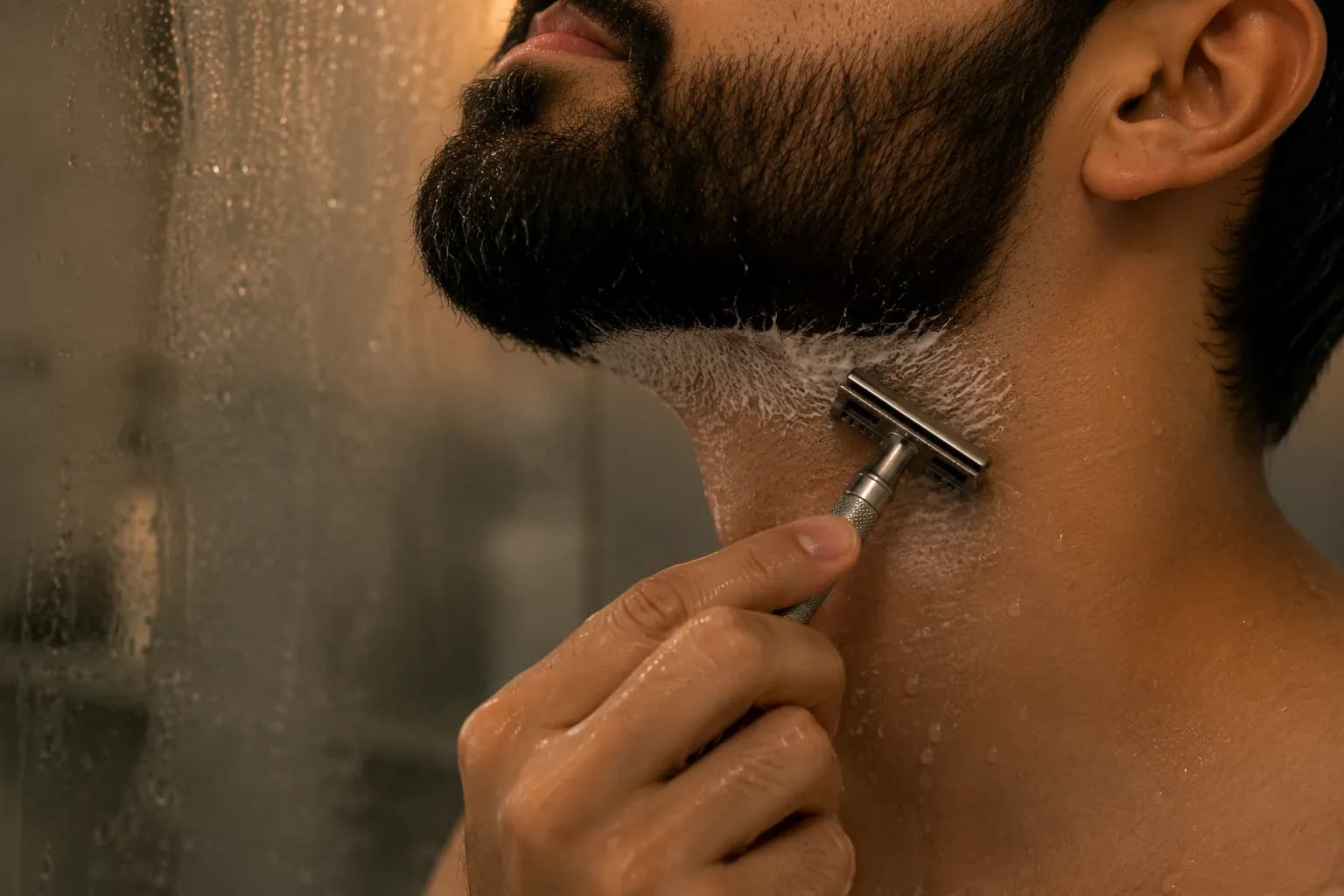
The first exception is line work. Once the length is dialed in dry, a wet razor lineup on softened skin gives the cleanest edge, which is the moment to shape a crisp neckline if you use a blade rather than the trimmer's edge.
The same logic covers the top border of the beard. A post-shower razor pass is also when many people clean up your cheek line, because the softened skin takes a blade with less drag and less redness.
The second exception is a full shave, when you are removing the beard rather than shaping its length, and warm water and lather are exactly what you want. Dermatologists make the same point about softened, post-shower hair for shaving, so the wet timing here is a feature, not a shortcut.
Razor-burn guard: light pressure, a fresh blade, and a lubricant. Shave with the grain on softened post-shower skin to keep the lines clean and the razor burn away.
Should You Wash Your Beard or Face First?
Wash your beard before trimming, then dry it fully: a clean, detangled beard falls into its natural shape, while an oily or product-clumped beard reads patchier and thinner than it really is and tempts you to over-cut.
Rinse or wash first, dry completely, then trim, and washing your face too leaves the skin clean, which lowers irritation if you edge the lines with a razor afterward.
The reason is visibility. A guide from Readysleek makes the point that an unwashed beard clumps with oil and looks wispy, so you end up shaping a version of the beard that is not really there.
Washing is step one, drying is step two, and cutting is step three. Do not collapse them into trimming a damp beard to save a few minutes, because a clean beard that is still wet will shrink up on you exactly like an unwashed one.
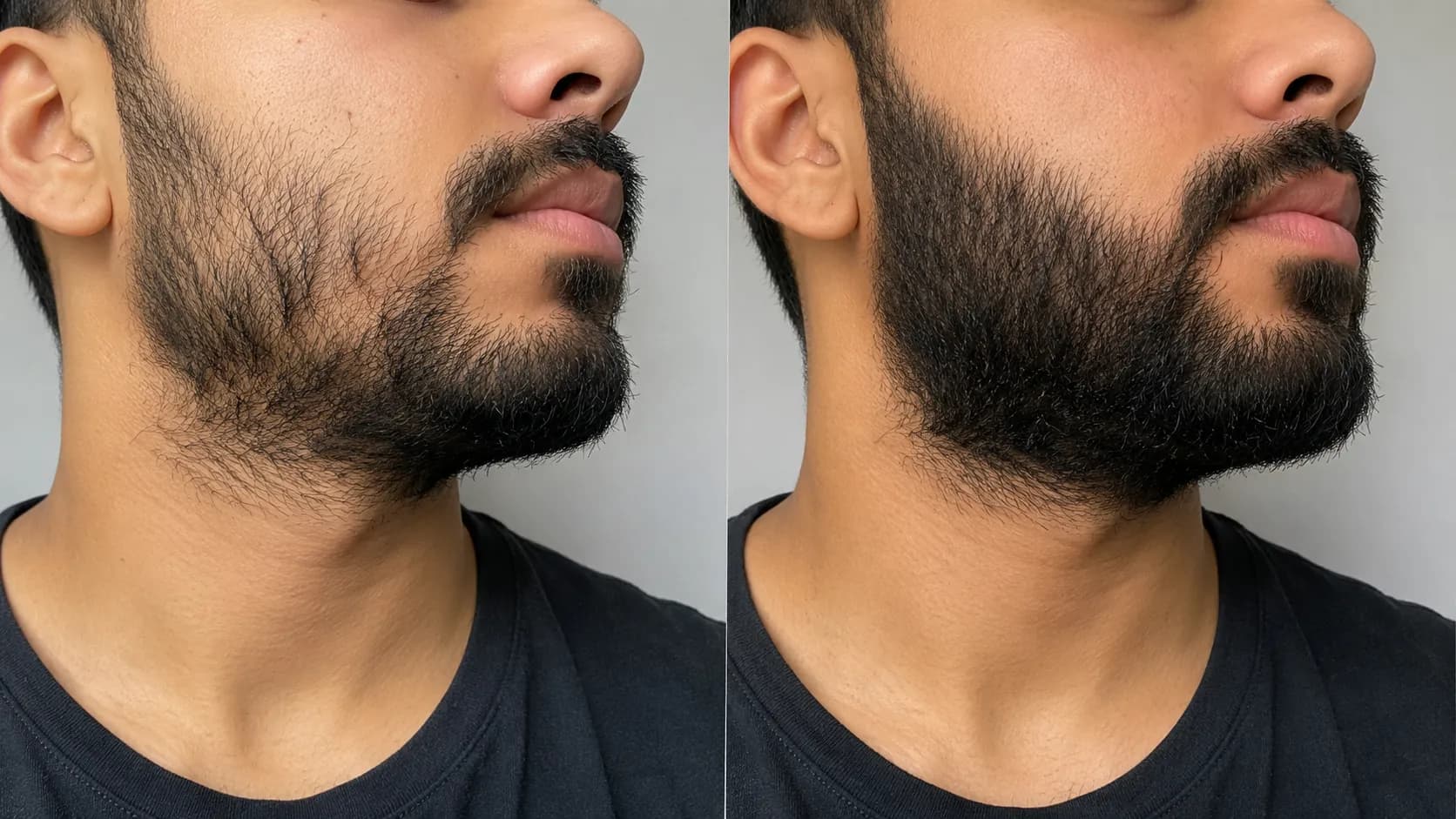
Do You Comb Your Beard Up or Down Before Trimming?
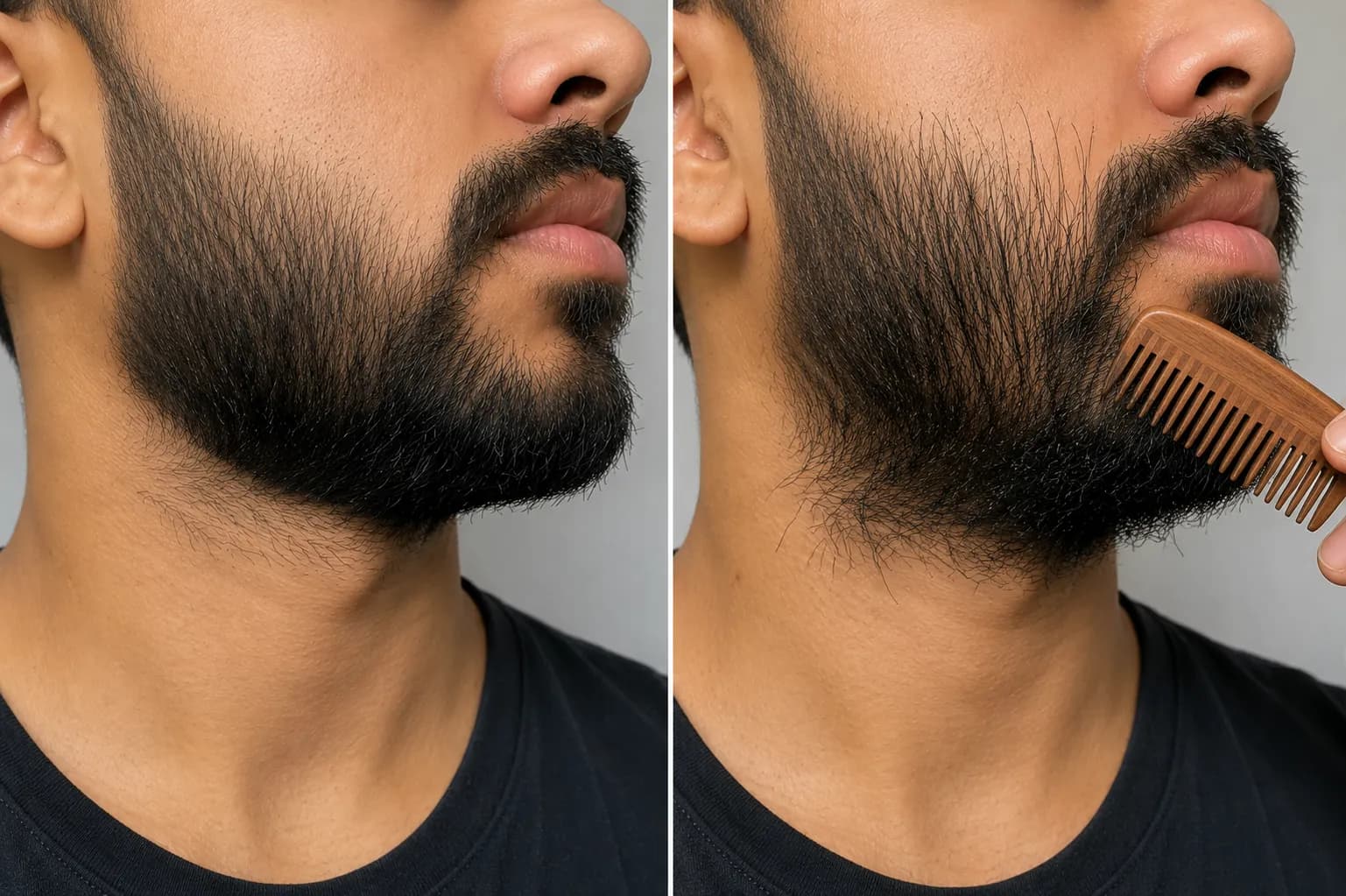
Comb your beard out before trimming, and do it on a dry beard: comb upward first to lift and separate the hairs so strays and true length show, then comb down into the natural shape you intend to cut. Comb before oil, because oil weighs the hairs down and hides length, and reach for a comb on shorter beards or a brush on longer ones.
The up-then-down order does two jobs. Combing up pulls the hidden longer hairs proud of the surface so you can catch the strays, and combing down sets the beard into the everyday shape you are actually cutting toward.
Dermatologists also recommend combing the hairs out when you trim, which detangles the beard and gives the trimmer a clean, even field to work across. Oil comes after that, never before, so the length you see is the length you cut.
One more prep decision pairs with this one. Which way you run the trimmer, and which direction to cut relative to the grain, changes the finish as much as combing does.
Frequently Asked Questions
Should you style your beard before trimming?
Style it into its everyday shape first, combing the beard the way it naturally falls each day so you cut to how it actually sits, not a fluffed-up version. If you use products daily, apply them lightly first, since they change how the hairs lie and therefore where you should cut.
How dry should your beard be before trimming?
One hundred percent dry, because a damp or "mostly dry" beard still stretches and the parts that stayed wettest end up shortest once everything dries and shrinks up. Towel the beard, then finish with a cool-air blow dry until there is no dampness left before the trimmer touches it.
Can you wash beard trimmings down the sink?
Avoid it, because beard clippings clump together and bind with soap and oil, which is how they build up and clog a drain over time. Wipe the trimmings into the trash with a towel, or fit a small mesh drain strainer to catch them before they reach the pipe.
Can you trim your beard wet or dry if you are in a rush?
Still dry, even when you are short on time, because a rushed damp trim is the fastest way to over-cut when the wet beard hangs long and then shrinks up after you have already committed to the line. A quick cool-air dry costs a minute and saves you weeks of regrowth.
Does trimming a wet beard ever look fine?
Only for a few minutes, since a wet-trimmed beard can look sharp while it is still damp, then it dries, shrinks back, and reveals the "chin strap" or patchy look you did not intend. That short-lived good result is exactly why wet trimming fools so many people.
The Bottom Line
Whether you trim your beard wet or dry comes down to what you are trying to control. If you are setting length, dry it to 100 percent first, comb it out, and cut, because wet hair reads long and shrinks back on you the moment it dries.
My own five-zone test lost an average of about 17 percent between the wet and dry readings, which is the difference between a clean line and a patchy one.
The only time to work wet is when a razor is drawing a line, a neckline or cheek edge after a shower, or a full shave to take the beard off. Shower first for softer skin, dry the beard fully, trim, and edge wet only if you use a blade.
Get that order right and the guesswork disappears, along with the over-cut regret that follows a wet trim.
Summarize with AI
Keep reading
Related articles
 Styles, Shapes & Length Guides
Taper your beard at home with the 4-guard step-down method - drop one guard at a time for a clean low, mid, or high gradient without bowl-beard lines.
 Styles, Shapes & Length Guides
Set your stubble to one even length across three tiers (light, medium, heavy mm), fix the patchy jawline, and learn how often to re-cut for a clean 3-day look.
 Styles, Shapes & Length Guides
Keep the sides short and the chin long — the opposite of a haircut — to slim a round face. A barber-reviewed shaping guide by face shape, with before/after.
 Styles, Shapes & Length Guides
Trim lines and flyaways, not length, to stay sharp while growing your beard. A barber-reviewed 4-stage timeline to grow out without losing an inch.
Comments
Moderated for quality. Share a correction, ask a follow-up, or tell us what worked for you - every comment is reviewed before it goes live.