
Beard Guard Sizes: Why There's No Universal #3 (mm Chart)
Match every beard guard number to its mm length and the look it gives, plus why coarse hair needs one size longer and when to drop the guard entirely.
Written by Andre ColemanReviewed by Russell Hartley
Last updated on July 14, 2026
When you buy through links on our site, we may earn an affiliate commission (at no extra charge), which we use to fund new product tests. Learn more.
Summarize with AI
You are at the mirror, trimmer in one hand and a fistful of plastic combs in the other, and every comb has a different number stamped on it. The question of what guard to trim your beard with feels like it should have a one-number answer.
It does not. That is the most useful thing I took away from a week of measuring every comb in two different trimmers against my own beard.
The number on a guard is a starting point, not a promise. The same comb leaves a different length on coarse hair than on fine, which is exactly why a "#3" can betray you.
Quick answer: For a short, neat beard most men want a #3 or #4 guard (roughly 10 to 13 mm), with #1 to #2 (about 3 to 6 mm) for stubble and #5 and up (16 mm or more) for fuller looks. Whatever your target, clip on the guard one number longer first, then step down.
Here is the fast version by goal:
Stubble: #0.5 to #2, about 1.5 to 6 mm
Short beard: #3 to #4, about 10 to 13 mm
Medium beard: #5 to #6, about 16 to 19 mm
Long or full beard: #7 to #8 and beyond, about 22 to 25 mm
One caveat before you commit to a number. That chart assumes average hair, so if yours is coarse, thick, or curly, read the "no universal #3" section below before you trim, because the same guard will read shorter on you.
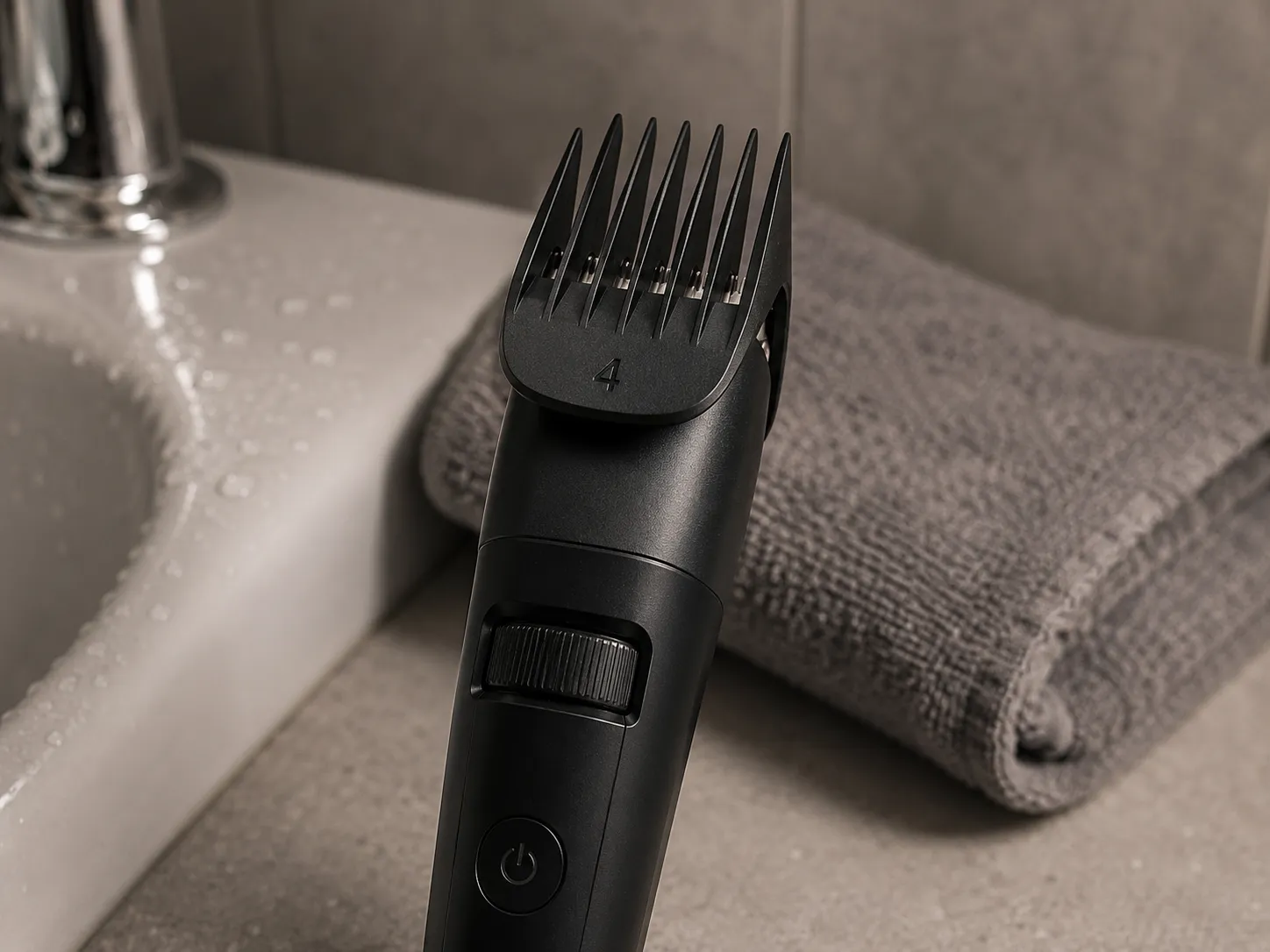
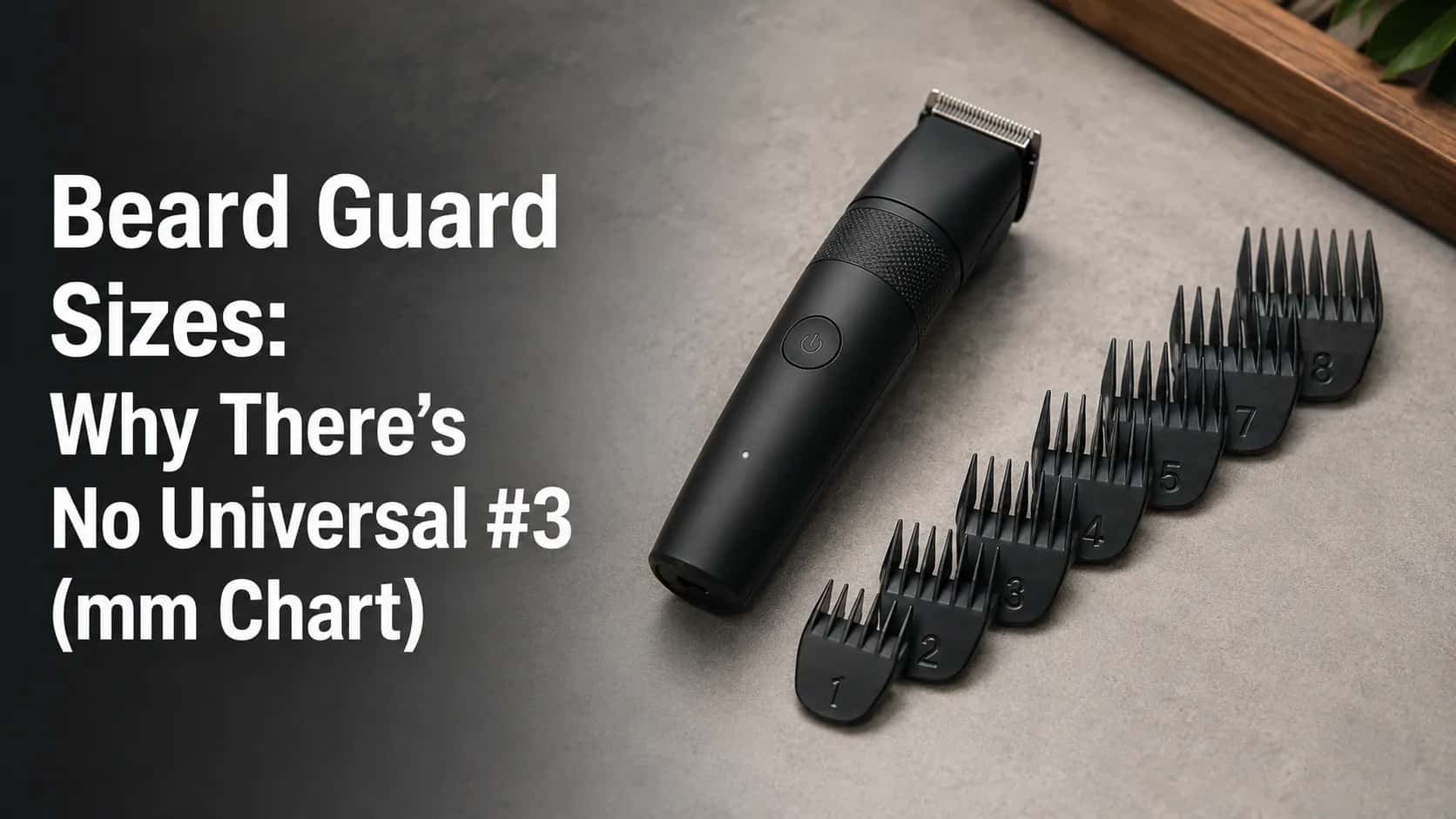
Beard Guard Numbers, mm and What Each One Actually Looks Like
Beard trimmer guards are the clip-on combs (also called guide combs) that set how much hair the blade leaves behind. The numbering runs low to high, and each step adds roughly 3 mm, so the range spans about 1.5 mm at a #0.5 up to 25 mm at a #8.
According to Ready Sleek's guard chart, a #3 lands near 10 mm and is the most popular all-rounder. Millimetres are the unit that travels between brands, and numbers are not.
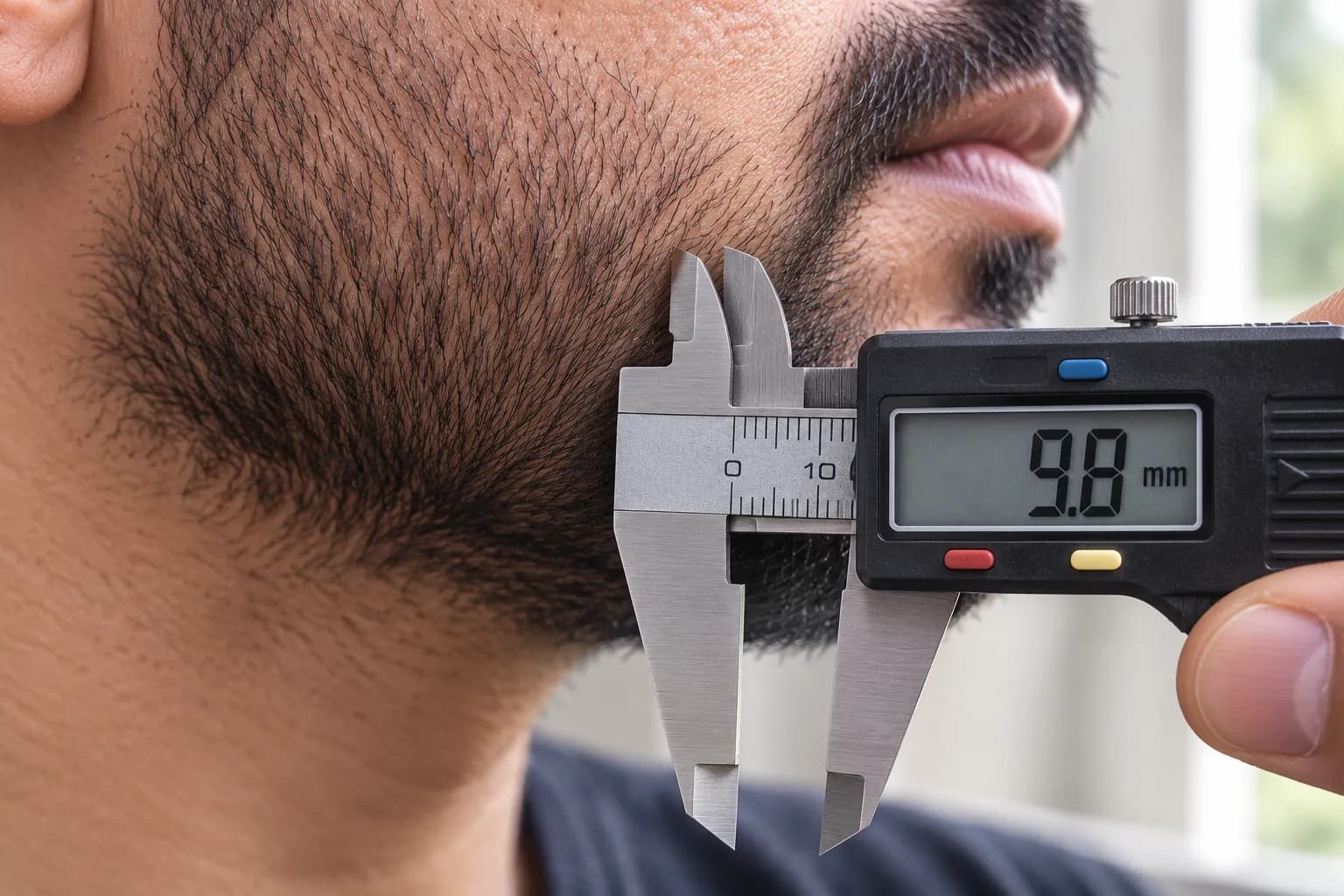
The table below is the decoder. The final column is the length I actually measured on my own beard with digital calipers, which runs a touch under the printed spec because dense hair stands off the skin and gets clipped a hair shorter.
Guard | Spec length | Inch (approx) | What it looks like | Best for | Measured on my beard |
|---|---|---|---|---|---|
#0.5 | 1.5 mm | 1/16 in | Faint shadow | Pre-stubble shadow | 1.5 mm |
#1 | 3 mm | 1/8 in | Clean stubble | 5 o'clock shadow | 2.5 mm |
#2 | 6 mm | 1/4 in | Heavy stubble | Defined short stubble | 5.5 mm |
#3 | 10 mm | 3/8 in | Short beard | The popular default | 9 to 10 mm |
#4 | 13 mm | 1/2 in | Short to medium | Natural, polished | 12.5 mm |
#5 | 16 mm | 5/8 in | Medium | Fuller, still shaped | 15.5 mm |
#6 | 19 mm | 3/4 in | Medium-long | Needs regular combing | 18.5 mm |
#7 | 22 mm | 7/8 in | Full beard | Routine upkeep | 21.5 mm |
#8 | 25 mm | 1 in | Longest standard guard | Commanding, established | 24.5 mm |
Notice the #3 row shows a range, not a single figure. That is the whole point of this guide, and it is the gap every other chart skips over.
To see each length on a real face rather than on a ruler, our printable companion will show every guard length by photo so you can match the look before you pick the number.
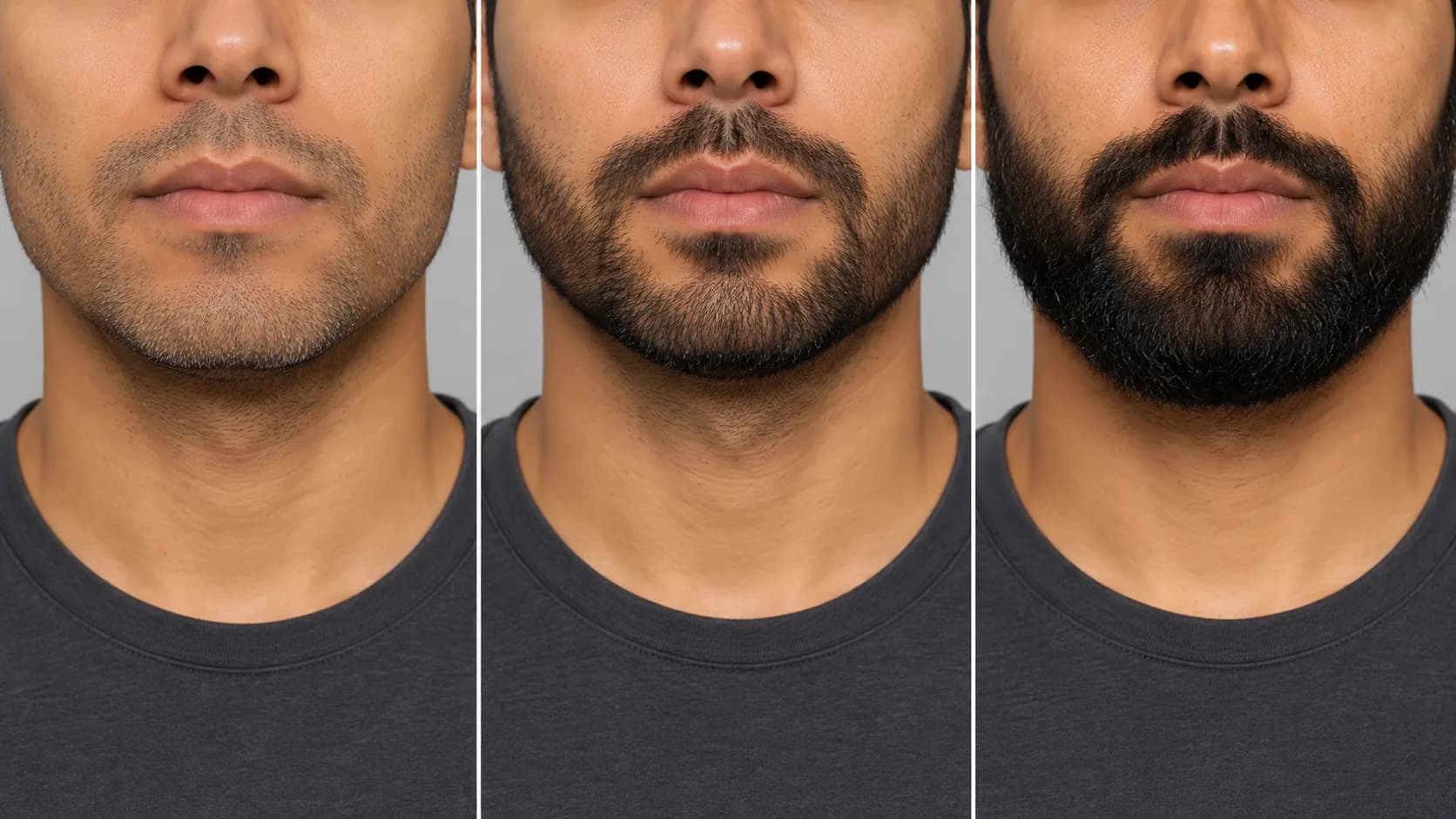
Which Guard to Use for Your Goal, From Stubble to Long
The right guard depends less on a magic number and more on the look you are aiming for, and the safe move is always to pick your target tier and start one number above it. Texture matters too.
BeardBeasts notes that thin or patchy beards tend to look better kept shorter, while coarse and curly beards hold shape better at a #3 or longer. Use the four tiers below as your decision shortcut.
Stubble (#0.5 to #2, about 1.5 to 6 mm). This is the engineered "5 o'clock shadow" zone. A #1 gives clean, even stubble that reads intentional rather than lazy, and a #2 adds enough weight to define a jaw.
Short beard (#3 to #4, about 10 to 13 mm). The everyday sweet spot, neat and low-maintenance. If you are committing to this length, the full walkthrough of how to trim a short beard step by step takes it past the guard stage into sides, front, and neckline.
Medium beard (#5 to #6, about 16 to 19 mm). Now you have real fullness, so shape starts to matter more than length. You will be combing before every trim and tidying strays by hand.
Long or full beard (#7 to #8 and up, about 22 to 25 mm). Past a #8 most plastic guards run out. You move to scissors or an extended comb for the tips.
People also ask which length is "most attractive," and survey data tends to crown short-to-medium beards rather than the extremes. Treat that as preference, not law, because the length that suits your face and growth pattern wins every time.
Why There's No Universal #3, and Coarse Versus Fine Hair Changes Everything
Here is the counterintuitive truth the charts bury: a #3 does not leave the same beard on every man. The guard sets a fixed distance from the skin, but how the hair sits in that gap changes the result.
Mission Beard explains that coarse and curly hair needs a longer guard, because dense hair stands away from the face and curl retracts after the cut. The beard then looks shorter than the number promised.
Why Did My Beard Come Out Shorter Than the Guard Number?
Because the number describes the comb, not your hair. On my own face the difference was easy to measure, and it was bigger than I expected.
Where I trimmed | Guard used | Visible length after |
|---|---|---|
Coarse cheeks | Wahl #3 | About 8 mm |
Finer jawline | Wahl #3 | About 10 mm |
Same comb, same pass, two different beards, roughly 2 mm apart. That is the gap that makes a man think he picked the wrong number when he actually picked the wrong assumption.
The fix is one sentence: on coarse, thick, or curly hair, start one number longer than your target, then step down only if you want more off. If you are maintaining a stubble length, this effect is even more visible, because a millimetre or two is a much bigger share of the total.
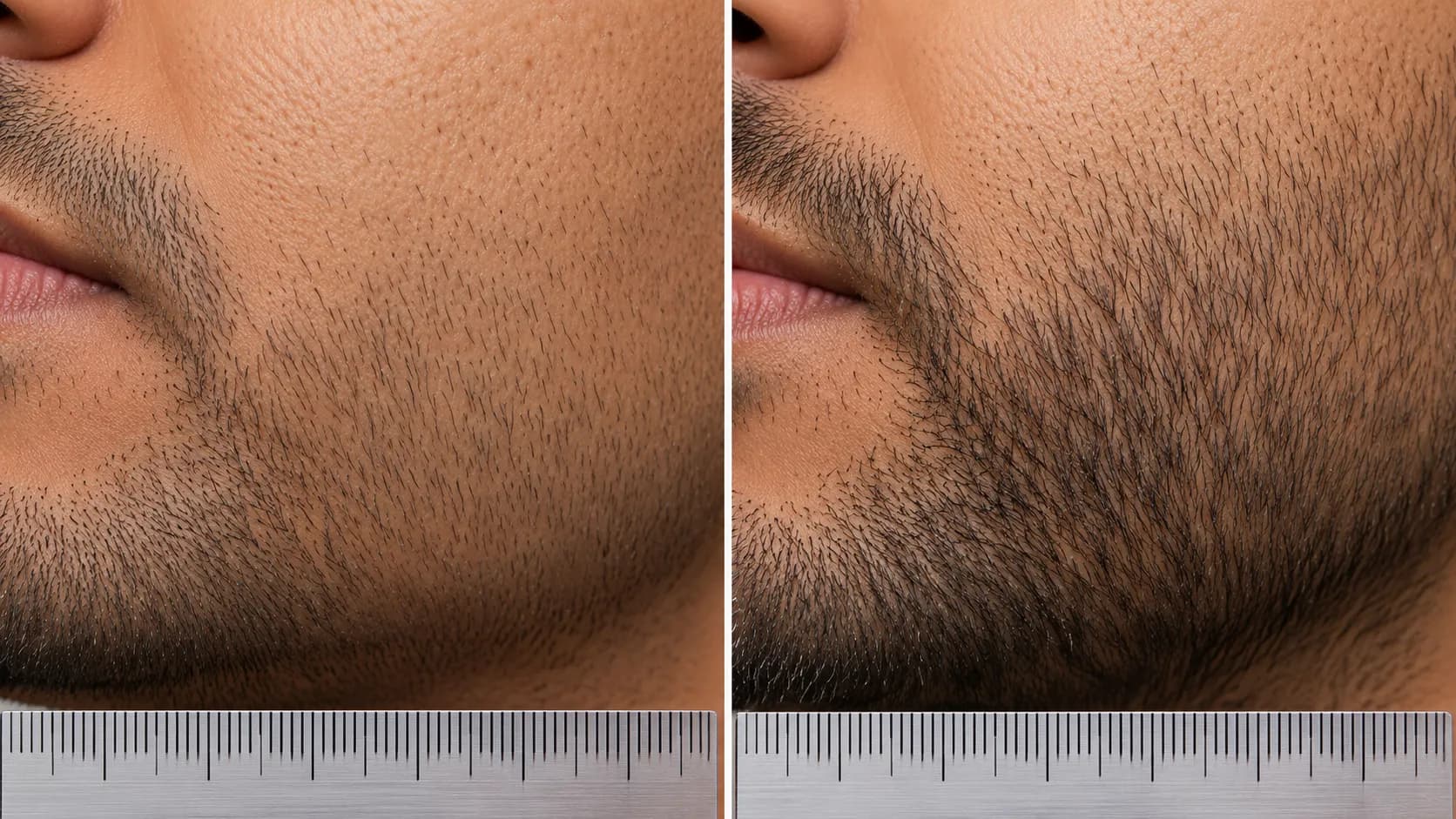
How to Use the Guards: Start Longest, Then Step Down
The safest way to trim a beard with clippers and a guard is to work from long to short in stages, never the other way around. The method is forgiving: clip on a guard one number above your target, pass against the grain to lift the hairs, then comb, assess, and step down only if you still want more off.
Wahl's guide-comb advice is to run a longer comb on the chin and step down toward the cheeks and sideburns for a natural taper. Follow these steps in order:
Start clean, dry, and combed. Wet hair stretches, so Ready Sleek recommends trimming dry to see your true length.
Clip on a guard one number longer than your target and tug-test it. A secure click means it will not pop off mid-pass.
Make the first pass against the grain, moving up to lift the hairs. You should see even bulk come off, with no tracks or steps.
Comb the beard back down and look. If it is still longer than you want, this is the moment to step down one number.
Optional finishing pass with the grain for a softer, less blunt edge.
Vary the guard by zone for a natural shape, longer on the chin and shorter on the cheeks and sideburns.
This guard stage is one step inside a bigger routine. The complete beard-trimming routine covers prep, neckline, and detailing around it.
Trim dry only. Wet hair cuts shorter than the number suggests, and that is the single most common way men overshoot their target length.
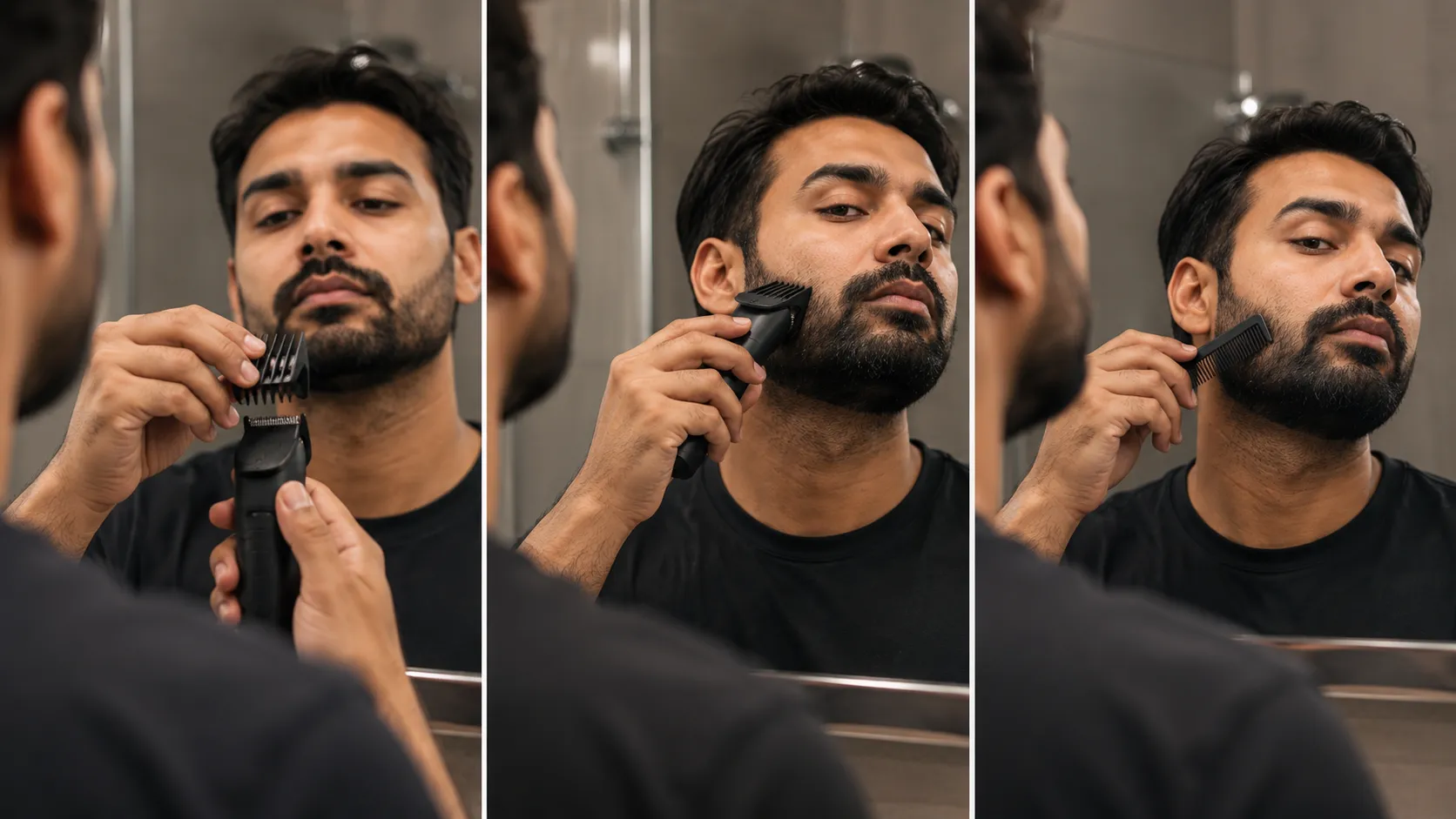
Trimming With No Guard, for Cheeks, Neckline and Hard Edges
You drop the guard only for the edges, never for the bulk. Trimming a beard with no guard means using the bare blade to define a crisp cheek line, a clean neckline, and the mustache border, where a comb would only get in the way.
Barber Craft's guidance is to switch to the naked blade for precise lip-line and edge detailing after the guarded passes are done. The technique is light and patient.
Hold the blade flat or at a shallow angle, use the lightest pressure, define the line first, then clean below it. Step back often so you are shaping the whole edge, not one spot.
The mistake to avoid has a name in the r/beards world: chasing the line. Each pass you take a little higher to "even it up," and three passes later your neckline is halfway up your jaw.
My own near-miss was the neckline. I caught myself creeping upward to fix one stray, stopped, and let it grow back rather than chase it, which is the only real cure.
If you would rather detail those edges by hand with no electricity at all, you can detail the edges with scissors using the scissor-over-comb method instead.
Skin-safety note: with no guard the blade touches skin, so stretch the area flat, use light pressure, and do not chase a line higher each pass.
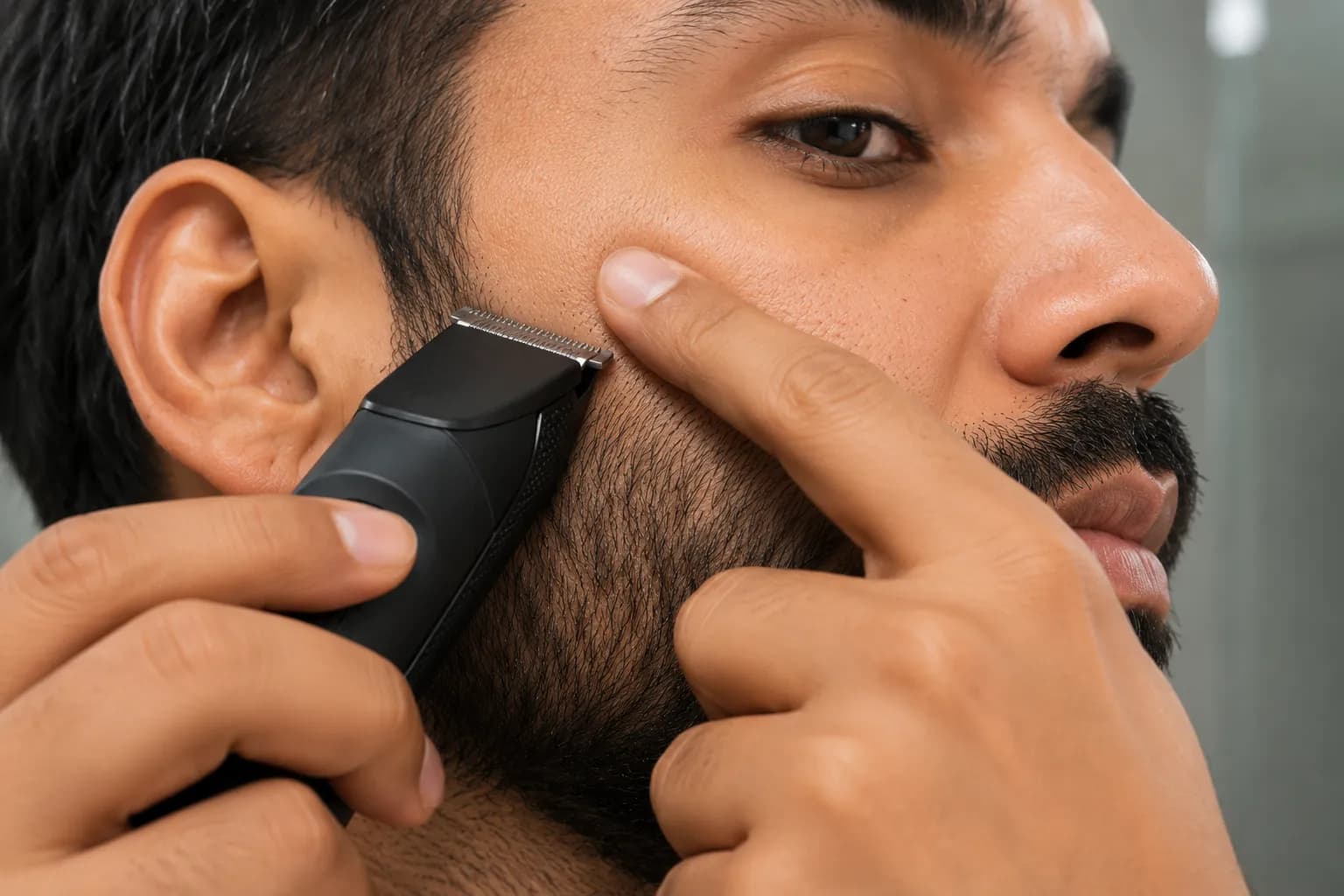
Zero Gap Versus Zero Blade: What They Mean and When to Use Each
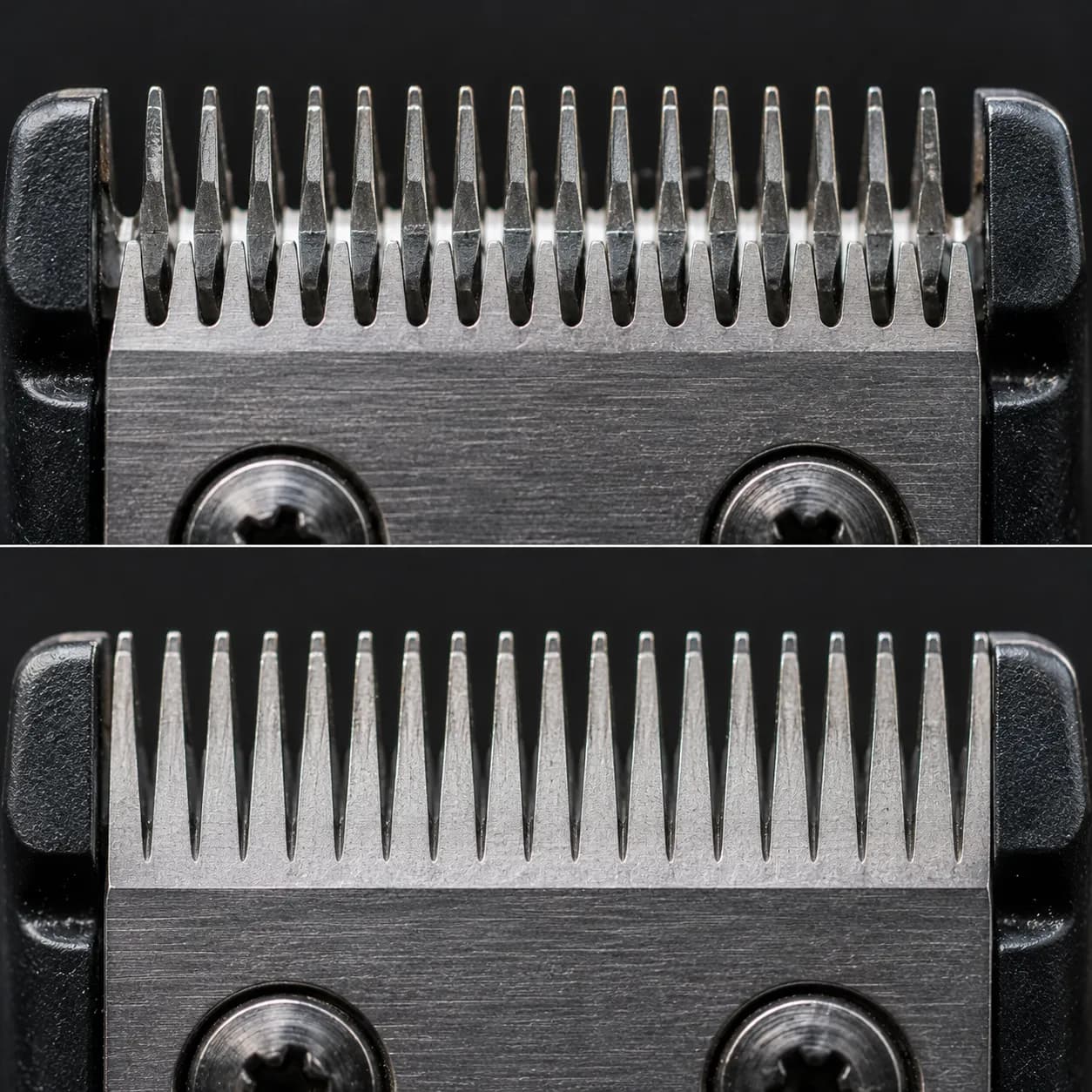
These two terms get muddled, and they are not the same thing. Zero-gapping means aligning the trimmer's inner cutting blade flush with the outer blade, tooth to tooth, for the closest possible line.
ProStylingTools describes it as a barber technique that gets you sharper edges but carries a real nick risk if the blades end up misaligned. Trimming with no blade guard, by contrast, just means running the bare blade at its 0 mm setting.
Factory blades ship with a small safety buffer on purpose. According to Bestbomg's zero-gap guide, that buffer is usually around 0.5 to 1.5 mm, and the safe way to test an adjusted blade is a paper test followed by a forearm test before it touches your face.
Use zero-gapping when you want a crisp, defined cheek or neck line and you are confident with the tool. Skip it if you are new, because the factory gap is fine for most beard work and the upside is small against the downside of a cut.
Most men never need to zero-gap. It is a barber move for sharp lines, not a requirement for everyday beard trimming.
Why a Wahl #3 Is Not a Philips #3
Guard numbers are not standardised, which is the practical reason this guide keeps pushing you toward millimetres. Ready Sleek points out that Wahl uses the classic numbered system, Philips labels its combs directly in millimetres, and Braun often uses a dial in 0.5 mm steps.
A "#3" only means something once you know whose tool it sits on. Guards are also brand-specific and do not swap between makes.
Brand | How guards are labelled | A 10 mm-ish example | Interchangeable? |
|---|---|---|---|
Wahl | Numbered, #1 to #8 | #3, about 9 to 10 mm | No, brand-specific |
Philips Norelco | Direct millimetres | The 10 mm comb | No |
Braun | Dial, 0.5 mm steps | Dial set to 10 mm | No |
On my own beard, the Wahl #3 and the Philips 10 mm comb finished within about half a millimetre of each other on the ruler. Neither matched the picture in my head, though, because my coarse cheeks pulled the visible length down to around 8 mm regardless of brand.
There is one more wrinkle worth knowing. Beard trimmers usually ship zero-gapped from the factory, so as ClipHub explains the guard you attach, not a lever or dial, is what sets the length.
If you are shopping for a tool that carries the full range of combs, our tested roundup of trimmers with the full guard range compares them by kit.
FAQs: Beard Guard Sizes and Numbers
Is a #2 or #3 Guard Shorter?
A #2 is shorter. It leaves roughly 6 mm, while a #3 leaves about 10 mm, because lower numbers always mean a closer cut and each step up adds around 3 mm.
What Is a 1/2 (Half) Guard?
A half guard sits between two whole numbers for blending. A #1.5, for example, leaves about 4 to 5 mm, which is handy for melting the step between a #1 and a #2 so there is no visible line.
What Number Guard Is Best for a Short Beard?
A #3 or #4 is the short-beard default, leaving roughly 10 to 13 mm. The #3 reads neat and low-maintenance, while the #4 keeps a little more weight if your hair is fine.
Can I Use Hair-Clipper Guards on a Beard Trimmer?
Only if they are the same brand and physically fit. Clipper and trimmer guards are not universal, the numbers do not line up exactly, and a loose comb risks an uneven cut, so check the fit before you trust it.
What Guard Do Barbers Use for a Beard?
Most barbers work in the Wahl numbered system because it is the professional standard, and a #3 or #4 is a common starting point for a short beard. From there they step down by zone to shape the taper rather than relying on a single number.
The One Rule Worth Keeping
If you remember nothing else, remember that the guard number is a label for the comb, not a guarantee for your face. The honest answer to what guard to trim your beard with is a starting point you then verify, which is why thinking in millimetres beats memorising numbers every time.
Pick the tier that matches your goal, clip on the guard one number longer, and step down only when you have looked. Your hair texture, not the marketing on the box, decides what that number actually leaves behind.
Do that once with your own trimmer and a set of calipers, and you will never trust a bare number the same way again.
Summarize with AI
Keep reading
Related articles
 Styles, Shapes & Length Guides
Trim your beard dry so it dries even; wet hair stretches then shrinks. Go wet only for a razor lineup in the shower, plus wash and comb order.
 Styles, Shapes & Length Guides
Taper your beard at home with the 4-guard step-down method - drop one guard at a time for a clean low, mid, or high gradient without bowl-beard lines.
 Styles, Shapes & Length Guides
Set your stubble to one even length across three tiers (light, medium, heavy mm), fix the patchy jawline, and learn how often to re-cut for a clean 3-day look.
 Styles, Shapes & Length Guides
Keep the sides short and the chin long — the opposite of a haircut — to slim a round face. A barber-reviewed shaping guide by face shape, with before/after.
Comments
Moderated for quality. Share a correction, ask a follow-up, or tell us what worked for you - every comment is reviewed before it goes live.