
How to Trim a Beard With Scissors: 6 Steps, Cut Dry
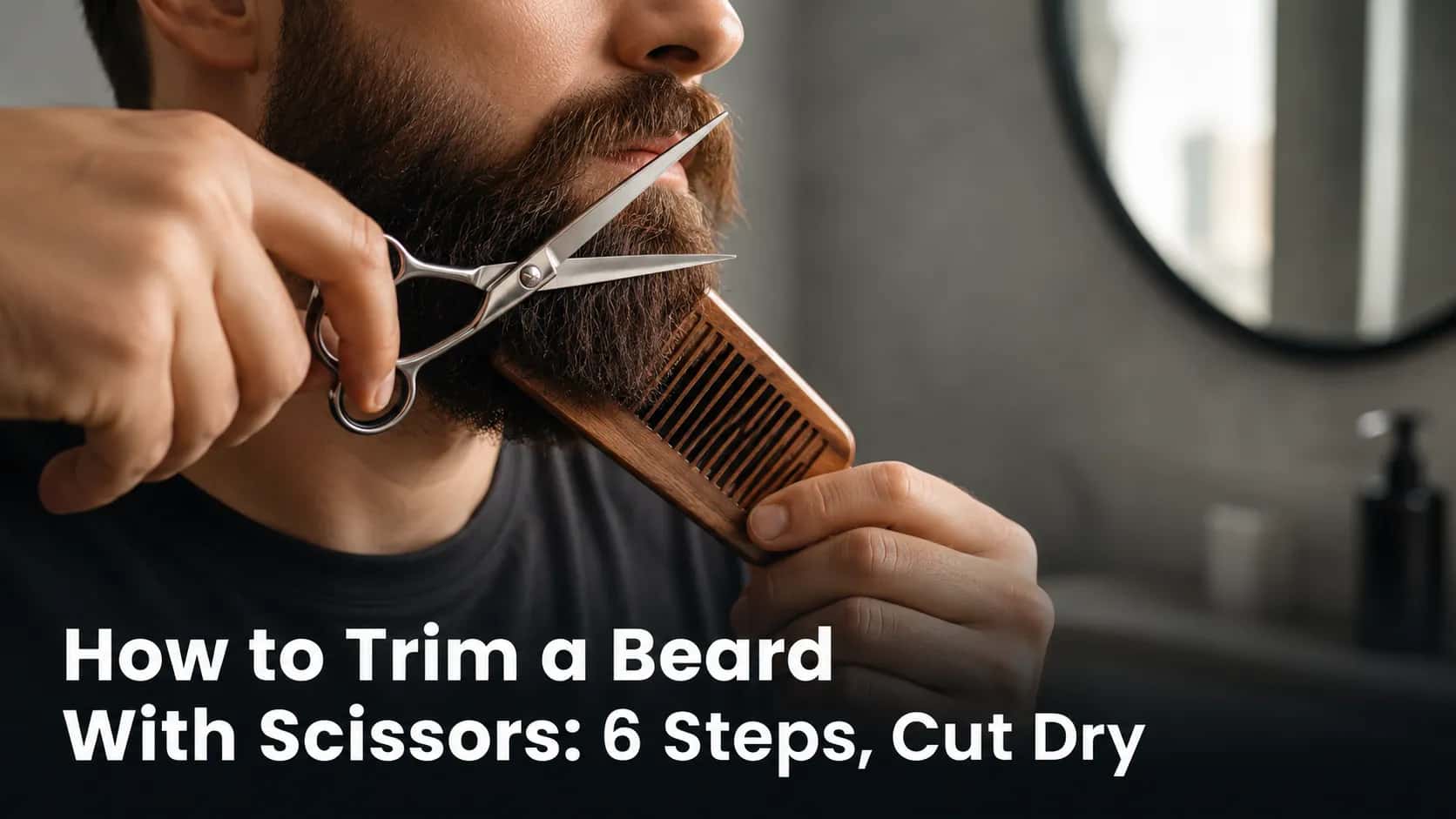
Trim your beard with scissors the barber way: cut it dry, work scissor-over-comb in small sections, and get a natural finish with more control than a trimmer.
Written by Andre ColemanReviewed by Russell Hartley
Last updated on July 14, 2026
When you buy through links on our site, we may earn an affiliate commission (at no extra charge), which we use to fund new product tests. Learn more.
Summarize with AI
Most men reach for scissors only when their trimmer dies. That is backwards. A sharp pair of grooming shears and a comb give you more control than any electric trimmer, which is exactly why barbers still keep scissors on the counter.
The catch is technique. Learning how to trim a beard with scissors comes down to two habits: cut your beard bone-dry, and take less than you think. Get those right and you get a soft, natural finish that a guard simply cannot produce. This guide walks the full method in six steps, with the scissor-over-comb move that does most of the work.
The 50-Second Answer: Trimming a Beard With Scissors
Yes, you can trim a beard with just scissors and a comb. Wash and fully dry your beard, comb it down, then work scissor-over-comb in small sections to remove bulk. Snip the flyaways, shape the bottom, and tidy the mustache. Cut conservatively, because you can always pass again but you cannot add hair back.
That is the whole method, and it is why scissors beat a trimmer for control and a natural look. The six steps below expand each move, with the prep rule that stops a scruffy result before it starts.
Here is the sequence at a glance:
Wash and fully dry your beard.
Comb it down to its real shape.
Remove bulk with scissor-over-comb.
Snip the flyaways and split ends.
Shape the bottom and jawline.
Tidy the mustache, then check your work.
What You Need: Grooming Shears and a Comb, Not Kitchen Scissors
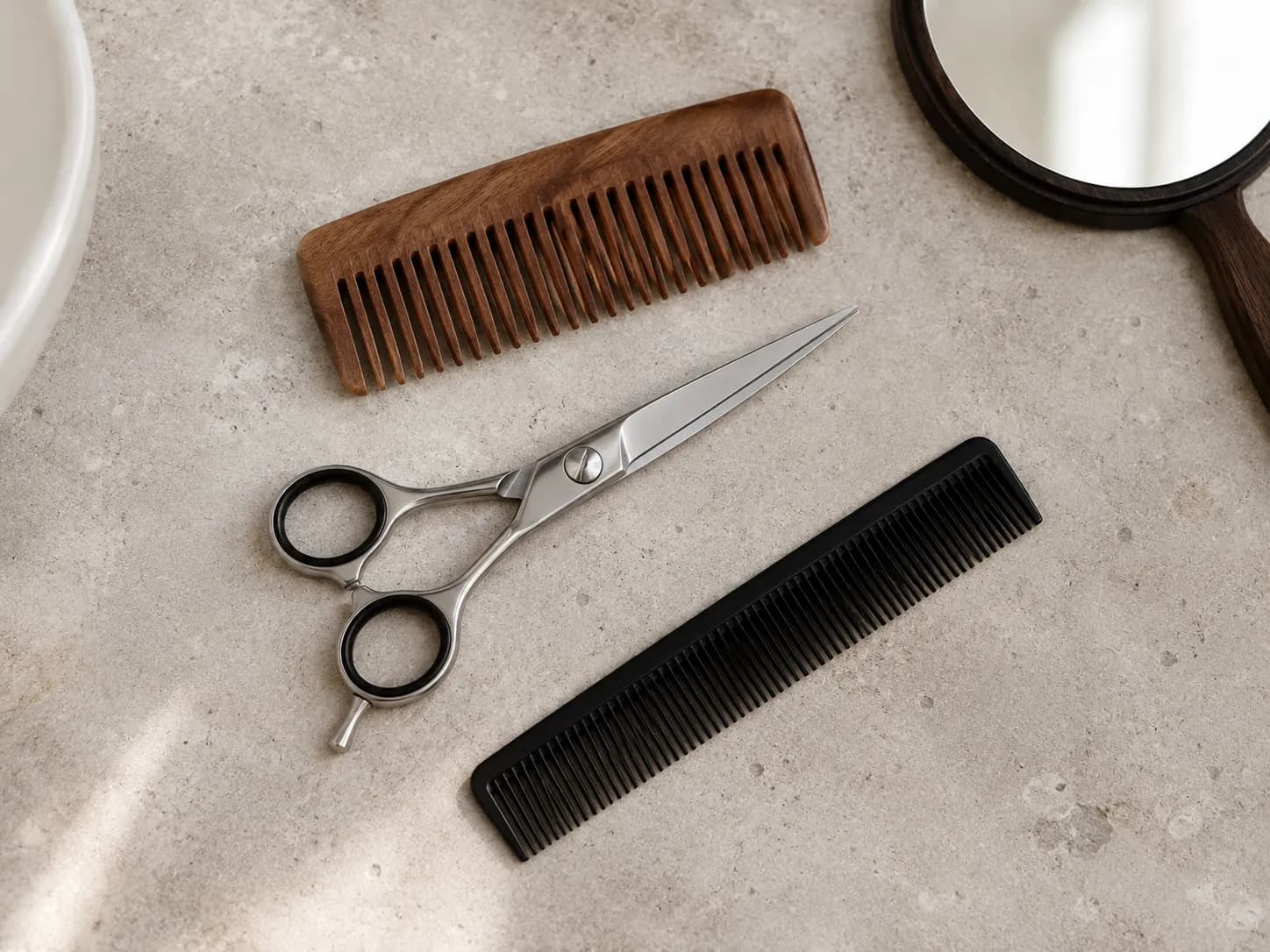
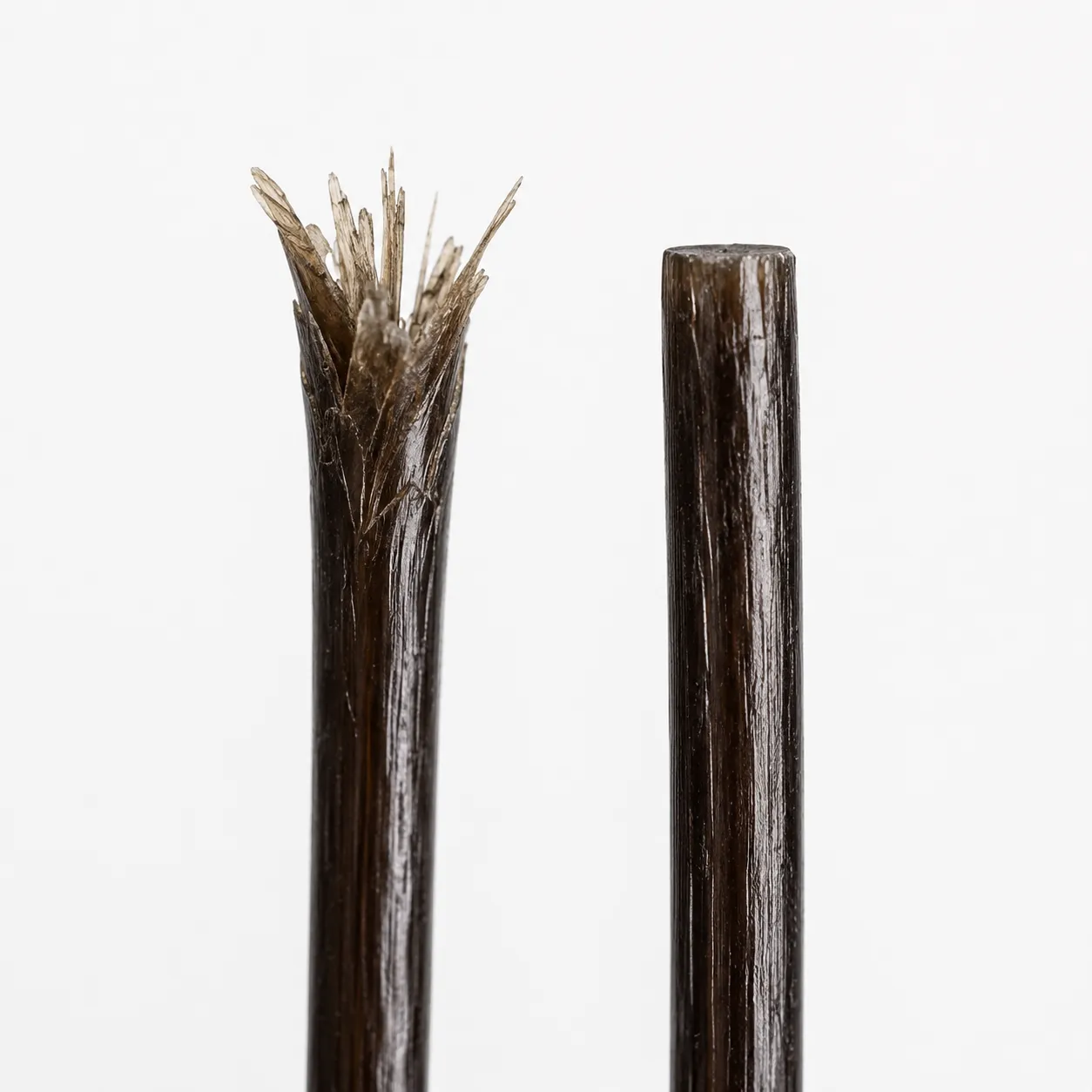
To trim a beard with scissors you need just two things: a sharp pair of grooming or beard shears around 5 to 6 inches long, and a beard comb. Dull or kitchen scissors fold coarse hair instead of slicing it, which leaves frayed, split ends that look worse a week later. As Beardbrand notes, scissors give you maximum control and are far harder to ruin a beard with than clippers.
You do not need a kit. Two combs help, though: a wide-tooth comb to detangle, and a fine-tooth comb that adds tension for detailing.
Blade length is a quiet detail most guides skip. A longer blade suits full-blade scissor-over-comb passes, while a shorter pair gives you tip control for flyaways and the mustache.
My first attempt used a cheap drugstore pair, and they snagged and pulled the coarse hairs on my chin. Switching to a sharp 5.5 inch pair was the difference between a clean cut and frayed, scraggly tips.
The point is control, not gear. Sharp shears and a comb beat any expensive kit you do not know how to use.
Prep: Wash, Dry Completely, Then Comb It Down
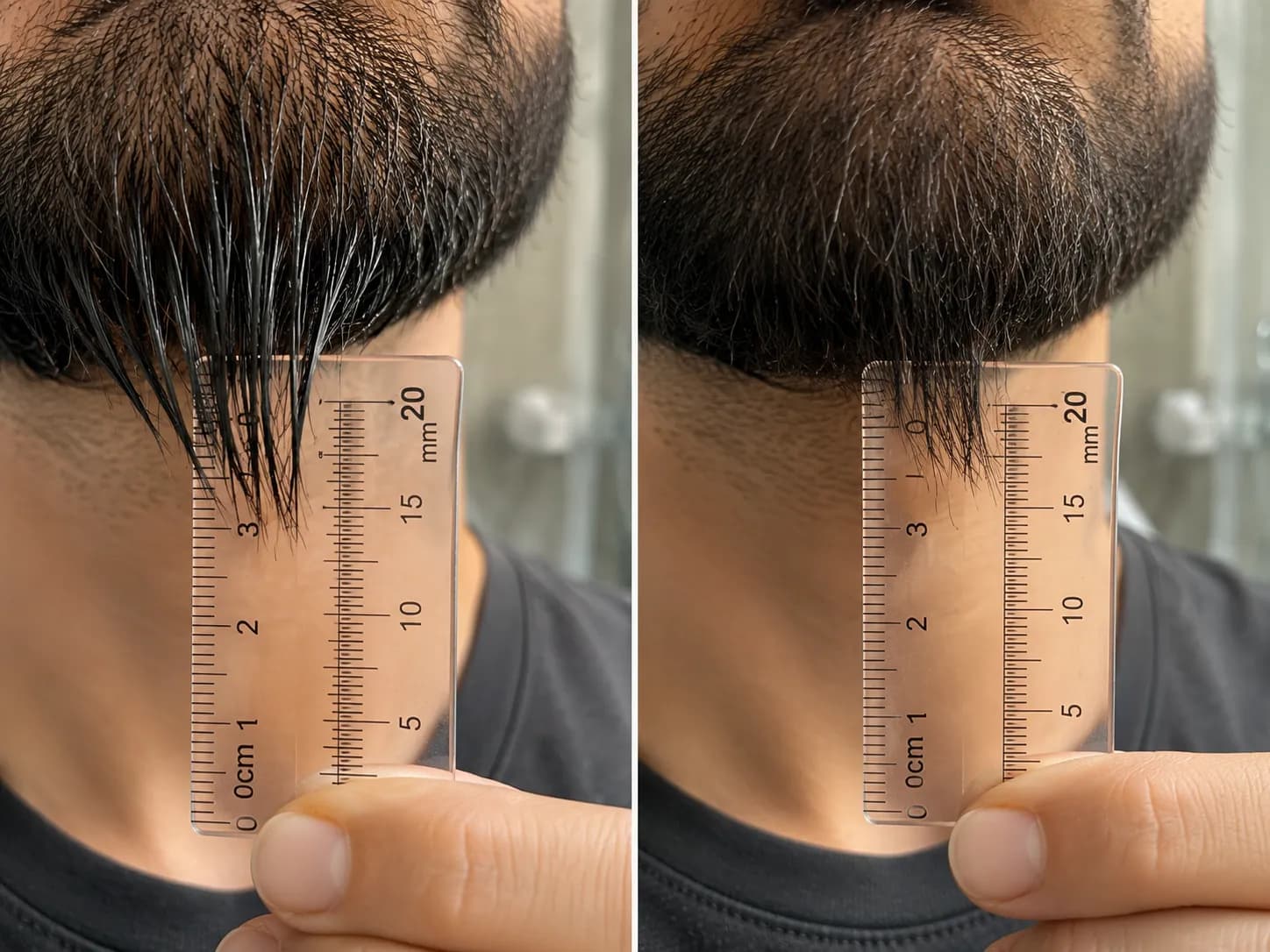
Always trim your beard dry. Wash it, dry it completely, then comb it down. Wet beard hair is weighed down by water and stretched longer than it really is, so if you cut it wet it springs up shorter as it dries and leaves you with an accidental 5 o'clock shadow. According to stylist guidance on dry cutting, cutting dry removes the guesswork because what you see is the true length.
The reason is simple physics. Keratin absorbs water, so wet strands stretch and hang longer, then contract once they dry.
I measured this on my own beard to see how much it matters. The gap was bigger than I expected.
Beard section | Length wet | Length dry | Difference |
|---|---|---|---|
Chin (longest point) | 18 mm | 14 mm | 4 mm shorter dry |
Jaw | 15 mm | 12 mm | 3 mm shorter dry |
Cheek | 11 mm | 9 mm | 2 mm shorter dry |
That 4 mm at the chin is the entire difference between a tidy trim and a hack job. Even a cool blow-dry counts, so do not trim damp.
Skip heavy beard oil before you trim, because it clumps the hairs together and hides the real shape. Comb down first to set the natural fall, then comb up and out once to make the strays stand up.
Remove the Bulk With Scissor-Over-Comb
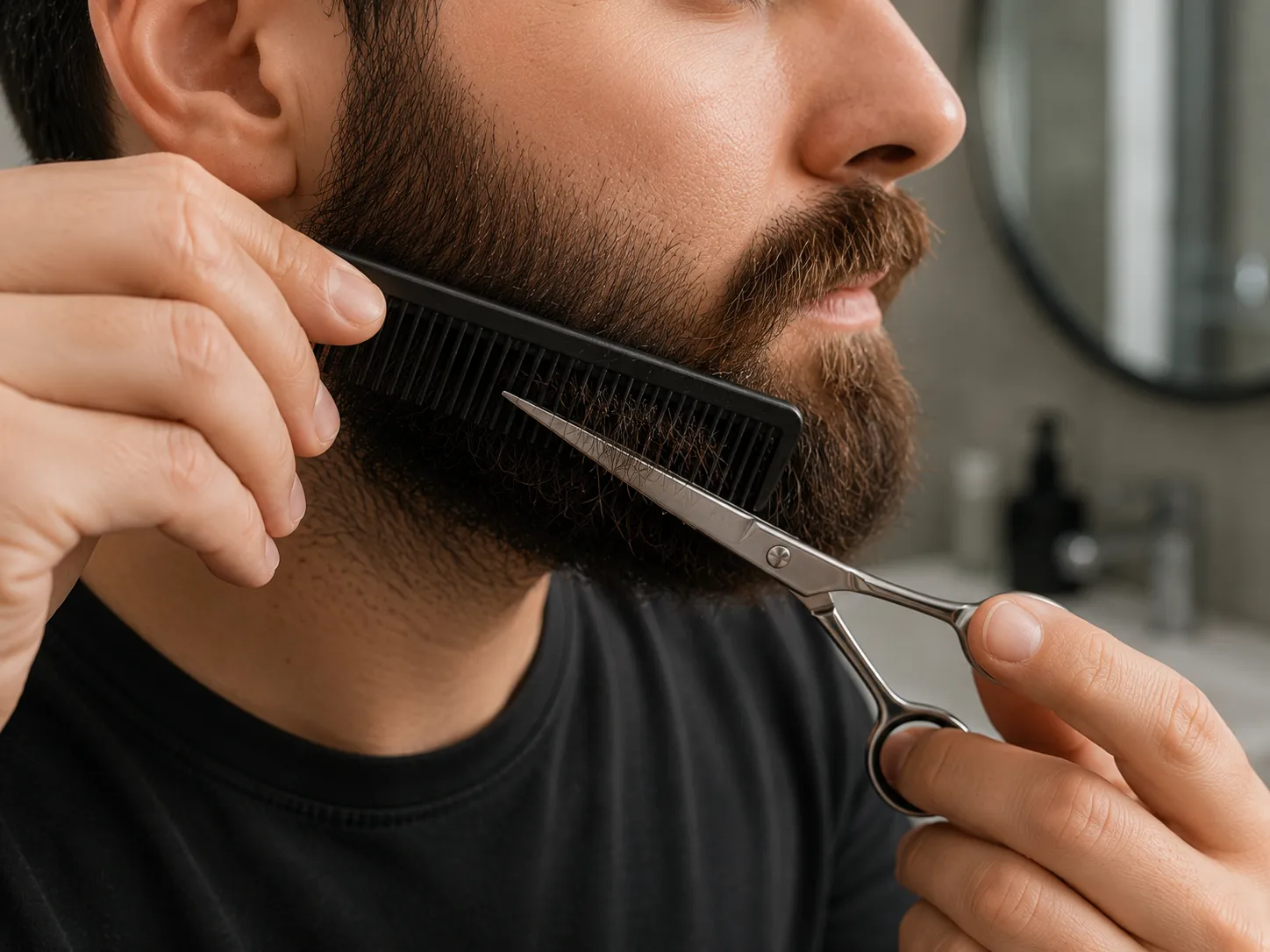
Scissor-over-comb is the core move. Comb a small section of beard outward to lift the hair, hold the comb at a steady angle, and snip only the hairs that poke past the comb's teeth. The comb's angle sets the length, so keep it consistent across passes for an even cut. Work in small sections from under the chin up toward the cheeks, finish one side fully, then match the other. Take less than you think, because you can always pass again.
This is a true barber technique. The London School of Barbering describes how the comb lifts and guides the hair while the scissors cut what passes the teeth, producing a softer finish than clippers. Salon educators add that you should cut only the tips beyond the comb and keep your sections small.
The beard adaptation is to work smaller and lighter than you would on a head. Use the full blade for bulk, switch to tip control for detail, and think of it as keeping a hedge in shape rather than carving it.
Here is the sequence for one pass:
Comb a small section against the growth so the hair stands away from your face.
Hold the comb at a fixed angle and keep it there.
Snip the hair sticking past the comb's teeth, light and quick.
Re-comb and check the tips are even before the next pass.
Do one whole side, then match the other to it.
The single thing that finally stopped my sides coming out uneven was holding the comb at one steady angle. On my first two tries I changed the angle without noticing, and the length drifted with it.
How Do You Snip Flyaways Without Going Too Short?
To remove flyaways, comb your beard up and outward so the strays stand out, then snip each one with just the tips of your scissors, one hair at a time. Target the wiry hairs poking out and the split ends that break your outline. Do not dig the full blade into the bulk, because tip control removes the texture without thinning the beard. Barber Sunny, who has spent over two decades on the scissor-over-comb technique, treats this detailing pass as where the soft, natural finish is won or lost.
Split ends and stragglers are normal between trims, since beard hairs grow at different speeds. Clearing them is what separates a scruffy beard from a tidy one.
The guardrail matters more than the move. I once caught myself thinning the bulk while chasing a single stray, which left a thin patch.
Switching to tip-only snips on lifted hairs fixed it. Flyaways grow back in days, but lost density takes weeks, so resist the urge to over-snip.
Shape the Bottom and Jawline, Half an Inch at a Time
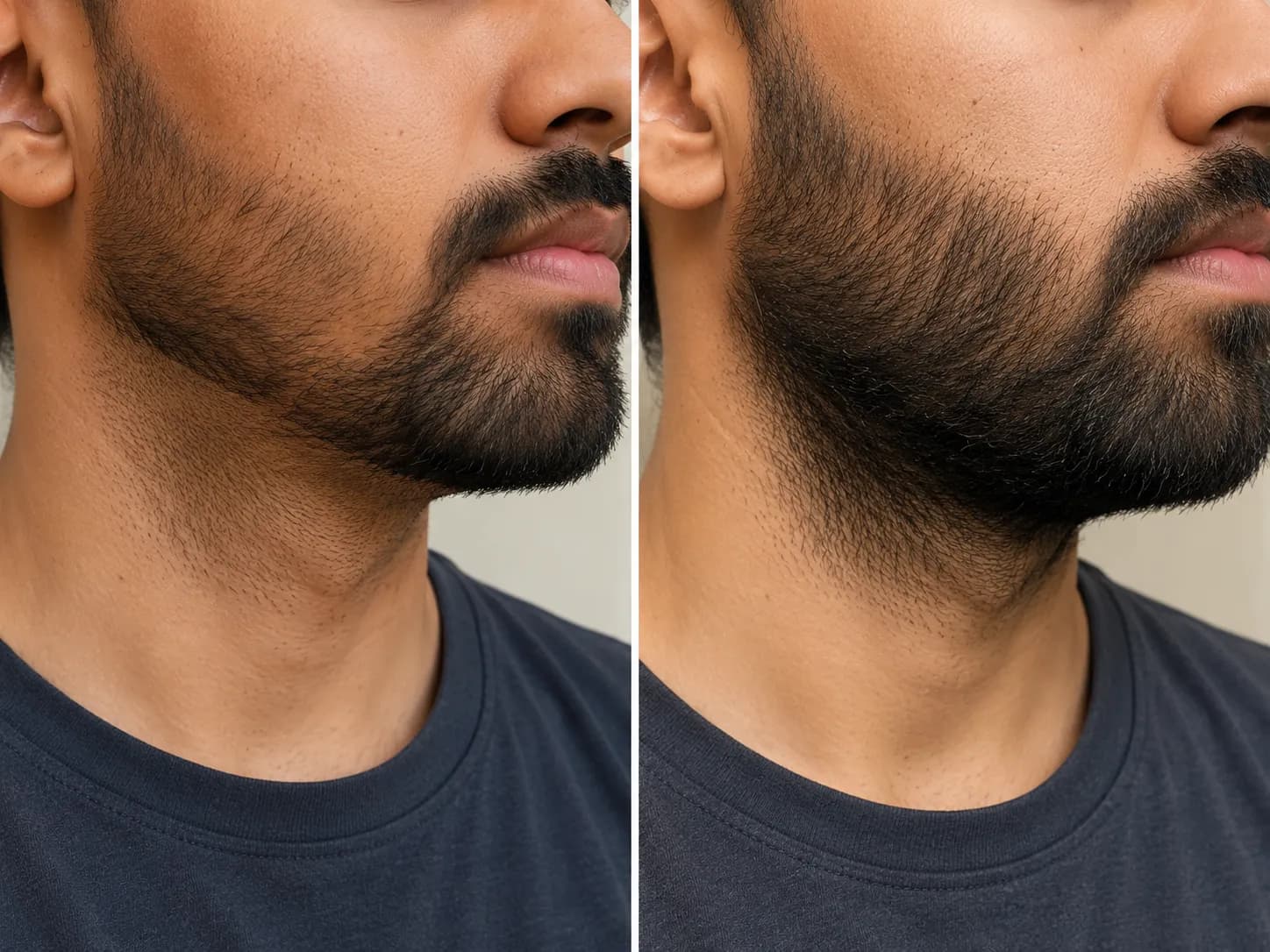
Set your length at the chin first, then shape outward. Reduce in small passes of about half an inch at most, re-combing and re-checking between each one. Round the bottom to follow your jawline rather than forcing a straight line, which looks unnatural on a curved face. Always take less than you think, because you cannot add hair back once it is gone.
The chin is your reference point. Establish the length you want there, then bring the sides and the underside to match it.
A curved bottom edge reads as natural, while a forced flat line reads as a chinstrap. Follow the shape your beard already wants.
I learned the increment rule the hard way. I once took roughly half an inch too much off one side and spent two weeks growing it back to match the other.
Trimming style | What it looks like | The risk |
|---|---|---|
Half-inch passes, re-check each time | Even, controlled, natural curve | Slower, takes patience |
Big cuts to "get it done" | Fast | Easy to over-cut and go too short |
Small passes are insurance you can actually see working.
Tidy the Mustache and Lip Line
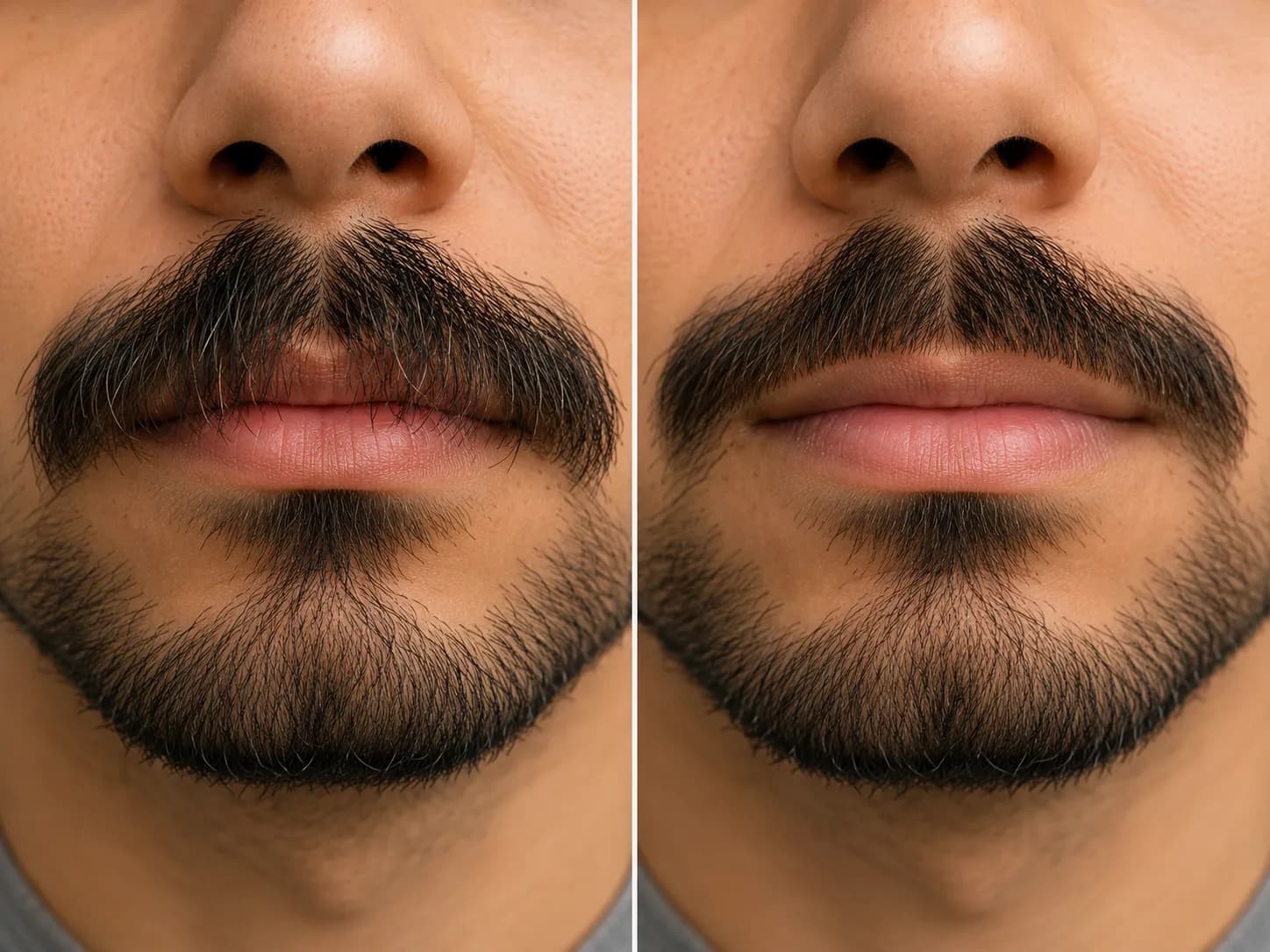
Trim the mustache last. Comb it straight down over your top lip, then snip only the hairs that fall clearly below your lip line, using the scissor tips for control. Keep the density in the middle, because thinning the center weakens the whole shape. Shape your beard first so you can judge the mustache against the finished length.
Sequence matters here. Trim the beard, settle its shape, then judge the mustache in context rather than guessing.
Snipping straight across the comb-down left my lip line clean in one pass. The one time I thinned the center, the mustache looked sparse for a week, so I leave the middle alone now.
Check Your Work and Fix an Uneven Side
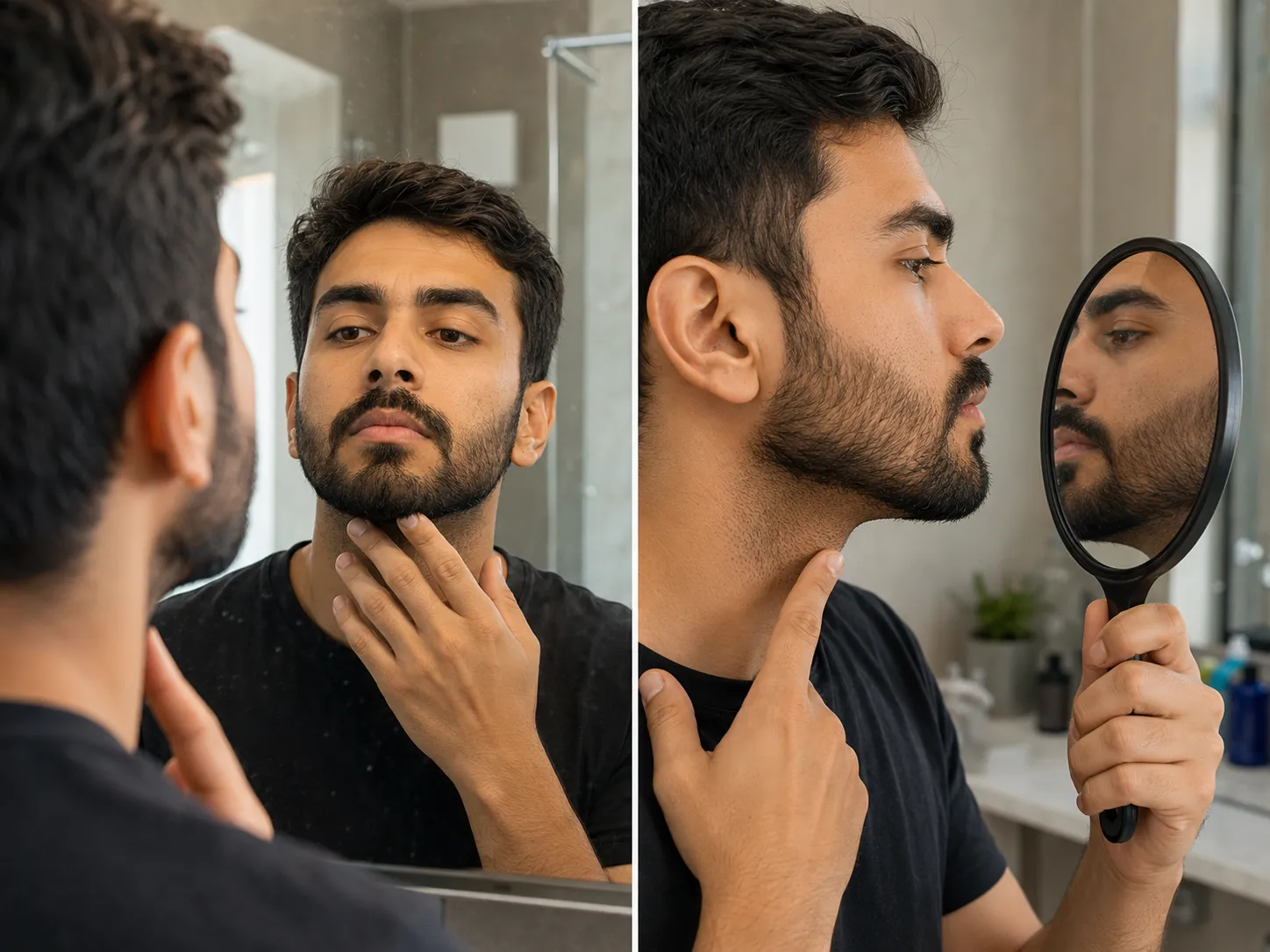
Re-comb and check your beard from the front, both sides, and underneath with a hand mirror. If one side is longer, trim it down to match the shorter side once, and do not trim back and forth chasing symmetry, which is how beards end up too short. Rinse out the loose hairs, then work in a little beard oil and comb through to finish. Asymmetric growth is normal, so close is the goal, not millimeter-perfect symmetry.
The side angle is where most mistakes hide. Checking from the side caught a heavy patch my front mirror had hidden.
Matching to the shorter side in one pass saved me from over-correcting. The back-and-forth spiral is the fastest way to realize you took too much off.
Scissors vs. Clippers: When to Pick Which
Choose scissors when you want maximum control, a natural finish, or you have a longer beard a guard cannot reach, and when you do not mind going slower. Choose a trimmer when you want speed, a uniform short length, or crisp neck and cheek lines. Most men use both, a trimmer to set length and lines, and scissors to finish flyaways and detail. Scissors are harder to ruin a beard with, but they are slower.
The trade-off is real and worth naming. On my one-inch beard, a full scissors-only trim took about 12 minutes, against roughly 4 with a trimmer, but the scissor finish looked softer at the edges.
Tool | Best beard length | Best for | The catch |
|---|---|---|---|
Scissors | Medium to long | Control, natural finish, flyaways, mustache | Slow, poor for fades and crisp lines |
Trimmer | Stubble to short | Speed, uniform length, neck and cheek lines | One slip can over-cut a whole patch |
Both | Any | Trimmer for length and lines, scissors to finish | Needs two tools |
That softer edge is the whole reason barbers still reach for scissors, since scissor-over-comb leaves a softer result than a clipper pass at any length. The honest downside is that scissors are bad at fades and laser-straight lines, so let a trimmer handle those.
If you would rather run the full electric routine instead, our complete step-by-step beard trim covers the guard method end to end.
Curly or Coarse Beard? Adjust Like This
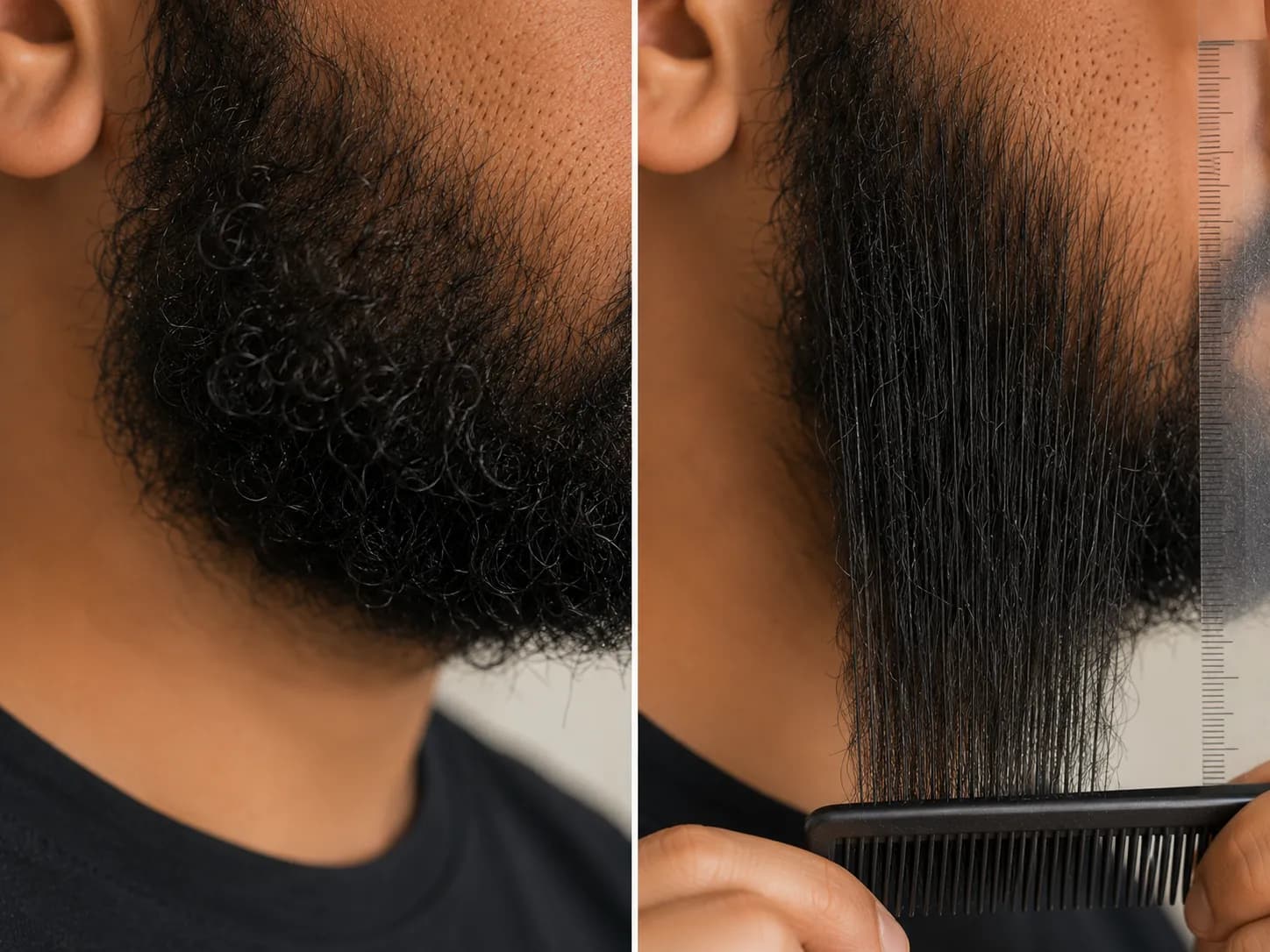
For a curly or coarse beard, switch to a wide-tooth comb, which lets the texture pass through instead of stretching it. Cut even more conservatively than on straight hair, because curly beard hair shrinks a lot as it dries and springs back shorter. Trim at the curl's natural resting length, not its stretched length, and never comb curls dead straight and then cut. Curly and coily textures can shrink dramatically once dry, so resting length is what you cut to.
The mistake here is treating curls like straight hair. Combing my coils straight and cutting once took close to two inches off when they sprang back.
A wide-tooth comb plus resting-length cuts fixed it. Deeper curly and coily technique is its own guide, so this is the scissors-specific adjustment, not the full routine.
Five Common Scissor-Trimming Mistakes
The five most common scissor-trimming mistakes are cutting a wet beard, skipping the comb, over-correcting one side against the other, using dull or kitchen scissors, and rushing by taking too much off at once. Each has a simple fix, and skipping them is how a trim turns scraggly. Industry roundups of beard trimming mistakes put wet-cutting and over-cutting at the top of the list for the same reason.
I made four of these five on my first scissor trim. Over-correcting was the one that cost me the most length, the same patch logged in the shaping step above.
Cutting wet. Wet hair dries shorter, so trim bone-dry every time.
Not combing first. Comb up and out, or you cut the bent hairs and miss the strays.
Over-correcting side to side. Match to the shorter side once, then stop.
Dull or kitchen scissors. They fold and fray the hair, so use sharp grooming shears.
Rushing. Take small passes and cut less than you think.
Frequently Asked Questions
Can you trim a beard with only scissors?
Yes, you can trim a beard with only scissors and a comb. Wash and dry it fully, comb it down, then work scissor-over-comb in small sections, snip the flyaways, and shape the bottom conservatively. Scissors give more control and a more natural finish than a trimmer.
How often should you trim a beard with scissors?
Most men trim every one to two weeks to keep the shape and clear strays. Longer beards can stretch to every few weeks, since the goal is maintaining the outline rather than removing length. Let your own growth rate set the cadence.
Should you cut a beard wet or dry with scissors?
Cut it dry, always. Wet hair stretches and looks longer, then springs up shorter as it dries. On my own beard the chin measured 4 mm shorter dry than wet, which is the margin between a trim and a regret.
Do you need special beard scissors?
Yes, you need sharp grooming or beard shears, not kitchen scissors. Dull or general-purpose scissors fold coarse facial hair instead of slicing it, leaving frayed, split ends. A sharp 5 to 6 inch pair is all you need.
How do you trim a beard with scissors and a comb?
Comb a small section outward to lift the hair, hold the comb at a steady angle, and snip only the hairs past the comb's teeth. Keep the comb angle consistent so the length stays even, and work in small sections from the chin outward. This scissor-over-comb method is the core of trimming a beard with scissors.
Trimming a beard with scissors is not the slow, scary backup most men assume. It is the precision option, and the only real rules are to cut dry and take less than you think. Master the scissor-over-comb pass and the natural finish that follows, and you will reach for the shears on purpose, not just when the trimmer dies.
Summarize with AI
Keep reading
Related articles
 Styles, Shapes & Length Guides
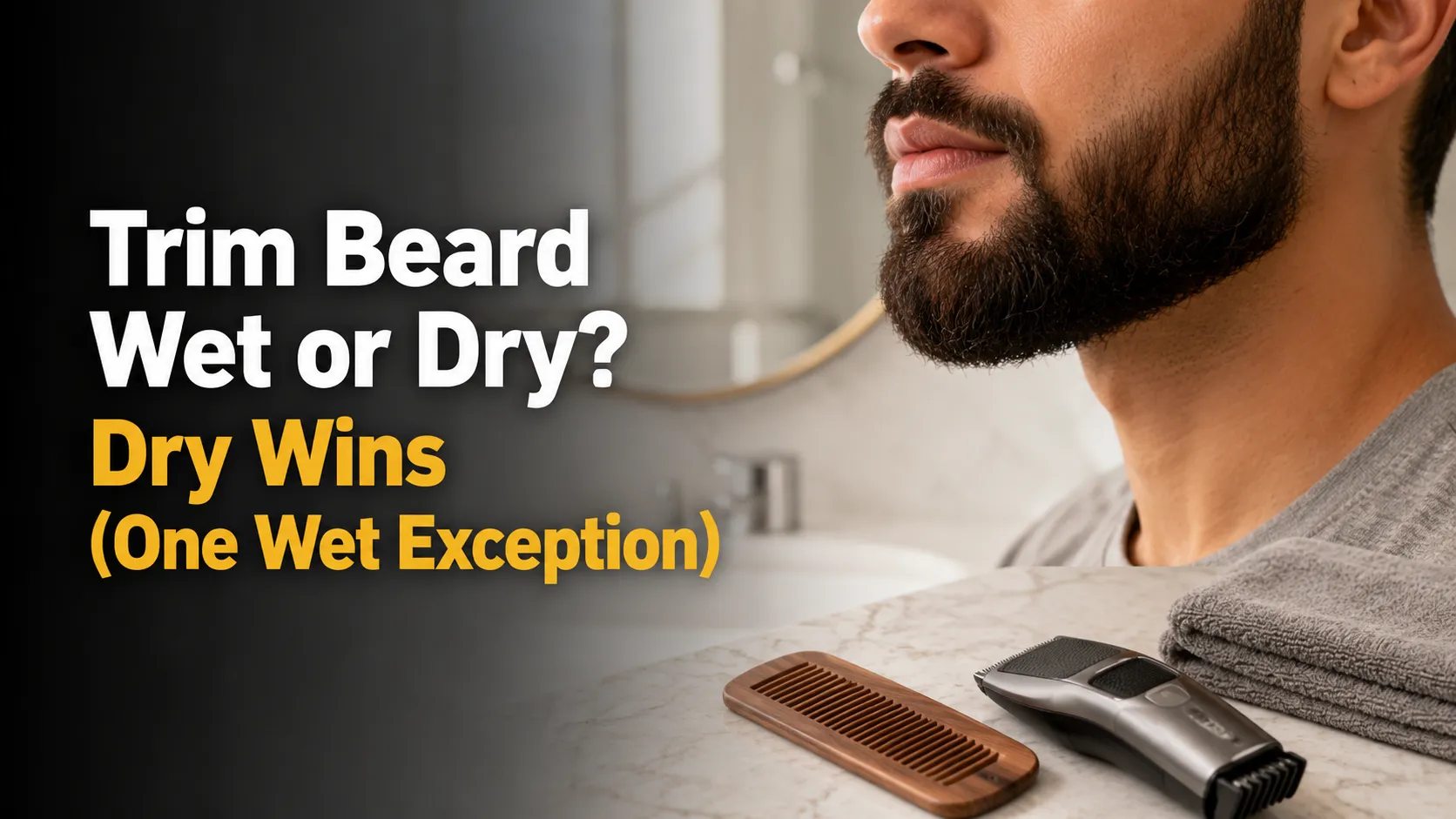
Trim your beard dry so it dries even; wet hair stretches then shrinks. Go wet only for a razor lineup in the shower, plus wash and comb order.
 Styles, Shapes & Length Guides
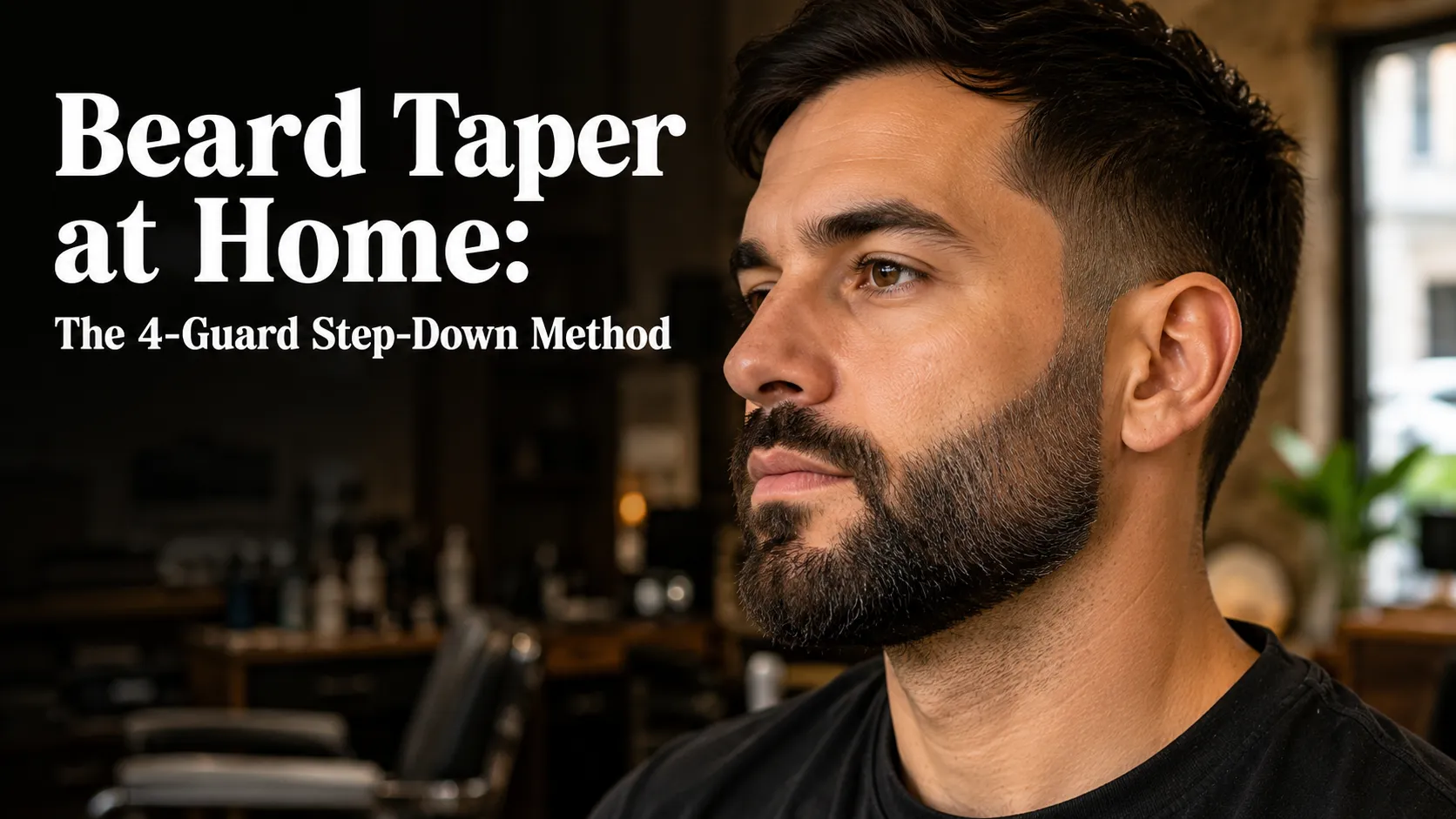
Taper your beard at home with the 4-guard step-down method - drop one guard at a time for a clean low, mid, or high gradient without bowl-beard lines.
 Styles, Shapes & Length Guides
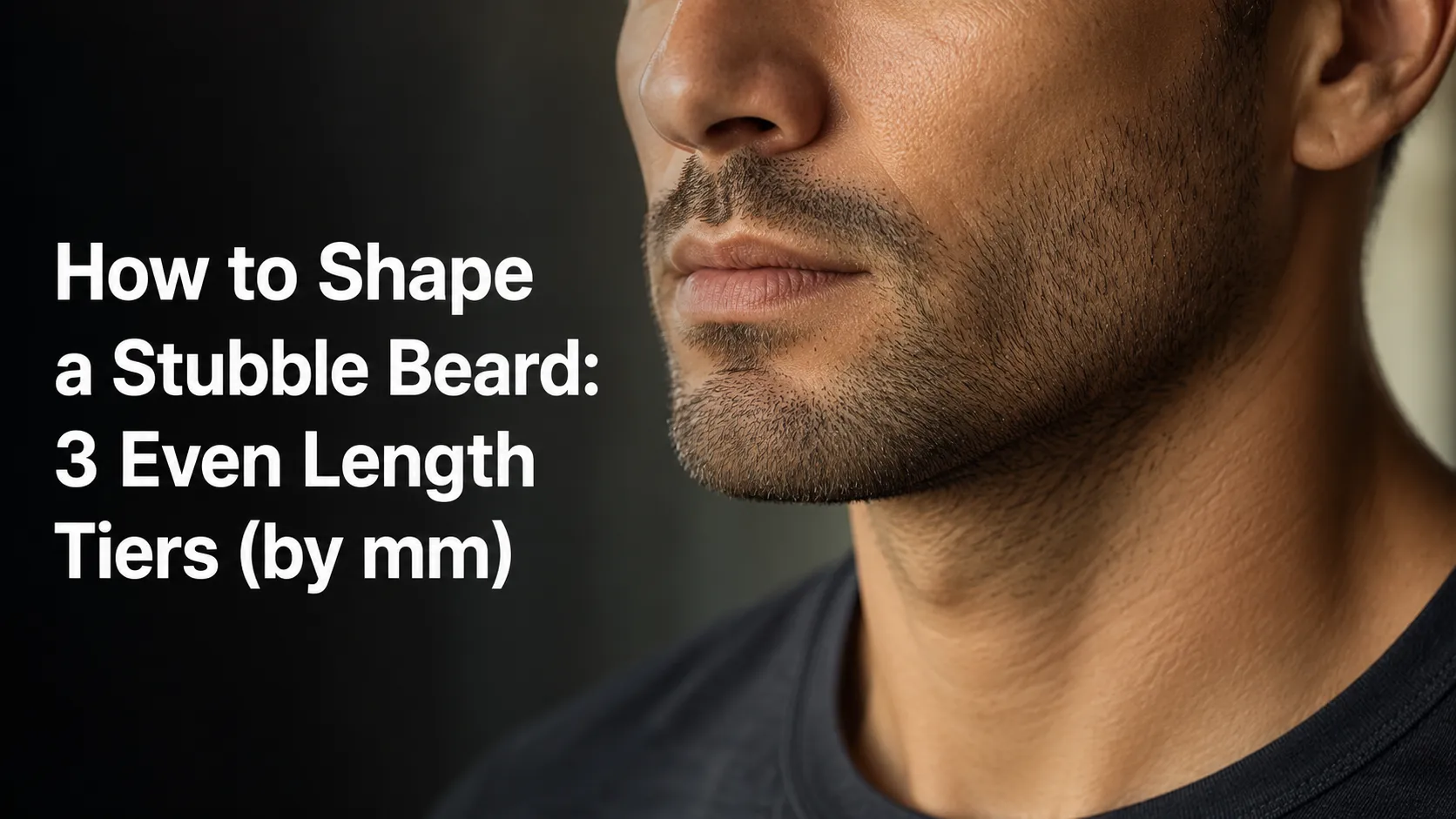
Set your stubble to one even length across three tiers (light, medium, heavy mm), fix the patchy jawline, and learn how often to re-cut for a clean 3-day look.
 Styles, Shapes & Length Guides
Keep the sides short and the chin long — the opposite of a haircut — to slim a round face. A barber-reviewed shaping guide by face shape, with before/after.
Comments
Moderated for quality. Share a correction, ask a follow-up, or tell us what worked for you - every comment is reviewed before it goes live.