
How to Use Coconut Oil to Shave Pubic Hair: 8 Steps for Men
How to use coconut oil to shave pubic hair as a man: melt a thin layer on wet skin, shave with the grain, keep the trimmer dry and wash the oil off.
Written by Aman Singh
Last updated on November 3, 2026

When you buy through links on our site, we may earn a commission at no extra cost to you. It never changes which tools we recommend. Learn more.
Summarize with AI
Trim dry, coat wet skin thinly with melted coconut oil, shave with the grain using a razor, then wash the oil off.
That's how to use coconut oil to shave pubic hair on a man's groin, and anyone who shaves can do it.
Gillette's manscaping guide has you trim first, on dry hair before the shower. The trimmer also handles the scrotum, and like a foil shaver it needs no oil.
Two conditions change the answer: if your groin tends to get acne or bumps, use a shave gel instead, because coconut oil clogs pores.
And if a latex condom is coming soon after, leave the oil out. Coconut oil is one of the oils the WHO and Johns Hopkins Family Planning Handbook says damage latex.
Below are the oil to buy and how much to use, then the steps zone by zone and the clean-up.
Why coconut oil works on the groin, and who should skip it
Yes, you can put coconut oil on your pubic area for a shave. Melted, it leaves a slick film for the blade to ride on, and plain virgin oil has no added fragrance.
Cleveland Clinic counts soothing milder skin problems such as razor burn among its possible uses.
Whatever you shave with, how the stubble feels as it grows back comes from the cut, not from the oil.
The catch is that coconut oil is highly comedogenic, a pore clogger. The same page says it's generally not recommended on the face and tells acne-prone people to keep it off the shoulders, chest and back.
Carry that rule to the groin: if you get acne or bumps there, skip the oil. Skip it too if the patch test below irritates your skin, or if a latex condom is likely soon after.
For those men, the American Academy of Dermatology (AAD) shaving routine uses a shaving cream or gel.
Pick one labeled for sensitive skin if yours is very dry or sensitive. There are also other ways to shave without cream, other oils among them.
Can coconut oil cause ingrown hairs?
Ingrown hairs come from shaving itself, so they can follow a coconut oil shave like any other.
Cleveland Clinic's ingrown-hair page says shaving can cause them, and the more often you shave, the more likely they are.
Because coconut oil clogs pores, it's a poor pick if you often get an ingrown or bumps there.
Coconut oil vs shave gel in my side-by-side sessions
On my groin, coconut oil didn't beat a plain shave gel. Both sides showed the same light redness and sting, and the oil side took longer to shave and far longer to clean up.
Dermatologists name a shaving cream or gel as the default, so the case for oil is that it's in your kitchen, with no added fragrance.
I ran two split-side sessions on the pubic mound and inner thighs, at least 7 days apart, at the same morning time and light.
Each began with a 3 mm trim on the Philips Norelco Bodygroom Series 7000 (BG7040/42) and a warm shower.
One side got unrefined virgin coconut oil and the other a fragrance-free shave gel, each with a new cartridge on a Gillette SkinGuard Sensitive razor.
The sides swapped in the second session, and the shaft base and scrotum stayed at the 3 mm trim.
The table shows how the two sides compared across both sessions.
Measure | Coconut oil side (2 sessions) | Shave gel side (2 sessions) |
|---|---|---|
Redness at 1 hour | Light in both | Light in both |
Sting at 10 minutes (0 to 5) | 2 in both | 2 in both |
Soreness next morning (0 to 5) | 1 in both | 1 in both |
Nicks | None | None |
First pass to rinse (minutes) | 5 and 6 | 4 and 4 |
Clean-up (minutes) | 4 and 5 | 1 and 1 |
Itch on days 1, 3 and 7 (0 to 5) | 0, 2 and 1 | 0, 2 and 1 |
Regrowth photos, days 1 to 7 | Same as the gel side | Same as the oil side |
Sting, soreness and itch are my own ratings, from 0 for none to 5 for discomfort that disrupts sleep or movement.
The oil cost me time, not comfort: every skin measure matched, and neither side drew blood.
The extra minutes went on the shave itself and on the clean-up. For the oil side, that meant its skin and cartridge plus the tub and drain, since gel leaves no film behind.
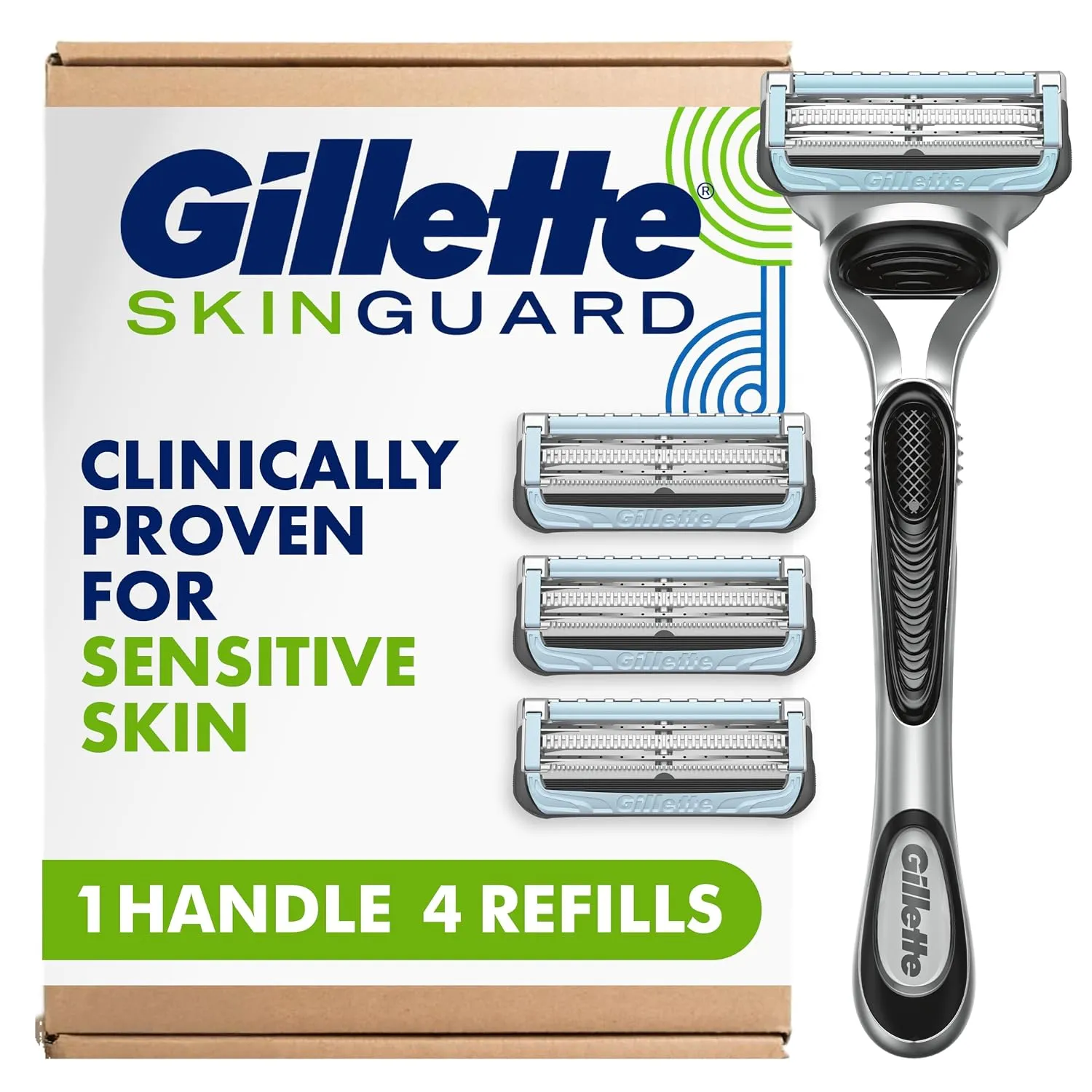
by Gillette
Check Price (opens in a new tab)In Stock · Amazon
Pros
- No nicks on either armpit in my split-side sessions
- Sting gone by the next morning
Cons
- Stung more than the foil head for the first couple of hours
- Needs shave gel: never shave dry with a blade
As an Amazon Associate, Grooming Nova earns from qualifying purchases.
Regrowth looked and felt the same on both sides, with a mild itch that peaked around day 3.
Mayo Clinic puts that down to the cut: shaving gives each hair a blunt tip that can feel coarse or stubbly as it grows out.
These are two sessions on one man's skin, with one razor, one gel and one jar of oil, and no winner named.
They can't speak for bump-prone skin, other razors or other oils. The dermatology advice here is general shaving advice applied to the groin.
Philips's cleaning advice is meant for its own groomers, and its dry-shave advice for its shavers, not the body groomer.
Which coconut oil to use, how much, and a patch test first
Use plain unrefined virgin coconut oil, melted between your palms to a clear liquid and spread in a thin layer.
Pure, unrefined, cold-pressed coconut oil is Cleveland Clinic's pick for skin. There's no need to whip it with shea butter into a homemade cream first.
Whether the oil in your jar is solid or liquid depends on your bathroom's temperature, not on its purity.
Solid or melted coconut oil
Dr. Bronner's gives its virgin coconut oil a melting range of 68 to 75°F (20 to 24°C). Above 75°F all of it is liquid, below 68°F all of it is solid, and in between it turns slushy.
Melted oil turns from a white solid to a clear liquid, so you can see your skin and the way the hair grows through it.
That range is why the same jar can look different from one month to the next. wikiHow says pure coconut oil always comes solid and oil that's liquid at room temperature isn't pure.
The maker's range shows otherwise: a warm bathroom is enough to melt pure oil. For the shave, keep the jar somewhere cool, scoop the oil solid and let your palms do the melting.
How much oil the groin needs
Wildly Organic, a coconut oil maker, has you spread a thin layer for shaving after warming the oil between your hands.
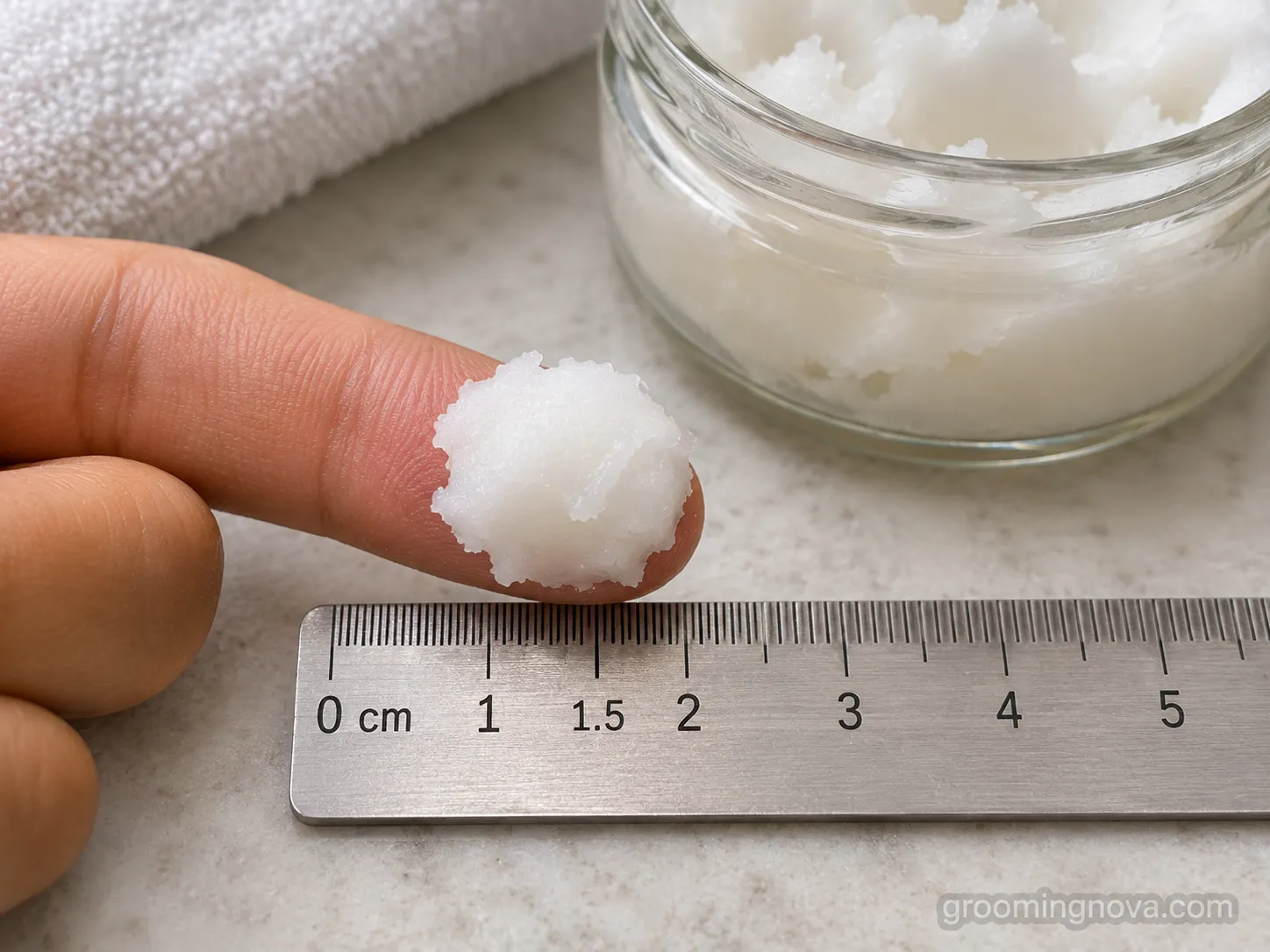
In my sessions, I measured one scoop of solid oil against a steel ruler at about 1.5 cm (5/8 in) across.
Melted in my palms, it gave a thin, see-through layer over one side: half the trimmed pubic mound and that inner thigh. The whole groin took about two scoops.
One shave takes the following, and everything but the oil is likely in your bathroom already.
Unrefined virgin coconut oil: about two scoops, each about 1.5 cm across
A cartridge razor with a sharp, clean cartridge
A body groomer or trimmer with a comb for the pre-trim
A clean washcloth, in case of a nick
A towel for patting dry
A paper towel or two for wiping oil off the razor and tub
The oil is the only thing to buy. Dr. Bronner's Whole Kernel virgin coconut oil cost US$0.71 per fl oz in a 14 oz jar at New Seasons Market, a US grocer.
One jar lasts many shaves at two small scoops each.
Prices checked October 2026.
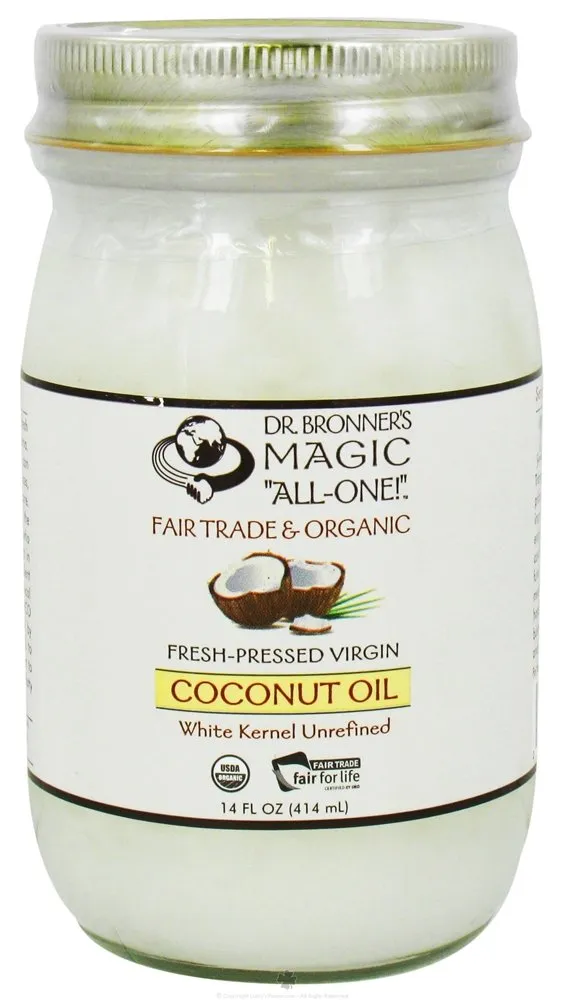
by Dr. Bronner's
Check Price (opens in a new tab)In Stock · Amazon
Pros
- Melts in the palms to a clear liquid, so you can see the skin and the way the hair grows
- Plain virgin oil with no added fragrance
- One jar lasts many shaves at two small scoops each
Cons
- Highly comedogenic: skip it if your groin gets acne or bumps
- Damages latex condoms
- Clean-up took 4 to 5 minutes against 1 for shave gel
As an Amazon Associate, Grooming Nova earns from qualifying purchases.
Plan the timing too: start the AAD's patch test 7 to 10 days before your first oil shave.
On the day, one oiled side took me 5 to 6 minutes from first pass to rinse, plus 4 to 5 minutes of clean-up.
Patch test a week ahead
The AAD's patch test for any new skin product takes three steps.
Choose a quarter-sized spot that won't get rubbed or washed, such as the underside of your arm or the bend of your elbow.
Apply your normal amount of melted oil to the spot twice a day for 7 to 10 days.
At the end, check the spot: no red, itchy or swollen skin means you can go ahead and shave with the oil.
If the spot reacts at any point, gently wash the oil off as soon as you can and don't use it again.
That rules coconut oil out for your shave, too. If the reaction is severe and a cool compress doesn't ease it, you may need a dermatologist.
Coconut oil with a trimmer or foil shaver
Keep coconut oil for the blade: the trim happens on dry hair before the shower. Philips builds its Norelco body groomers to be used wet or dry, so the groomer has no need for oil.
The brand's tip to dry shave without water, foam or gel, to avoid slipping, is on its shaver help page. It's written for its shavers rather than the body groomer.
What I saw on the Bodygroom 7000 shows why oil and an electric cutter mix badly. I ran the foil head once over a small oiled patch of skin.
Within about 10 minutes, the foil and trimmer teeth held clumps of hair in a whitish film of set oil.
The oil had cooled toward the solid end of the range above. A warm-tap rinse with no soap cleared it in about a minute.
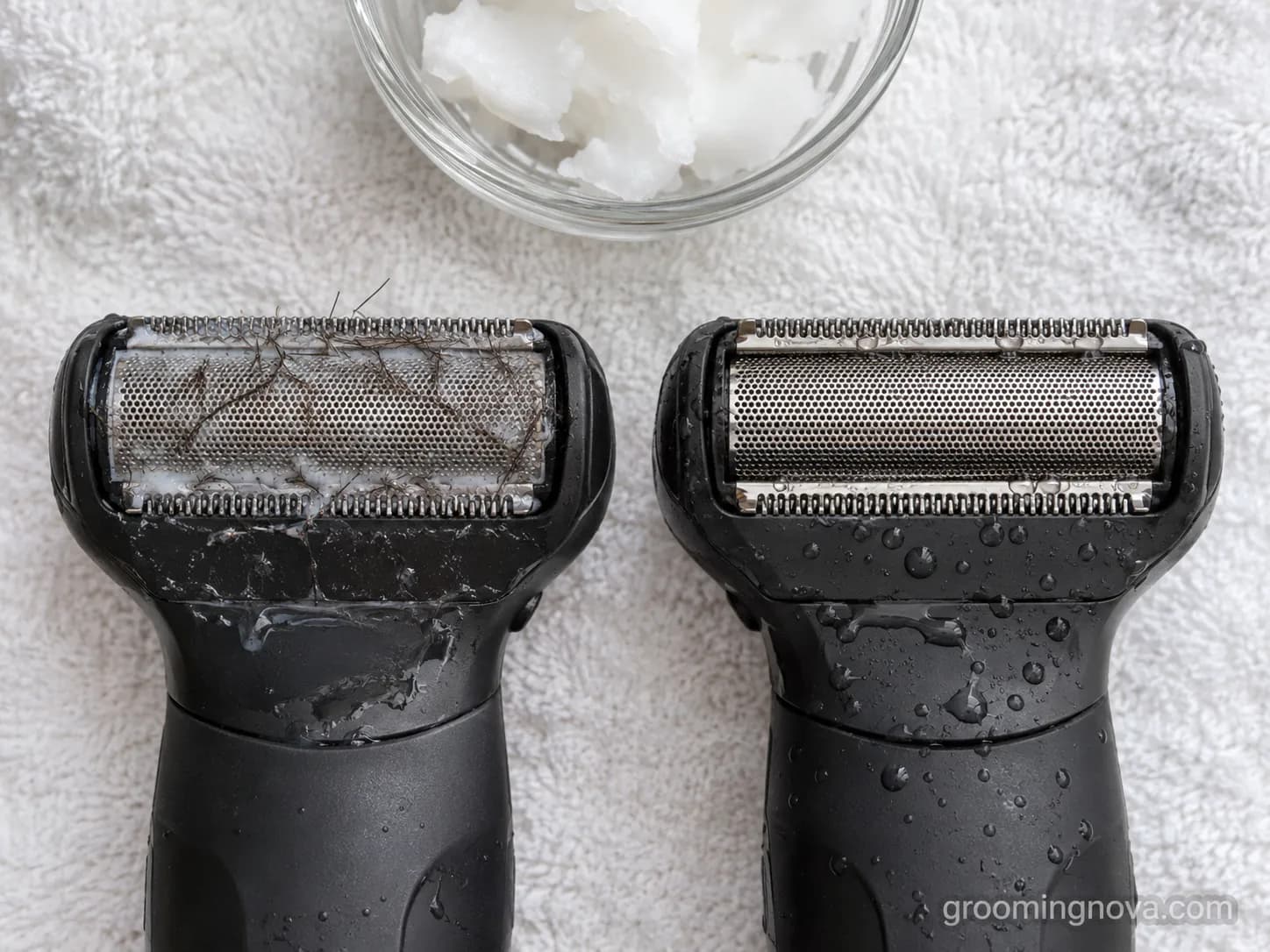
If oil does get on your trimmer or foil, the Philips groomer cleaning page gives three steps for its showerproof groomers.
With the groomer switched off, rinse the comb and cutting unit under a warm tap.
Skip soapy water and detergent, which can strip the protective grease on the cutter and affect how it cuts.
Let the parts air dry, since a towel or tissue on the cutting unit can damage it.
How to shave pubic hair with coconut oil, step by step
The shave runs in eight steps, from a dry trim to washing the oil off. The blade and the oil stay on the pubic mound and inner thighs, and the trimmer does the scrotum and shaft base.
Before you start: if a latex condom is likely soon after, shave with a gel rather than the oil. The WHO and Johns Hopkins Family Planning Handbook warns that oils, coconut oil among them, damage latex.
Leave any patch of razor burn unshaved until it heals, as Cleveland Clinic's razor burn page advises. Finish the patch test above before the first oil shave.
These steps follow the AAD's shaving rules, with the groin-specific moves from Gillette, Wahl and Banner Health.
Before you shower, trim the pubic mound and inner thighs dry with the groomer's comb. On the Bodygroom 7000, it sets lengths from 3 mm to 11 mm.
Finish the scrotum and shaft base with the same dry trim, holding the skin taut so folds stay out of the guard.
To soften the hair, shower until your skin and hair are thoroughly wet.
Spread a thin layer of melted oil over the wet pubic mound and inner thighs, one scoop warmed clear in your palms per side.
To help prevent ingrown hairs, let the skin lie flat under the razor, without pulling it taut or pressing down.
Shave in the direction the hair grows, in light, short strokes, without going over the same patch twice.
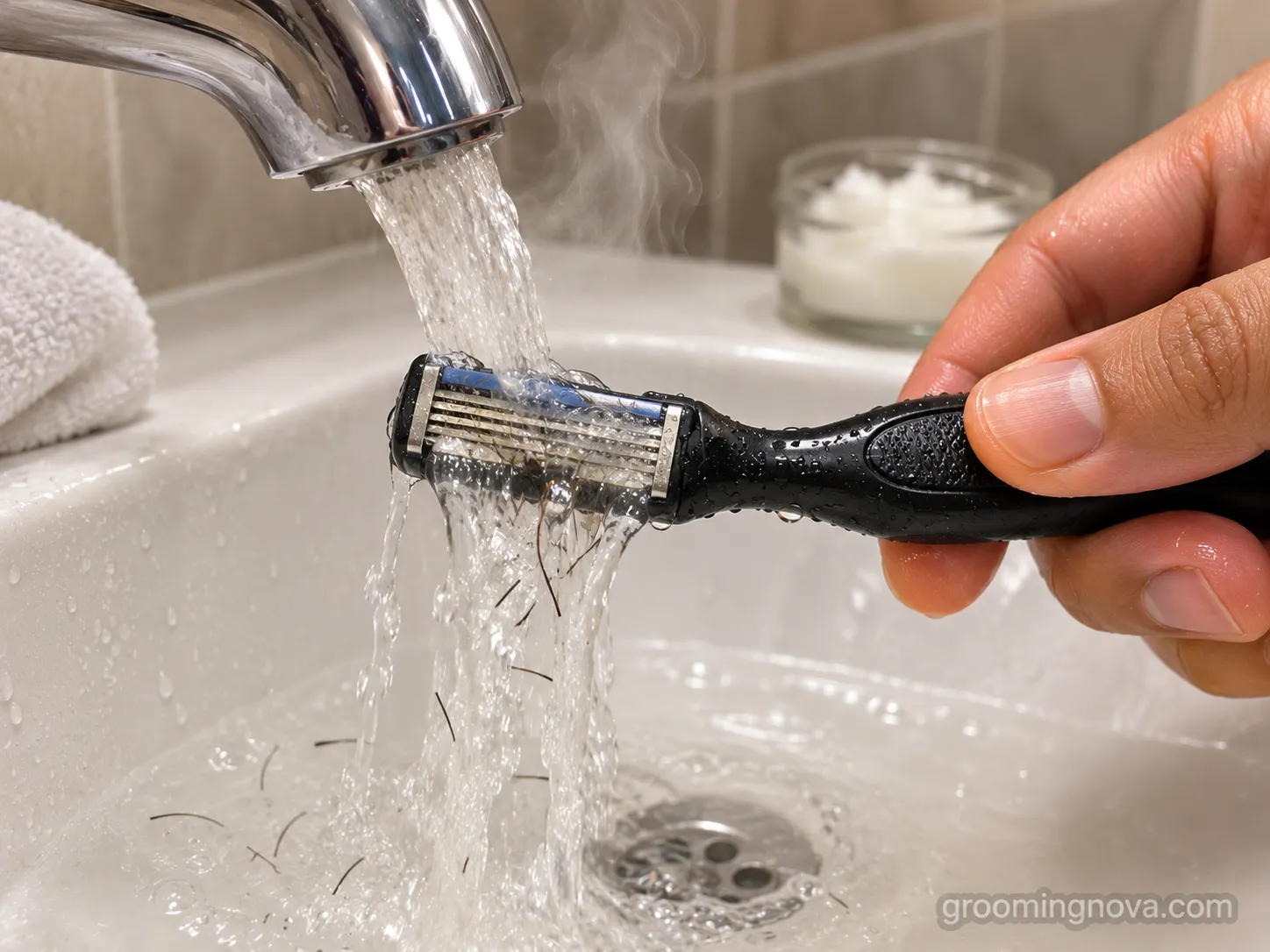
Rinse the blade under hot running water after every stroke, so oil and cut hair don't build up between the blades.
Rub the oil off under warm water with your fingertips until no slick film is left.
To check the shave, stroke the skin with the grain. It should feel smooth, with no stubble and no oily film left behind.
When a step goes wrong, the fix is usually quick.
If this happens | Do this |
|---|---|
The oil sets white on your skin | Rewarm it in your palms or under the shower |
The blade clogs with oil and hair | Rinse it under hot water after every stroke |
You nick yourself | Press a clean washcloth on it for 1 to 2 minutes, or until it stops |
A cut is over 3/4 inch long, 1/4 inch deep, or keeps bleeding | Get medical care right away |
Skin stings or turns red as you shave | Stop shaving that area and let it heal |
Nick and cut advice comes from the AAD's guide to minor cuts, and the razor burn advice from Cleveland Clinic.
Cleaning coconut oil off your skin, razor, tub and drain
Oil doesn't rinse away like gel, so wipe the excess off before you rinse anything and keep it out of the drain.
The Southwest Environmental Finance Center warns that hot water only moves fats and oils along. They solidify once the water cools and build up in the pipes until they clog them.
Allow a few extra minutes for it, since my oil-side clean-up took 4 to 5 minutes against 1 for gel.
Here's the clean-up, surface by surface.
Skin: wash the oil off rather than leaving it on, rubbing under warm water until no slick film is left (step 8).
Razor: rinse it hot, dry it fully away from the shower and change the cartridge after 5 to 7 shaves to minimize irritation, by the AAD's rules.
Tub: wipe oil drips off the tub floor with a paper towel, so no oily film is left underfoot.
Drain: wipe excess oil from your skin and razor onto a paper towel before rinsing, and bin the towel.
And if a latex condom is in your plans, make sure no oil is left anywhere on your skin.
After the shave: calming the skin for the first few days
Pat the skin dry and wear loose underwear for the next few days. The AAD's folliculitis advice is loose clothing when it's hot and humid, since tight clothes rub against the skin.
If you get itching while it grows back, that's the stage when the blunt cut ends covered above feel stubbly.
Razor burn, if it comes, shows up within minutes of the shave and usually lasts a few hours to a few days.
Cleveland Clinic's relief options are a cool washcloth or a moisturizer free of fragrance and alcohol.
Call your healthcare provider if the rash hasn't gone within a few days.
On skin that isn't bump-prone, coconut oil after the shave is fine, and there's more on coconut oil as an after-shave moisturizer for men.
Rubbing it on your body every day works the same way: it moisturizes, but keep it off acne-prone areas.
Other oils work afterward too. Look at these oils that suit freshly shaved groin skin, compared for men.
On a man's groin, coconut oil earns its place only under the blade.
Trim dry first, keep the layer thin and melted, and wash every trace off.
Start the patch test a week ahead and keep the oil away from latex condoms. If your groin tends to get bumps, use a shave gel instead.
Summarize with AI
Keep reading
Related articles
 Technique & How-To
How to shave pubic hair with clippers for men: which guard to start on, where the guard stays on, the steps in order and how to clean the clipper after.
 Technique & How-To
Sensitive skin after shaving is most likely razor burn. Tell it from bumps and hives, calm it in 24 hours, and see if dry or wet electric shaving suits you.
 Technique & How-To
Why do my armpits hurt after shaving? Match the pain to when it started, from razor burn within minutes to regrowth prickle, then calm it and spot red flags.
 Styles, Shapes & Length Guides
Trim your beard dry so it dries even; wet hair stretches then shrinks. Go wet only for a razor lineup in the shower, plus wash and comb order.
Comments
Moderated for quality. Share a correction, ask a follow-up, or tell us what worked for you - every comment is reviewed before it goes live.