
How to Trim Your Beard for a Sharper Jawline (4 Steps)
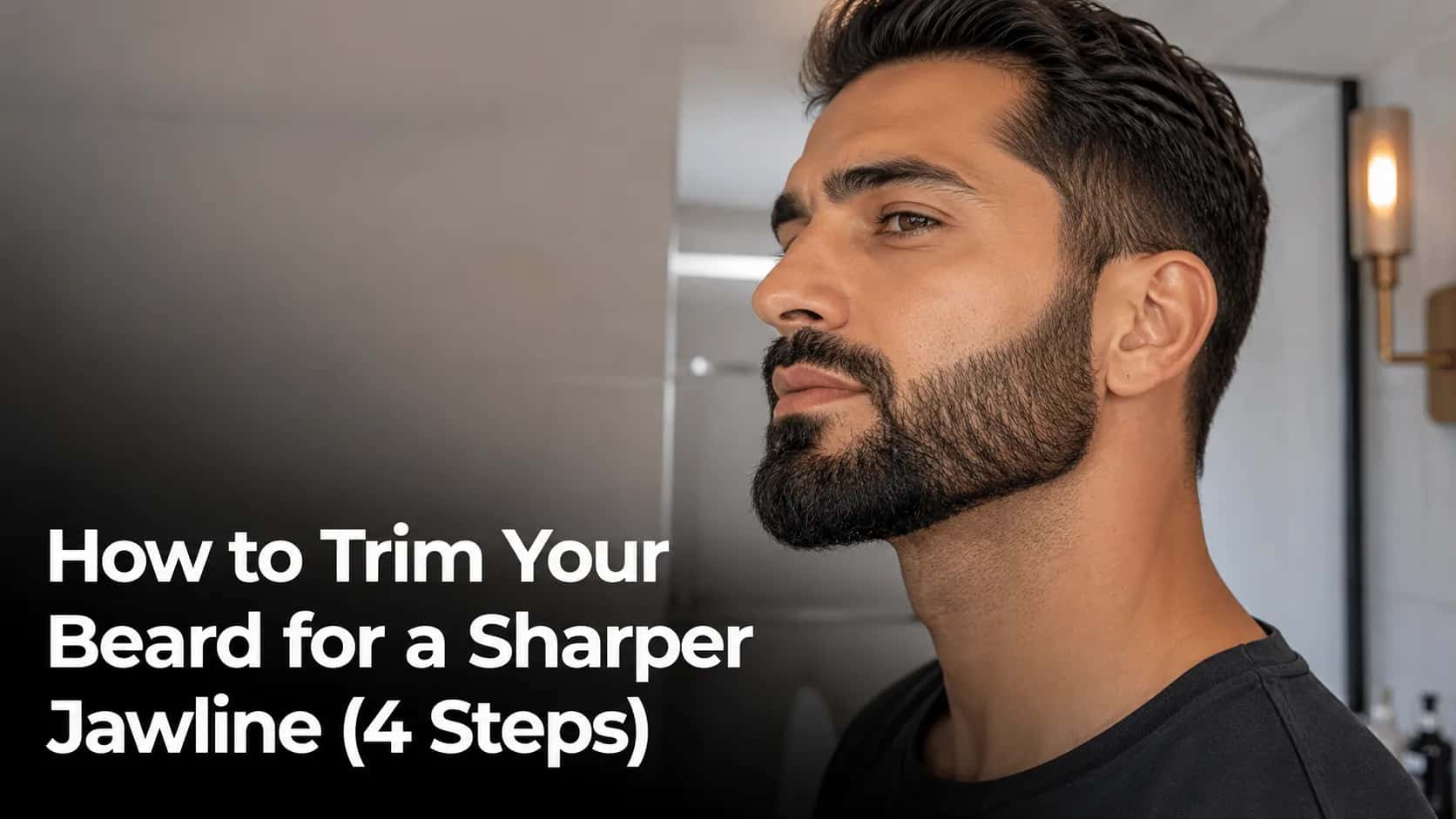
Trim your beard for a sharper jawline in 4 steps: clean the neckline, raise the cheek line, keep the chin longer than the sides, then foil-shave crisp edges.
Written by Andre ColemanReviewed by Russell Hartley
Last updated on July 22, 2026
When you buy through links on our site, we may earn an affiliate commission (at no extra charge), which we use to fund new product tests. Learn more.
Summarize with AI
Most men trim a jawline off their own face without realizing it. They grab the trimmer, buzz everything short and even, shave a hard line right at the jaw, and end up looking rounder than when they started.
Here is the counterintuitive truth about how to trim your beard for a sharper jawline: the shape is built by what you leave, not just by what you cut. Keep the chin longer than the tightly cropped sides and the beard reads as a jaw-widening trapezoid.
This guide walks the four moves I used across an eight-week shaping test, with the exact lengths, the double-chin fix, and the reason a beard sometimes makes a face look rounder instead of sharper.
The 50-Second Jawline Method (Start Here)
To trim your beard for a sharper jawline, run four moves in order: square off a low, clean neckline, raise a straight and fairly high cheek line, keep the chin longer than the tightly cropped sides (about 10 mm on the chin to 6 mm on the sides), then foil-shave the edges crisp.
The core idea is counterintuitive. A jawline is built by what you leave, not only by what you cut, so length stays long and central while the sides go tight.
The 4 steps at a glance: clean low neckline, straight high cheek line, chin longer than sides, foil-shaved edges. Time: about 15 minutes. Difficulty: beginner-friendly.
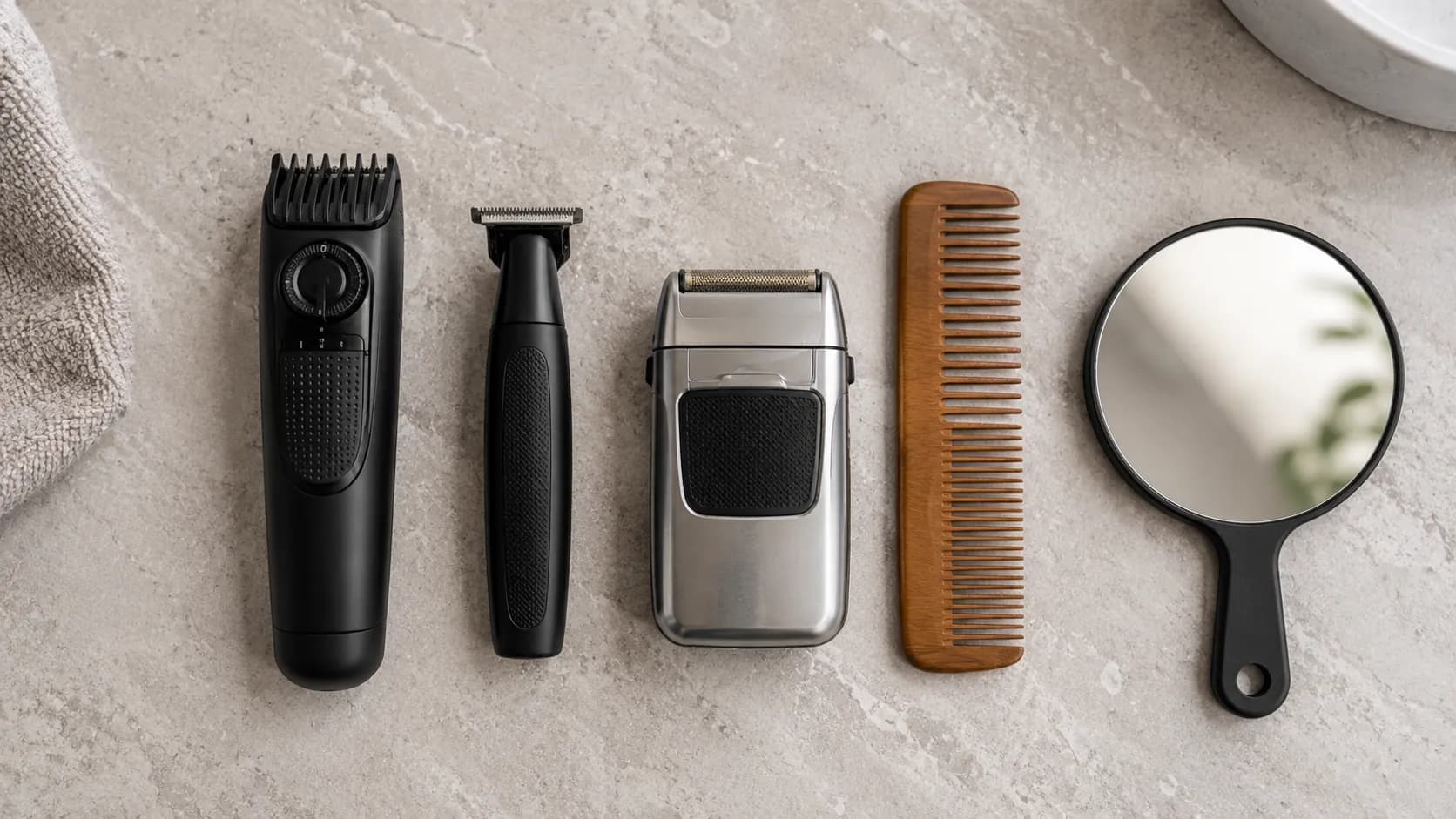
You will want a small kit before you start:
An adjustable beard trimmer with fine millimetre guards for the sides and chin.
A detail trimmer or T-outliner for the lines.
A foil shaver for the crispest edges.
A comb, a bathroom mirror, a hand mirror for the side profile, and good lighting.
How a Beard Builds a Jawline (the Trapezoid Principle)
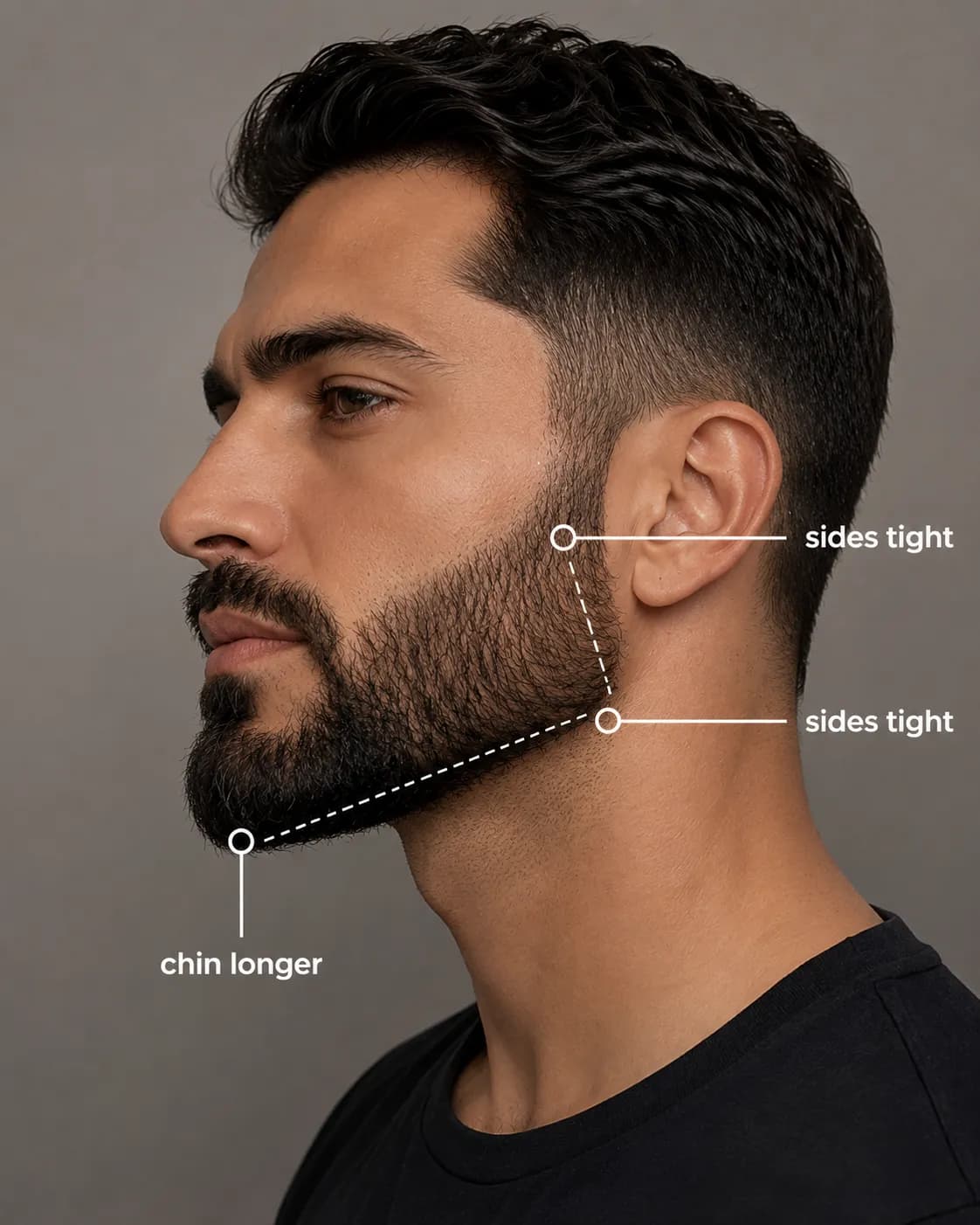
The jawline principle is simple: leaving the chin longer than the sides turns your beard into a trapezoid that widens and squares the jaw. This is why cutting everything short and sharp backfires. According to research on beardedness and jaw perception, beards amplify perceived jaw size and masculinity, so the length you leave low and central does the heavy lifting.
In my own testing, leaving the chin about 4 mm longer than the sides made the jaw look visibly squarer in a side-profile photo than an all-one-length trim. The front view barely changed. The profile is where the shape lives.
One honest limit: this is an illusion of structure, not a change to bone. It reshapes how the jaw reads, not the jaw itself.
Square Off a Low, Clean Neckline
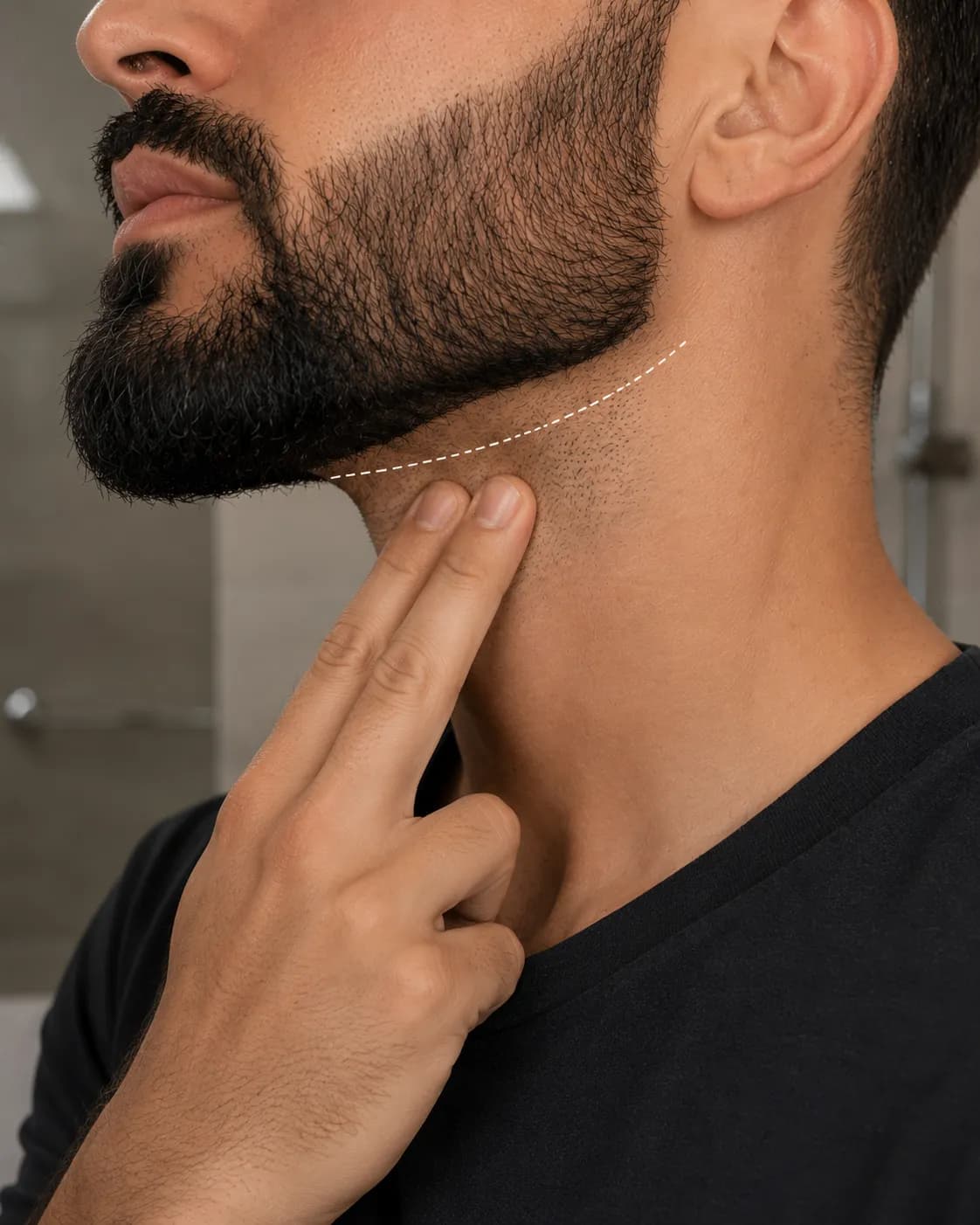
A sharp jawline starts with the neckline, not the jaw itself. Trim the neckline in a soft U about two fingers above your Adam's apple, never up on the jaw, or you get a chin-strap that erases the jaw. Too low and you keep a neckbeard that blurs into a double chin. Getting this one line right does more for the jawline than any other step, which is why it is the most common beard-trimming mistake.
Follow this order and check the side profile in your hand mirror as you go:
Place two fingers above your Adam's apple to mark the lowest point.
Imagine a U that runs from behind each ear down through that point.
Trim everything below the U, then clean the edge with the outliner.
There is one exception worth knowing. On a sloping, concave chin where the jaw seems to run straight into the neck, the by-the-book line can make the jaw disappear.
On my test subject's sloping chin, raising the line about 8 mm restored the edge. For the full method and the fixes, you can square off the neckline in its own guide.
The rule that saves most beards is to keep the outline below the jaw. Live Bearded's neckline guide makes the same point: a line taken up onto the jaw reads as a chin-strap.
Raise a Straight, High Cheek Line
The cheek line is the beard's upper edge, and for a jawline you want it straight and fairly high. A straight cheek line reads more angular than a curved one, sharpening the plane from cheekbone down to jaw. Start high and conservative, because you can always lower it, but you cannot add hair back for weeks. An over-lowered cheek line, as The Beard Struggle notes, blurs the jaw and can make the whole face look rounder.
Keeping the cheek line straight rather than curved made the jaw look about one length-tier squarer in my before-and-after. The move is small, but it stacks with the length ratio.
To pick straight versus curved for your own growth, raise the cheek line using the full method, then commit to one and keep both sides level.
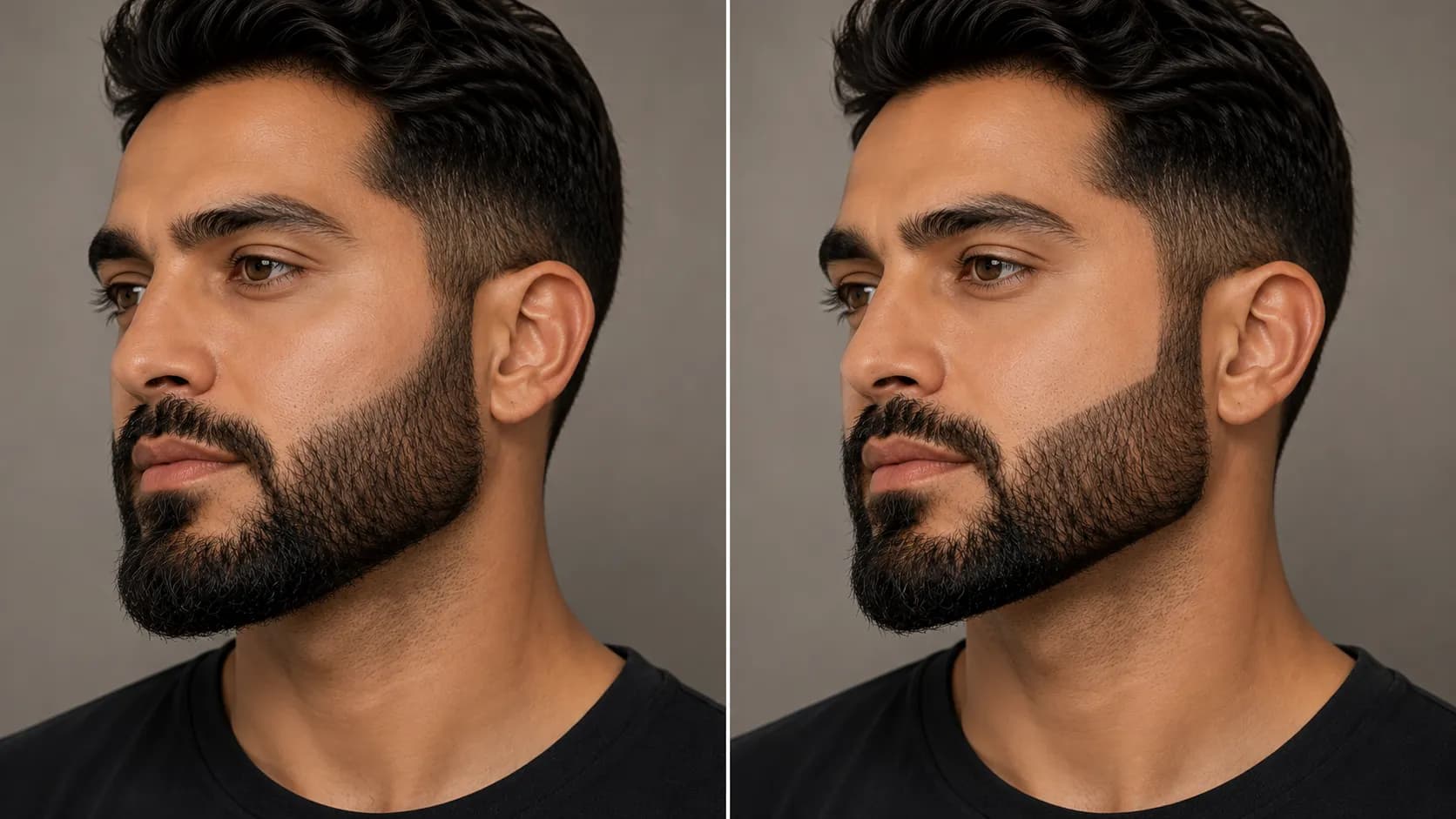
How to Trim the Sides and Chin for a Jawline
This is the heart of the build: keep the chin longer, the sides tight. Running the sides at roughly 6 mm and leaving the chin near 10 mm produced the cleanest trapezoid across my eight-week test. Comb the beard down, trim the sides in passes, then taper the corner of the jaw so there is no hard length shelf.
The exact millimetres matter less than the ratio. The chin is always the longest point, the sides always the tightest. This jawline build is one goal-based path off our full beard-trimming guide, which covers the whole-beard version of these moves.
Here is the length map I settled on:
Beard zone | Length I ran | Guard equivalent | Why |
|---|---|---|---|
Sides (cheek to jaw) | 6 mm | #2 | Tight enough to read angular |
Chin and front | 10 mm | #4 | Left longer to project the jaw |
Jaw-corner transition | Tapered 6–10 mm | #2 up to #4 | Blends the two so there is no shelf |
And here is what the test showed at different settings:
Setting tested | Weeks run | How the jawline read |
|---|---|---|
Sides 4 mm, chin 8 mm | Weeks 1–2 | Sharp but sparse on the cheeks |
Sides 6 mm, chin 10 mm | Weeks 3–6 | Best trapezoid, squarest jaw |
Sides 8 mm, chin 10 mm | Weeks 7–8 | Sides too full, jaw softened |
One caveat: a patchy chin may not hold the extra length, so drop the chin figure until it looks dense rather than thin.
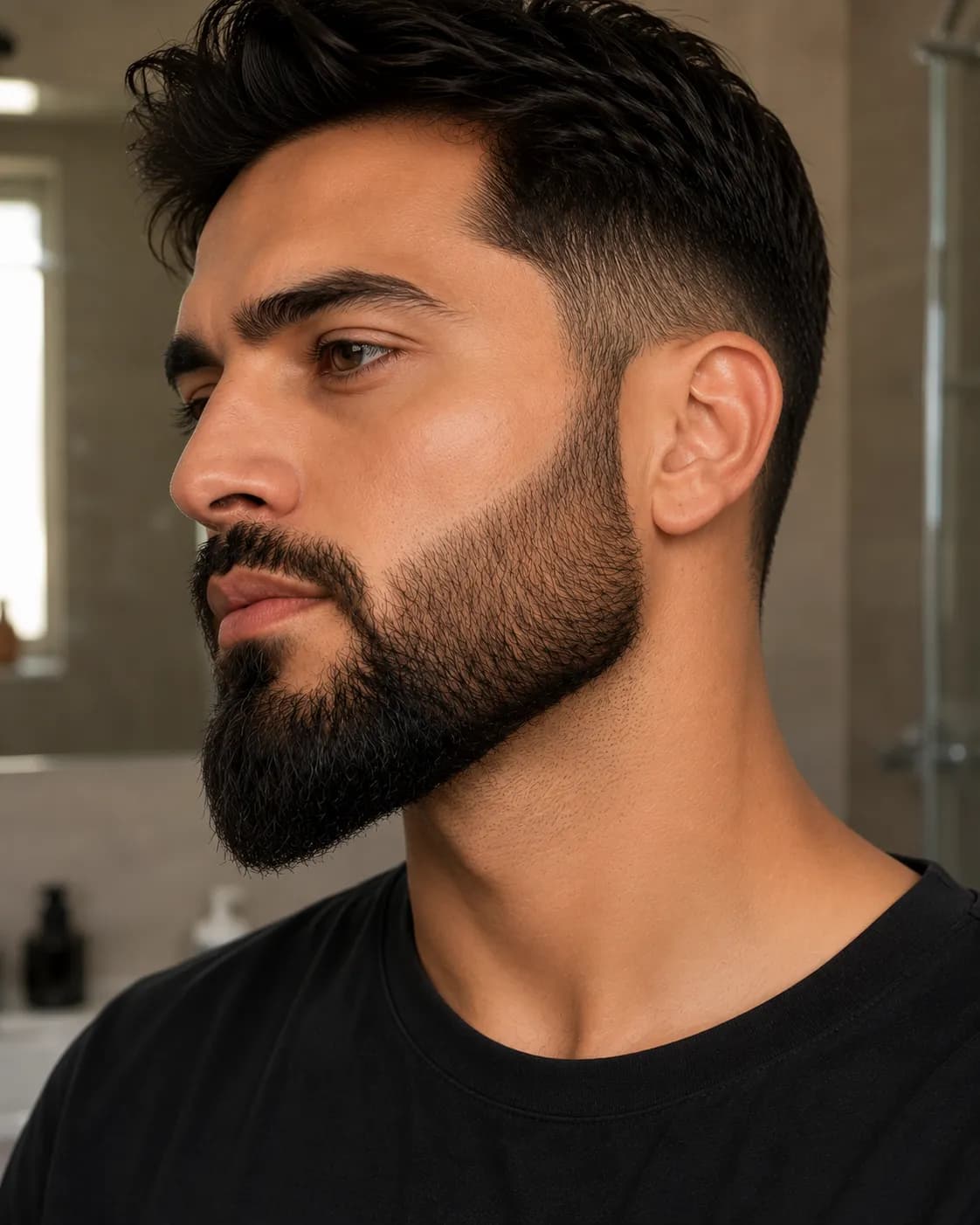
Foil-Shave the Edges for a Crisp Finish
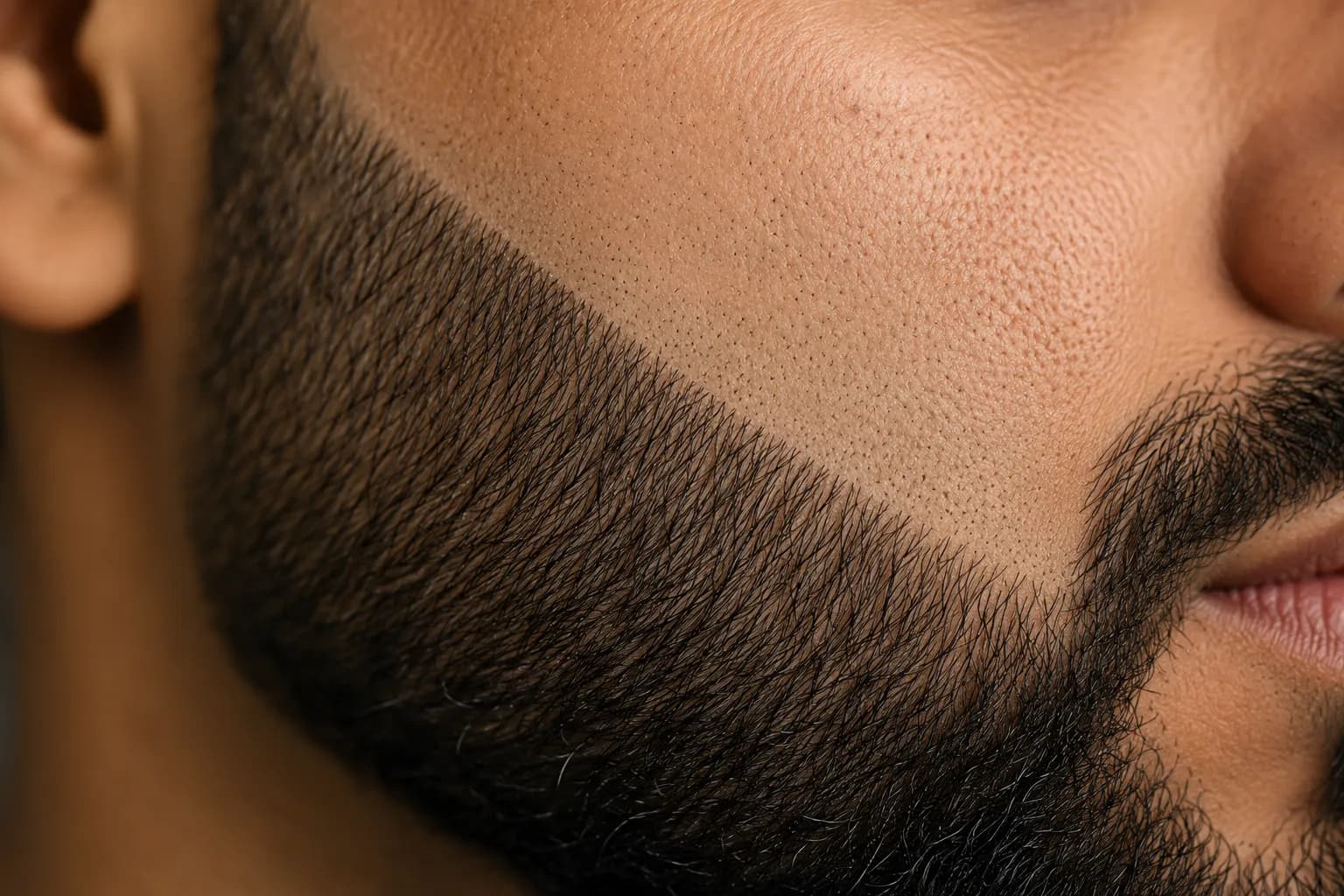
The final move is edging: foil-shave the perimeter so the trapezoid reads crisp. A foil shaver or a T-outliner gives a cleaner line on the cheek and neck edges than a multi-blade razor. Foil-shaving the cheek-line edge with the grain, then a light second pass, gave me a crisp line with no bumps on the test skin.
Two details make or break this step. If your hair grows in a swirl in different directions, brush and train it one way before you edge, or the line will look ragged.
Some men also get a cleaner edge on slightly damp skin, which raises the wet-versus-dry question worth deciding for your own skin.
Skin-safe edging: Warm and soften the skin first, use a sharp blade, and shave with the grain before any against-the-grain pass. Per the AAD's shaving guide, blades should be replaced every five to seven shaves to cut down on irritation. If you have coarse or curly hair, dermatologists' razor-bump advice is to go lighter and skip the closest pass, since tight curls are prone to bumps.
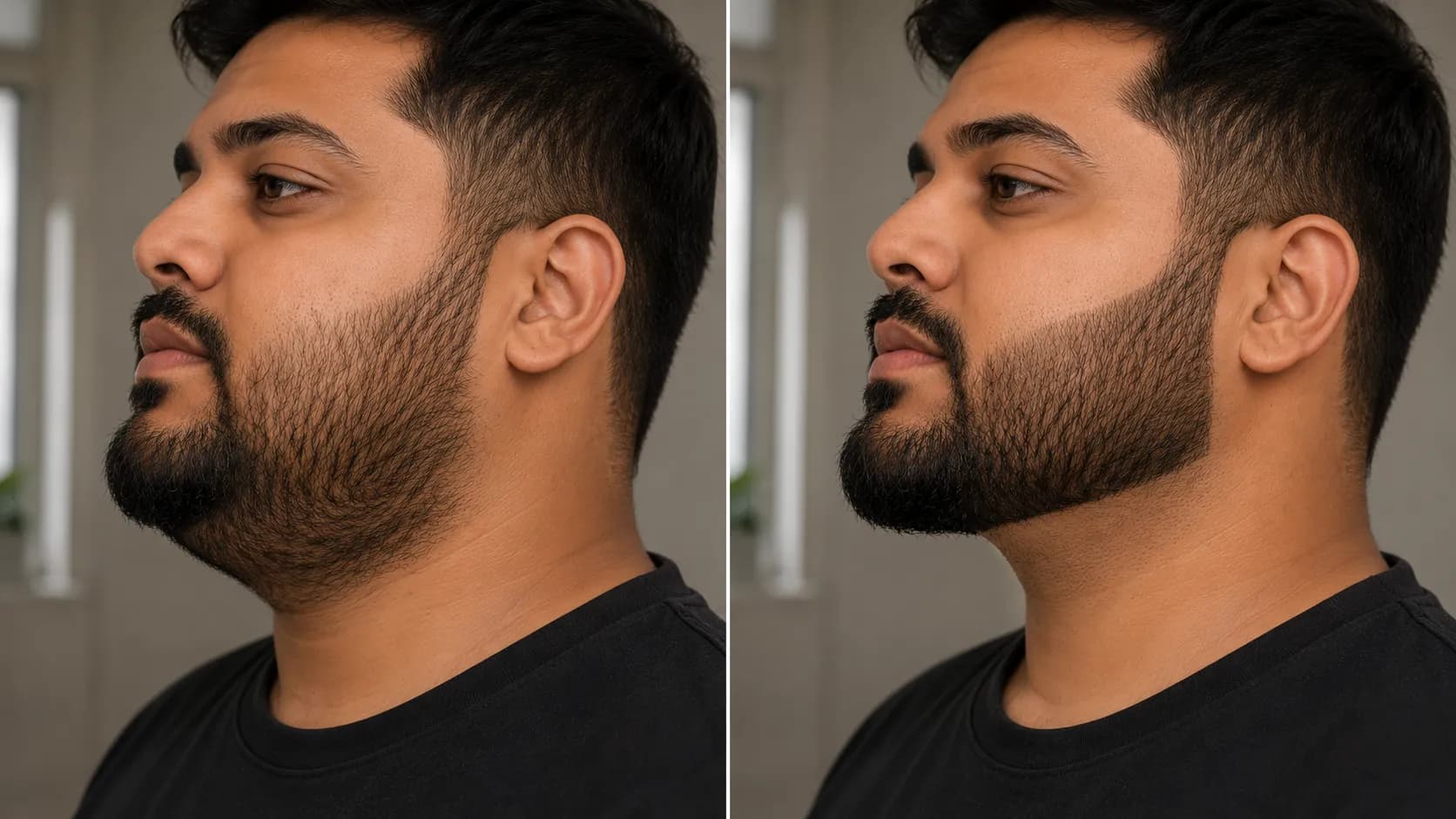
How to Trim a Beard for a Double Chin or Weak Chin
To trim a beard for a double chin or a weak chin, adapt the trapezoid: keep the neckline low enough to blur the under-chin, run a clean 45-degree line from the top of the Adam's apple up to the sideburns, and leave the chin the longest point to project it. Do not over-trim under the chin, which exposes what you are trying to hide. One facial-morphometrics study found beards can compensate for a smaller jaw by enhancing its apparent size.
The geometry matters most when the chin slopes away toward the neck in a concave arc. In that case, extra length at the very front of the chin does the projecting, while the 45-degree line keeps the under-chin from reading soft.
Work the fix in this order:
Set the neckline slightly lower than usual so hair softens the under-chin.
Run a straight 45-degree line from the Adam's apple up to each sideburn.
Leave the chin the longest point, keep the sides tight, and check the front and both profiles.
Dropping the neckline a touch and running that 45-degree line visibly softened a double chin in my before-and-after. One limit worth stating plainly: this is camouflage, so it works better head-on than from a low side angle.
Why Does My Beard Make My Face Look Rounder (and How to Fix It)
If your beard makes your face look rounder, the culprit is usually bulk on the sides plus a rounded bottom. The fix: tighten the sides, leave the chin longer, and square the bottom instead of letting it round off. A straight cheek line helps too. As Gillette's jawline guide points out, tight sides and defined lines create the impression of a sharper, less round jaw.
The bottom of the beard drives most of the roundness. Squaring it and tightening the sides took the rounded-beard look off my test subject in a single session.
Roundness is partly a face-shape question, so it also helps to match the style to your face shape rather than chasing lines alone. One honest limit: a very round face gets partial slimming, not a full reshape.
Frequently Asked Questions About Jawline Beards
Should you trim right along your jawline?
No. Trimming the outline up onto the jaw creates a chin-strap and detaches the beard from your face. Keep the neckline a finger or two below the jaw, above the Adam's apple, and let the beard sit on the jaw rather than being cut to it.
Do beards actually help your jawline?
Yes, mainly by amplifying how large and angular the jaw appears. A beard adds visual structure to the lower face, and leaving the chin longer than the sides pushes that effect further. It reshapes perception, not bone.
Why does my jaw disappear into my neck?
Usually the neckline is set too low, or your chin slopes into the neck in a concave arc. Raise the neckline slightly and leave a little more length at the front of the chin so the jaw edge reads clearly from the side.
How often should I re-trim to keep the jawline?
The edges blur faster than the length. I re-touched the neckline and cheek-line edges about every four days during the test, and reset the overall length roughly once a week to hold the trapezoid crisp.
I have a curly or coarse beard, does anything change?
The shaping logic is the same, but go lighter on the closest edges to avoid razor bumps, and comb the curl out before you judge the length. Very tight, coily beards deserve a texture-specific approach beyond this guide.
Bringing It Together
A sharper jawline is not a matter of buzzing your beard shorter and shaving a hard line at the jaw. It comes from the ratio you leave behind: a low clean neckline, a straight high cheek line, a chin kept longer than tightly cropped sides, and crisp foil-shaved edges.
That is the whole trapezoid, and it is why the counterintuitive rule holds. When you trim your beard for a jawline, the length you keep low and central is doing the shaping, while the tight sides frame it.
Start with the neckline, get the ratio right on the next pass, and judge the result in profile rather than head-on. Give it a couple of grow-and-shape cycles, adjust the millimetres to your own density, and the jaw you were hiding under an even, rounded beard will start to show.
Summarize with AI
Keep reading
Related articles
 Styles, Shapes & Length Guides
Trim your beard dry so it dries even; wet hair stretches then shrinks. Go wet only for a razor lineup in the shower, plus wash and comb order.
 Styles, Shapes & Length Guides
Taper your beard at home with the 4-guard step-down method - drop one guard at a time for a clean low, mid, or high gradient without bowl-beard lines.
 Styles, Shapes & Length Guides
Set your stubble to one even length across three tiers (light, medium, heavy mm), fix the patchy jawline, and learn how often to re-cut for a clean 3-day look.
 Styles, Shapes & Length Guides
Keep the sides short and the chin long — the opposite of a haircut — to slim a round face. A barber-reviewed shaping guide by face shape, with before/after.
Comments
Moderated for quality. Share a correction, ask a follow-up, or tell us what worked for you - every comment is reviewed before it goes live.