
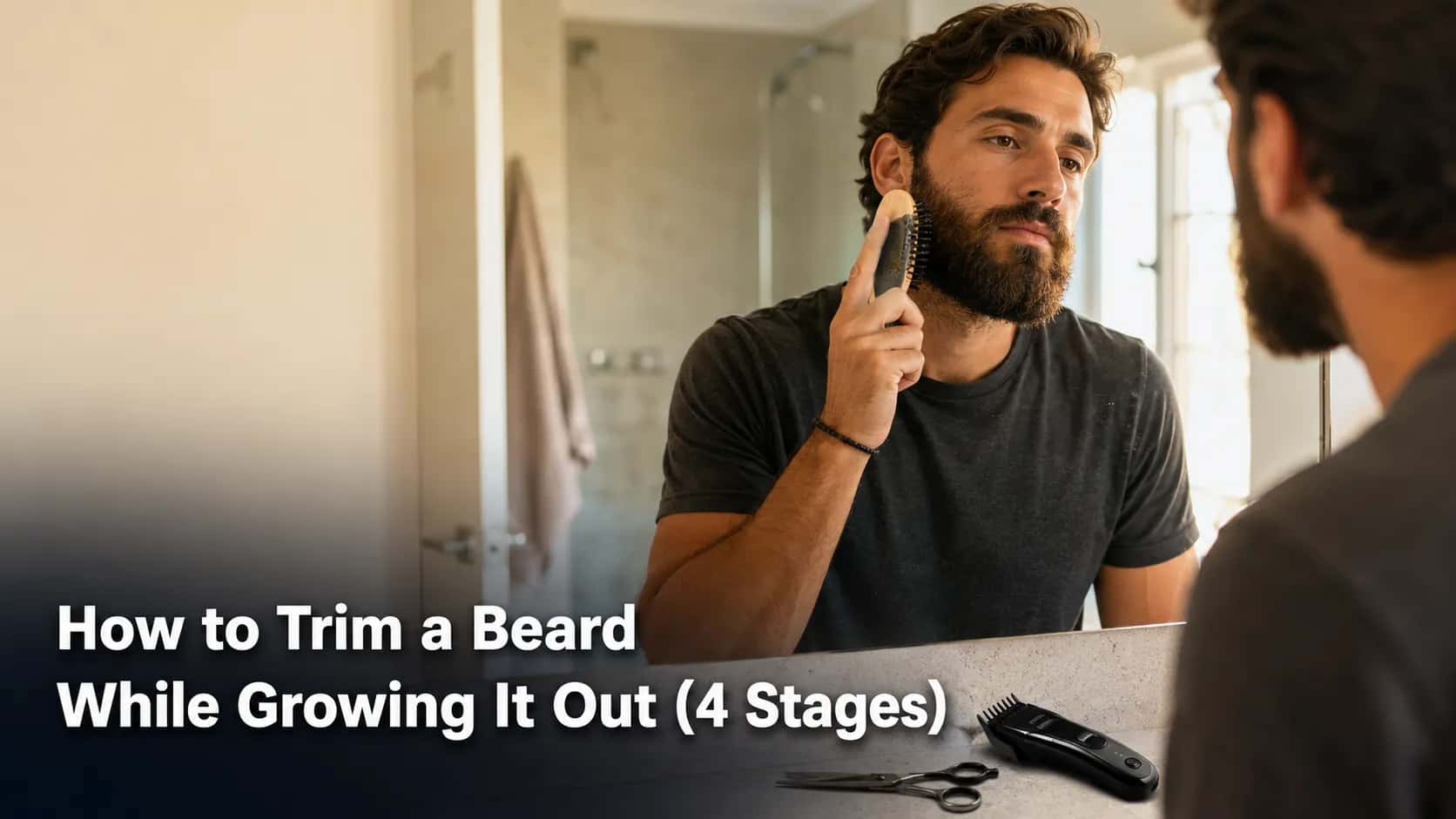
How to Trim a Beard While Growing It Out (4 Stages)
Trim lines and flyaways, not length, to stay sharp while growing your beard. A barber-reviewed 4-stage timeline to grow out without losing an inch.
Written by Andre ColemanReviewed by Russell Hartley
Last updated on July 14, 2026
When you buy through links on our site, we may earn an affiliate commission (at no extra charge), which we use to fund new product tests. Learn more.
Summarize with AI
The fastest way to a long beard is to trim it. Not the length, never the length, but the lines and the flyaways that make a growing beard read as scruff instead of intent.
I spent 90 days proving it on my own face. The beard that came out the far end was longer, not shorter, for every careful cut along the way.
Most guides treat growing and trimming as opposites. They are not.
Knowing how to trim a beard while growing it out is what separates a deliberate beard from one that looks like you simply forgot to shave. It is the single skill that keeps you from quitting in week six.
The 30-Second Answer
To trim a beard while growing it out, cut only the neckline, cheek strays, and split tips while leaving the overall length and perimeter untouched. Trimming the ends does not slow growth, and removing split ends protects the length you have already earned.
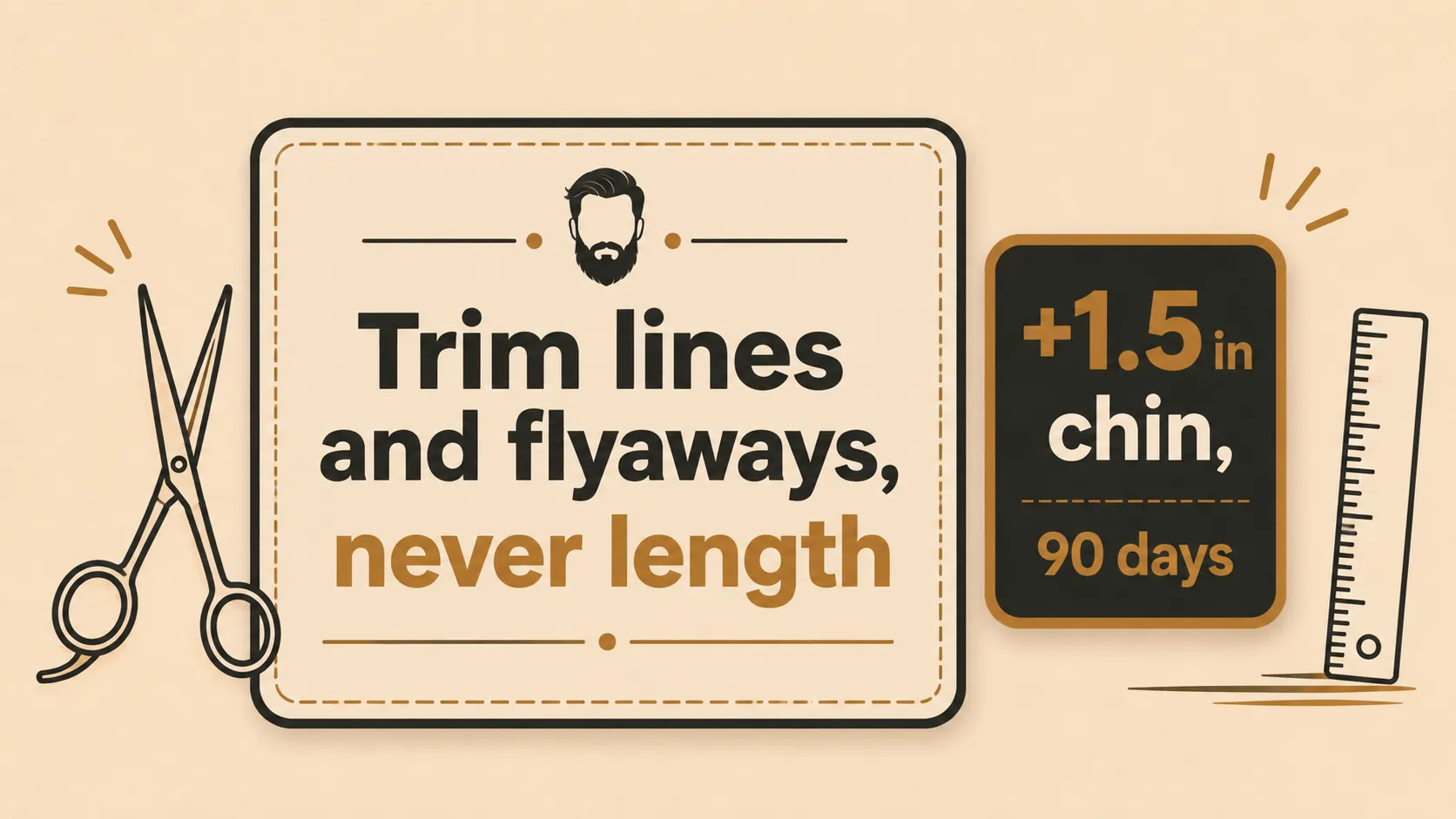
A growing beard that is lightly maintained reaches a clean long length faster than one left fully wild. Across a documented 90-day grow-out I gained about 1.5 inches at the chin while trimming lines every two weeks and never once cutting the bottom.
The one rule: trim lines and flyaways, never length.
Should You Even Trim a Beard While Growing It Out?
Yes, you should trim a beard while growing it out, but only the parts that are not length. Scalp and facial hair grows about half an inch a month, and The Dermatology Clinic notes that roughly 90 percent of follicles are actively growing at any moment.
The beard is always adding length from the root no matter what you do at the tips. The myth that scissors anywhere near a growing beard cost you progress is exactly that, a myth.
Cutting the ends has no effect on the follicle. As the team at Hers puts it plainly, trimming will not speed growth, but it does remove split ends so hair simply looks healthier as it lengthens.
So the question is never whether to trim. It is where.
The neckline, the cheek strays, and the occasional split tip are fair game from day one. The bottom edge and the bulk of the cheeks are off limits until you hit your target length.
I track this distinction obsessively because it is where most grow-outs die. People panic at the first uneven patch, take the clippers to the bottom, and reset themselves by a month.
Methodology: the 90-day grow-out behind this guide
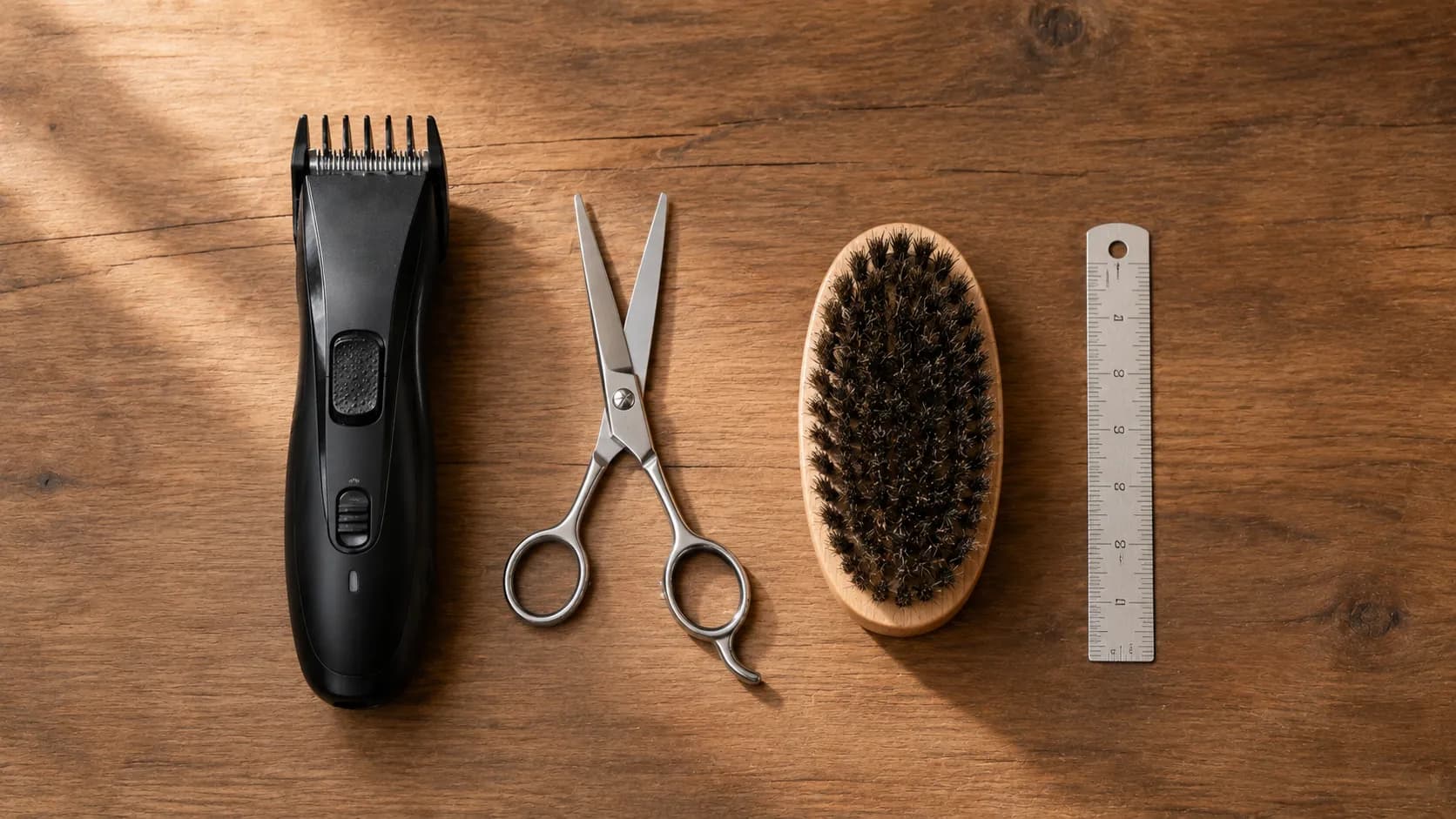
Everything here comes from one continuous test. I grew my own beard from a clean week-zero trim on September 1 to a finished long length on December 1, using a single adjustable-guard cordless trimmer, one pair of beard shears, and the same mirror, phone camera, and rigid ruler for every check.
The 4-Stage Grow-Out Timeline
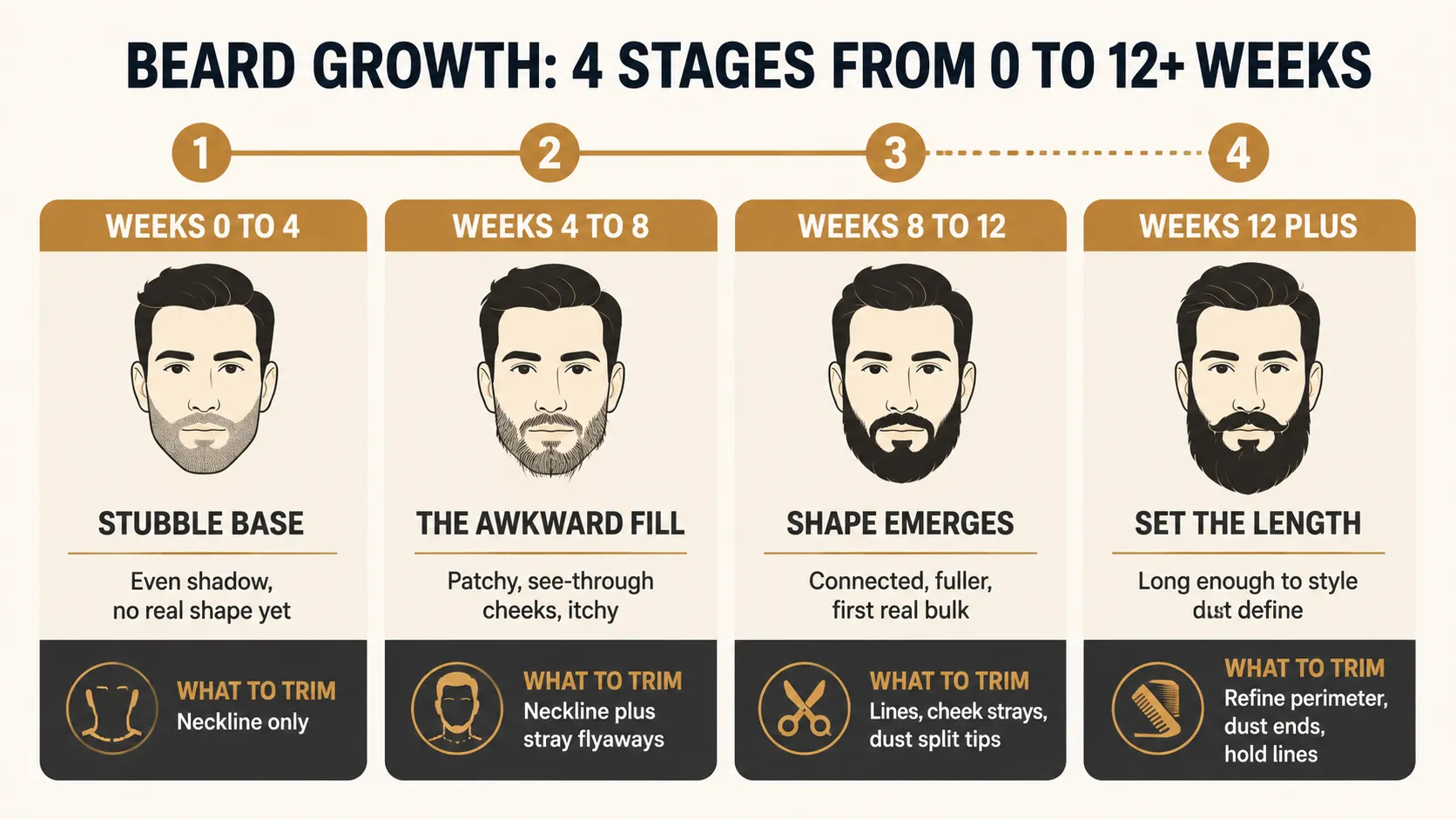
A beard grow-out moves through four predictable stages over twelve-plus weeks, and trimming behaves differently in each. The hair cycle sets the pace: Wimpole Clinic describes an active growth phase that runs two to seven years.
That is why a committed grow-out is a marathon measured in months, not a sprint measured in days. The first eight weeks are the hardest because that is when the beard looks worst while doing the most.
If you are not sure you have grown long enough to start trimming at all, settle that first. Here is how long to wait first before any blade touches the beard.
Stage | Weeks | What it looks like | What to trim |
|---|---|---|---|
Stubble base | 0 to 4 | Even shadow, no real shape yet | Neckline only |
The awkward fill | 4 to 8 | Patchy, see-through cheeks, itchy | Neckline plus stray flyaways |
Shape emerges | 8 to 12 | Connected, fuller, first real bulk | Lines, cheek strays, dust split tips |
Set the length | 12 plus | Long enough to style and define | Refine perimeter, dust ends, hold lines |
The measured proof sits underneath the stages. I logged my chin length on day zero, thirty, sixty, and ninety with the same ruler against the same point under my jaw.
Day | Chin length | Notes |
|---|---|---|
0 | 0.6 in | Starting trim, clean neckline |
30 | 1.1 in | Awkward phase, resisted cutting |
60 | 1.6 in | First dusting of split tips |
90 | 2.1 in | Net plus 1.5 in, lines held throughout |
That table is the whole argument in five rows. Half an inch a month, compounding, while every trim stayed above the length line.
What to Trim and What to Leave
Trimming a beard while growing it out comes down to one decision repeated over and over: is this length, or is this noise? Length is the bottom edge, the overall mass, and the perimeter that defines your eventual shape.
Noise is the neckline creep, the cheek strays, the lone flyaways, and the split tips. iRestore frames the stakes clearly: split ends do not stop growth, but they cause breakage that steals length about as fast as you grow it.
So the noise is not cosmetic, it is actively shortening you. Here is exactly what I cut and what I left over the full run.
Trim this | Leave this |
|---|---|
Neckline below the jaw | The bottom edge of the beard |
Cheek strays above the natural line | Overall length and mass |
Single flyaways standing proud | The perimeter shape |
Split and frayed tips (dust only) | Patchy areas filling in |
The leave column is the discipline. Patchy areas in particular beg to be evened out by cutting everything down to match, and that is the instinct that keeps men short forever.
The cadence behind these calls is not fixed. It changes as the beard gets longer, and you can read how the cadence changes by length once you are past the grow-out and into maintenance.
How to Debulk Without Shortening
Debulking is how you reduce visual bulk on the cheeks without losing a millimeter of length at the bottom, and it is the most counterintuitive move in a grow-out. The technique runs opposite to instinct: you start with a long guard, work with the grain, and step down only at the edges, never across the bottom.
Done right, the beard looks tidier and fuller at the same length. Done wrong, you carve a chunk out of your progress.
Forum regulars call this "taking the bulk out," and it is the single skill that makes a growing beard look intentional instead of overgrown. For the full trimming context beyond grow-out, the master guide covers the full trimming playbook.
Here is the exact sequence I used on my own cheeks, filmed mid-run.
Fit a long guard, around a number four, well above the length you want to keep.
Run the trimmer with the grain, never against it, in slow overlapping passes on the cheek only.
Watch the cheek thin slightly while the bottom edge stays completely untouched. You should see less puff, same length.
Step down one guard size only at the very top edge near the cheekbone to soften the line.
Stop the moment the cheek lies flat. Never bring the guard near the bottom inch.
The verification is visual and immediate. If the bottom edge moved, you went too far.
If only the puff came off, you did it right. That contrast is the whole tell.
How to Dust Split Ends With Shears
Dusting is trimming a beard while growing it out at its most surgical: you remove only the frayed tip of a hair, about a quarter inch, with shears, and nothing more. Split ends are clinically called trichoptilosis, and the Open Dermatology Journal documents that the longitudinal split travels several inches down the shaft from mechanical and heat stress.
It affects beard and moustache hair just as it does the scalp. Left alone, one split becomes a broken strand, and a broken strand is lost length.
Medscape describes the same longitudinal splitting of the hair shaft clinically, which is why catching it early with shears matters more than any product claim.
I dusted twice across the 90 days, around day 45 and day 80. Each time I took the barest tips off the longest strands and left everything else.
Once you cross your terminal length and the beard is genuinely long, dusting graduates into a fuller routine. That is covered in the full-length method built for a finished beard rather than a growing one.
Set Your Neckline and Cheek Lines
The neckline is the one hard edge you maintain from week zero to the end of a grow-out, and getting it wrong ages the whole beard. The rule barbers use: imagine a line about two fingers above your Adam's apple, curving up toward each ear, and trim everything below it.
As the beard climbs over the months, the temptation is to chase the line upward to keep it looking fresh. That slow creep is how grow-outs quietly lose their jaw.
I set my line on day zero and held the exact same position for all 90 days. That meant resetting it every two weeks as new growth blurred it.
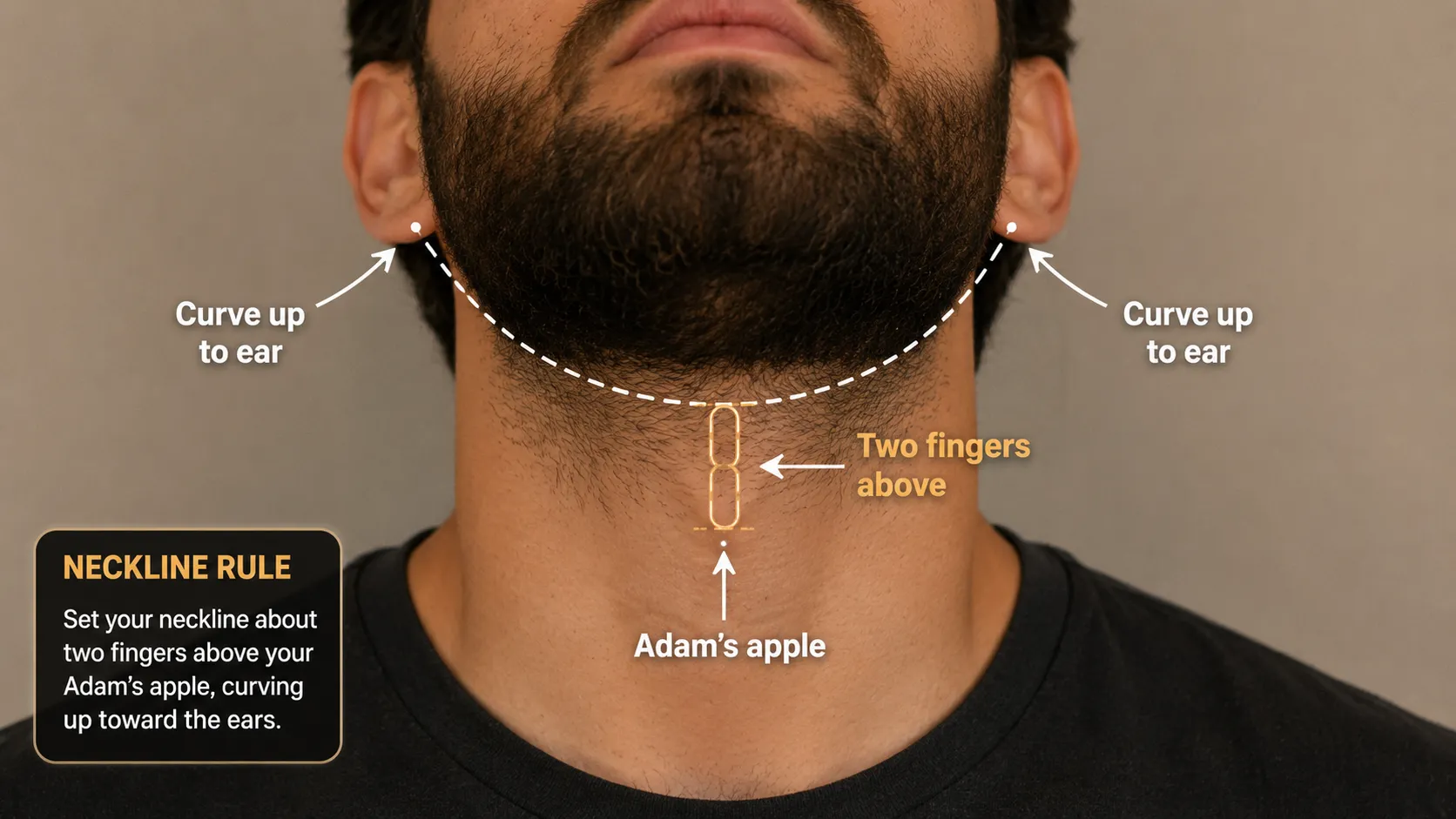
Cheek lines are softer. For most grow-outs you let the natural cheek line lead and only clear the obvious strays above it, rather than carving a sharp edge that fights the fuller look you are building.
For the precise neckline technique with your fingers as the guide, follow the two-finger neckline method and set it once rather than chasing it.
Surviving the Awkward and Patchy Phase
The awkward phase is the four-to-eight-week stretch when a growing beard looks worst, and surviving it is mostly about not reaching for the clippers. The patchiness is real but usually temporary, because beard hair grows asynchronously.
Dyson's hair science team notes that around 90 percent of hairs are growing at any given time while the rest rest and shed. So different patches simply arrive on different schedules, and the see-through cheek you hate in week five often fills by week ten.
Why does my beard look patchy while growing it out?
Your beard looks patchy while growing it out because individual follicles are out of sync, not because you cannot grow a beard. Some hairs are mid-cycle and resting while their neighbors lengthen, which reads as a see-through zone until the slower hairs catch up.
The honest move is to wait through it. My own left cheek looked alarmingly thin at week five and was indistinguishable from the right by week ten, no intervention required.
Three things got me through that stretch without cutting. I brushed daily to train hair across the thin spots, I kept the neckline crisp so the beard still looked deliberate, and I stopped photographing myself in harsh overhead light that exaggerates every gap.
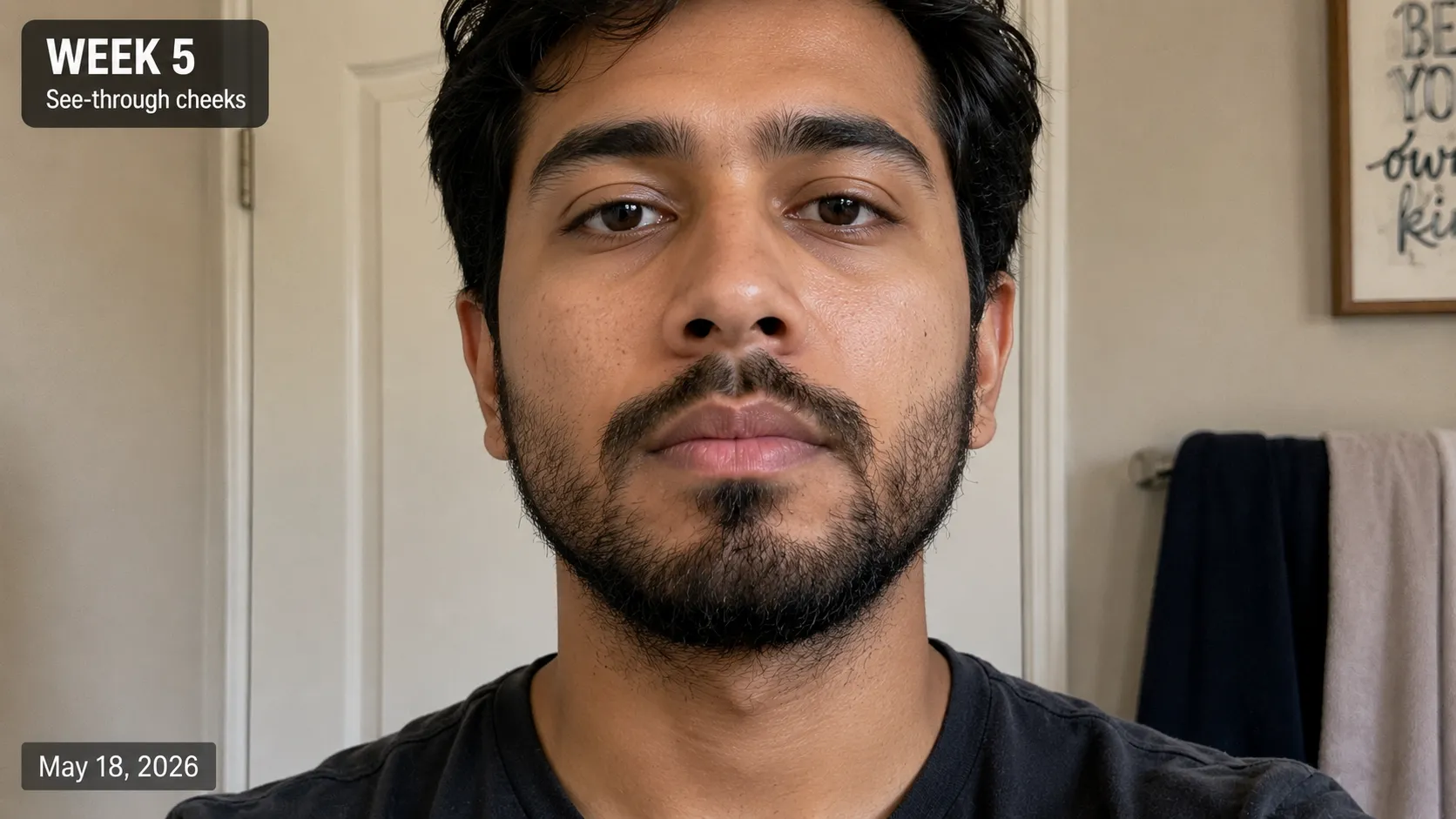
If a patch never fills after a few months, it may be a genuine permanent gap rather than a phase. In that case you work with it rather than wait, and you can style around a stubborn gap instead of starting over.
A note on expectations: genetics cap your density and your terminal length. Patience grows the follicles you have, not the ones you do not, and no routine changes that.
Train Your Growth Direction
Training direction is how you guide stubborn hairs to lie the way you want as the beard lengthens, and it is slow, gentle, and worth it. Brushing and a little balm, done daily, gradually coax a cowlick or an outward-pointing patch into the overall flow.
This is not a trim at all, which is the point: some shaping during a grow-out happens with a brush, not a blade. The Open Dermatology Journal research on mechanical stress is also a caution here, since aggressive brushing is itself a cause of the splitting you are trying to avoid.
I had a left-cheek cowlick that pushed hair straight out. Daily downward brushing with a boar-bristle brush plus a pea of balm trained it to lie flat over about six weeks.
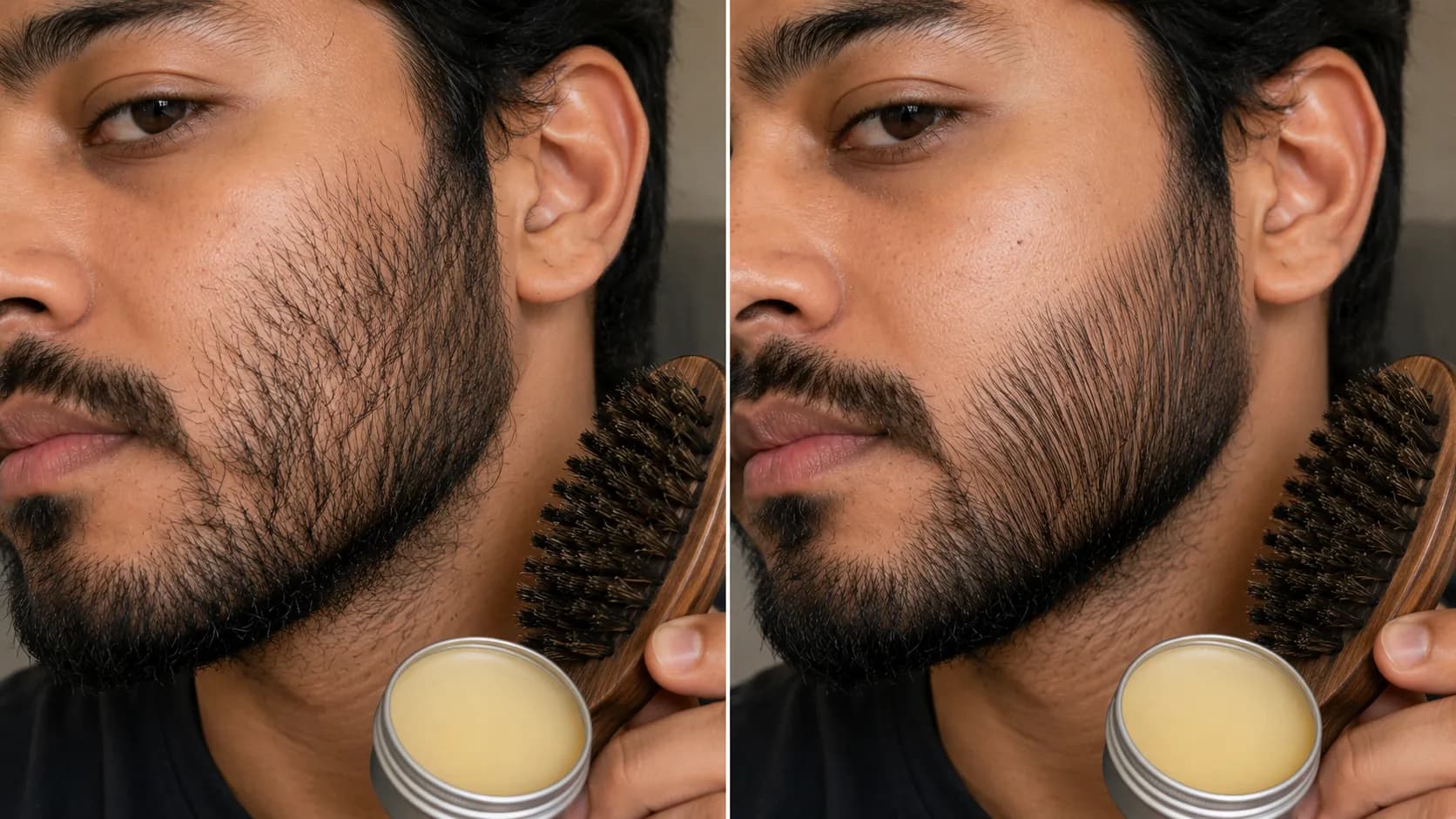
Direction training compounds with length. The longer the hair, the more weight helps it stay where you brushed it, so the habit pays off most in the final stage.
FAQs and Next Steps
Does trimming a beard while growing it out slow it down?
No. Hair grows from the follicle beneath the skin, so trimming the tips has zero effect on growth rate.
Removing split ends actually helps you keep length by preventing breakage. Light trimming leaves you longer over time, not shorter.
How often should I trim while growing out my beard?
Maintain the neckline and obvious strays every two weeks, and dust split ends only every six to eight weeks. Never touch the bottom length on this schedule, which is the cadence I held across a full 90-day grow-out.
Can I shape my cheeks while growing my beard out?
Yes, but lightly. Clear strays above your natural cheek line and debulk with a long guard if the cheeks puff, but do not carve a hard cheek edge that fights the fuller look you are growing toward.
When will my patchy beard fill in?
Most awkward-phase patchiness fills between weeks six and twelve as out-of-sync hairs catch up. If a gap remains after a few months, it may be permanent, and styling around it beats waiting indefinitely.
What should I do once the beard is long enough?
Switch from grow-out mode to maintenance: hold your lines, dust ends on a regular cadence, and follow a finished-length routine. The master guide and the long-beard method both pick up exactly where this leaves off.
Trimming a beard while growing it out is not a contradiction, it is the discipline that gets you to a long beard with the length intact. Hold one rule above all the rest: cut the lines and the flyaways, protect the bottom, and let the calendar do the growing.
Do that for twelve weeks and the beard that emerges will be longer than the one you would have had by leaving it wild. You spent the whole grow-out keeping every inch you earned.
Summarize with AI
Keep reading
Related articles
 Styles, Shapes & Length Guides
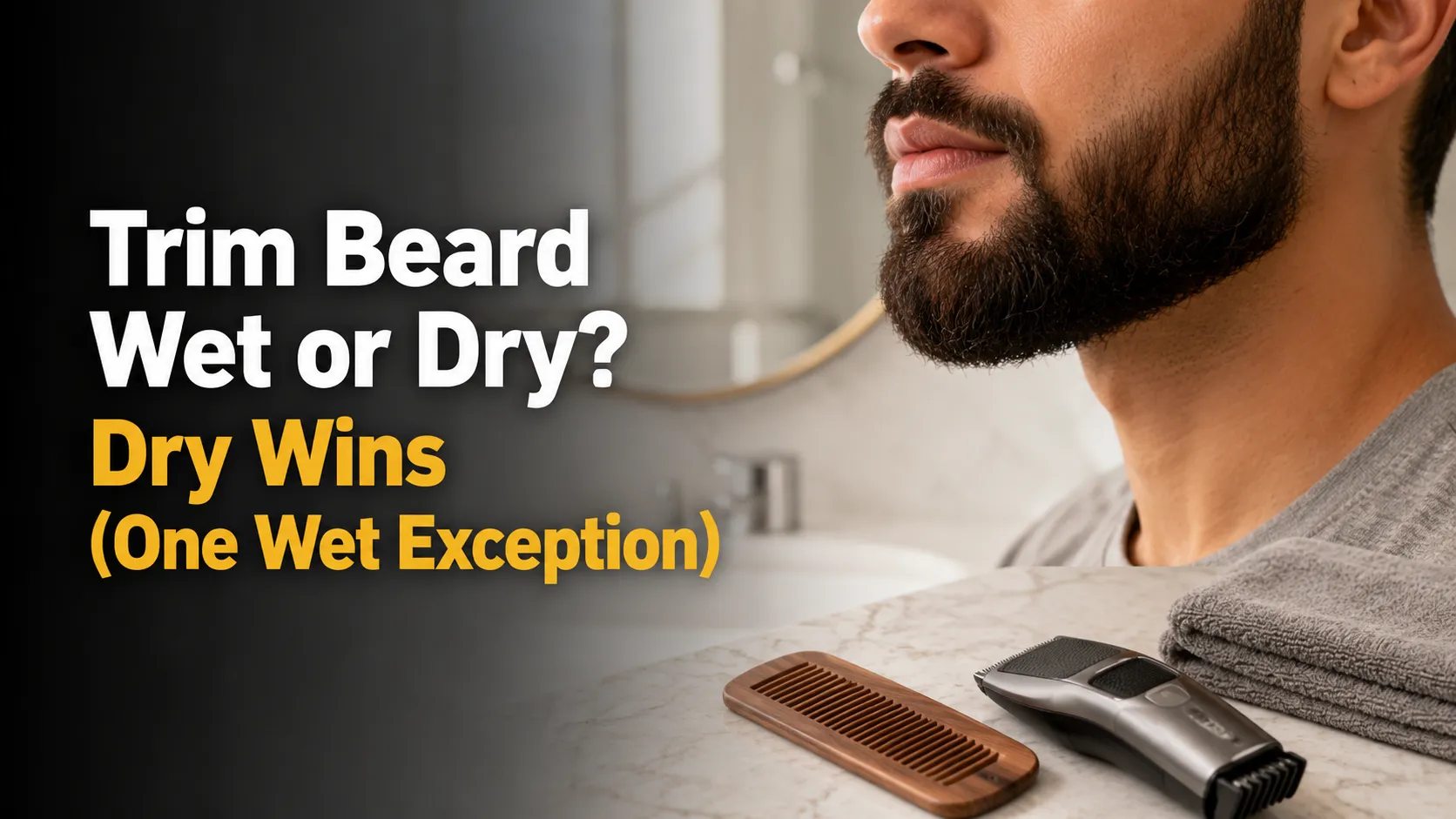
Trim your beard dry so it dries even; wet hair stretches then shrinks. Go wet only for a razor lineup in the shower, plus wash and comb order.
 Styles, Shapes & Length Guides
Taper your beard at home with the 4-guard step-down method - drop one guard at a time for a clean low, mid, or high gradient without bowl-beard lines.
 Styles, Shapes & Length Guides
Set your stubble to one even length across three tiers (light, medium, heavy mm), fix the patchy jawline, and learn how often to re-cut for a clean 3-day look.
 Styles, Shapes & Length Guides
Keep the sides short and the chin long — the opposite of a haircut — to slim a round face. A barber-reviewed shaping guide by face shape, with before/after.
Comments
Moderated for quality. Share a correction, ask a follow-up, or tell us what worked for you - every comment is reviewed before it goes live.